
I’ve sat in too many budget reviews where travel looks under control
on paper, yet margins keep eroding. When you finally dig in, the problem usually isn’t airfare or hotel rates. It’s something quieter and more expensive: the cost of employee time lost to travel days.
We obsess over ticket prices and per diems. We rarely ask the harder question: what is a travel day worth in lost productivity? Once you put a real dollar figure on that, a lot of necessary
trips suddenly look very expensive.
1. The Hidden Line Item: What a Travel Day Really Costs You
Most companies treat travel as a simple T&E category: airfare, hotel, meals, taxis. That’s the visible part. The invisible part is the salary you’re paying for hours when your people are effectively offline or working at half speed.
To see the true cost of employee travel days, you need to price the time, not just the receipts. A simple lost productivity formula, like the one used in tools such as the Lost Productivity Calculator, is a good starting point:
Lost Productivity Cost (per day) = Number of Employees × Hours Lost × Hourly Cost
For example:
- 1 employee on the road
- 8 hours mostly consumed by transit, check-in, waiting, and low-focus work
- Fully loaded hourly cost (salary + benefits + overhead): $70
That’s 1 × 8 × $70 = $560 in lost productivity on a single travel day, before you’ve paid a dollar for airfare or hotels. That’s the true cost of employee time on the road for just one person, one day.
Now layer in the direct trip costs using benchmarks from sources like Travel Code and GSA-based per diems:
- Average domestic business trip: about $1,293
- Average international business trip: about $3,594
- Standard U.S. per diem (FY 2026): $178/day (GSA: $110 lodging, $68 M&IE)
Once you add $500–$800 of lost productivity per travel day to those numbers, the real
cost of a trip jumps quickly. A cheap
$900 domestic trip can easily become a $2,000+ event once you factor in the cost of employee travel time.
Takeaway: If you’re not explicitly costing travel days as lost productivity, your travel budget and productivity budget are both wrong by a wide margin.
2. Why Your Per-Day Travel Cost Is Lying to You
Most finance teams can quote an average cost per travel day
. It usually bundles airfare (amortized), hotel, meals, and incidentals into a neat per-day number, similar to the frameworks in Global Travel Partners and LatestCost.
The problem? That number almost always ignores the value of the employee’s time. It’s a business travel cost breakdown for employers that stops at cash outlay and skips the productivity hit.
Here’s how most companies calculate per-day travel cost:
- Airfare spread across trip days (e.g., $900 ÷ 5 days = $180/day)
- Lodging (often the biggest daily line item)
- Meals & incidentals (per diem or actuals, say $60–$80/day)
- Local transport (rideshares, taxis, rental cars, public transit)
So you end up with something like:
- Airfare (amortized): $180
- Hotel: $220
- Meals & incidentals: $70
- Ground transport: $40
Reported daily cost: $510
But if that day is mostly travel, you should add the productivity loss we just calculated, say $560. Now your real daily cost is closer to $1,070. That’s a very different corporate travel time cost analysis when you’re deciding whether a trip is worth it.
Takeaway: Your average cost per travel day
is incomplete until it includes the cost of lost productive hours. Without that, you’re underestimating the hidden cost of staff travel.
3. The Productivity Trap: Travel Days That Look Busy but Produce Very Little
On paper, a travel day looks like a full workday. Calendar full. Laptop open. Emails sent from the airport. It feels busy. But in terms of output, it’s usually a fraction of a normal day.
Using the productivity loss formula from the Productivity Loss Calculator:
Productivity Loss = (Expected Output − Actual Output) × Unit Value
Translate that into hours to make the employee travel time cost calculation more concrete:
- Expected productive hours on a normal day: 6–7 hours of real work
- Actual productive hours on a travel day: maybe 2–3 hours of scattered, low-focus work
Let’s be generous and say:
- Expected: 7 productive hours
- Actual: 3 productive hours
- Gap: 4 hours
- Hourly cost: $70
Productivity loss: 4 × $70 = $280 per travel day, even if you assume some work still gets done. If the day is mostly transit and meetings don’t start until the next day, the gap is bigger and the business travel productivity loss climbs fast.
Now scale that across your team:
- 50 frequent travelers
- 20 travel days per year each
- $280 lost per travel day
That’s 50 × 20 × $280 = $280,000/year in productivity loss, on top of your T&E budget. And that’s a conservative scenario that doesn’t include truly unproductive days.
Takeaway: Travel days are often fake workdays
—they look busy but deliver half the output. If you care about the productivity cost of in person meetings, you need to price that gap explicitly.
4. Per Diems, Policies, and the Illusion of Control
Per diems feel like control. You set a daily cap, you stop chasing receipts, and everyone is happy. But per diems can also hide the true cost of employee travel days if you treat them as the whole story.
Here’s what’s really going on, based on guidance from sources like Otto the Agent and GSA/IRS rules:
- GSA per diems are benchmarks, mainly for federal employees. They set city-specific caps for lodging and M&IE (meals & incidentals).
- IRS high–low method gives private companies a simplified way to set tax-safe per diems (e.g., $319/day for high-cost, $225/day for other CONUS locations).
- Private employers can set per diems above or below GSA as long as they follow IRS reimbursement rules.
Per diems solve one problem (expense admin) but not the bigger one (lost productivity from business travel). A reasonable
per diem can make a trip look efficient while you’re still burning thousands in output.
Worse, per diems can distort behavior:
- Employees may stretch trips to maximize per diem days.
- They may choose slower, cheaper travel options that save $100 in airfare but cost $500 in extra time.
So yes, per diems help you manage receipts. But they don’t tell you the true cost of employee time on the road.
Takeaway: Per diems are a tool for managing expenses, not a proxy for the real cost of travel. Don’t confuse a tidy per diem policy with control over your productivity budget.

5. Road Warriors and Local Travel: The Daily Leak You’re Not Measuring
Most travel analyses focus on flights and hotels. But for many companies, the real leak is local, daily travel: sales reps, field techs, auditors, home health workers, regional managers. They may never get on a plane, yet their road time
quietly eats your productivity budget every day.
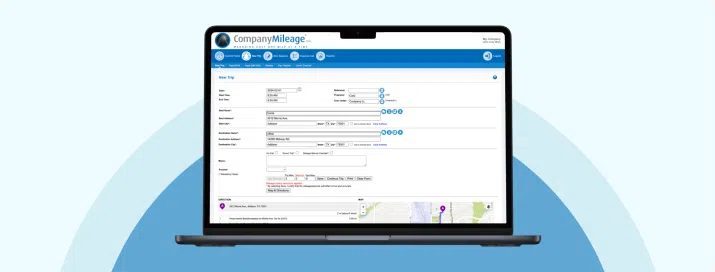
As CompanyMileage points out, mobile workers often incur daily travel costs that don’t show up in traditional travel reports. You might see mileage reimbursement or a car allowance, but not the hours lost to driving between sites.
Three common payment models:
- Per diems for meals or local travel – simple, but blunt.
- Car allowances – fixed monthly payments that may not match actual usage.
- Mileage reimbursement – more accurate, especially if you use the IRS rate (e.g., $0.67/mile for 2025) and track miles properly.
But again, these only cover cash out, not time lost. A field rep who spends 3 hours a day driving is 3 hours less productive, even if the mileage is reimbursed perfectly. If you’re serious about reducing lost time from employee travel, this is where you start.
Use the same productivity formula to see the travel day impact on productivity budgets:
- 100 mobile employees
- Average 2 hours/day in transit that could be reduced with better routing or territory design
- Hourly cost: $50
That’s 100 × 2 × $50 = $10,000/day. Over 220 working days, you’re looking at $2.2 million/year in potential productivity upside.
Takeaway: If you have a mobile workforce and you’re only looking at mileage and fuel, you’re missing the bigger cost: hours lost behind the wheel. The hidden cost of staff travel isn’t just fuel and wear-and-tear—it’s time.
6. When a Trip Is Actually Worth It: A Simple Decision Framework
Once you start pricing travel days correctly, some trips will suddenly look unjustifiable. Others will still be no-brainers. The key is to make that decision explicit instead of relying on gut feel.
Here’s a simple way to compare a business trip cost vs remote meeting and decide if travel is worth it:
Is the expected value of the trip > (direct travel cost + productivity cost)?
Break it down:
- Estimate direct travel cost
Use your benchmarks: airfare, hotel, per diem, ground transport. For a typical domestic trip, you might land around $1,200–$1,500. - Estimate productivity cost
Count all travel-heavy days (outbound, inbound, long transfers). For each, estimate hours lost and multiply by hourly cost. This gives you a clear employee travel cost per day that includes time. - Estimate trip value
This is the hard part. For sales, it might be expected deal value × win probability. For internal meetings, it might be the cost of not solving a problem or delaying a decision.
Example:
- Direct travel cost: $1,500
- Productivity cost: 2 travel days × 6 hours lost × $70 = $840
- Total real cost: $2,340
- Expected value of trip: $10,000 in incremental margin (e.g., deal, renewal, project acceleration)
That’s a good trade. But if the expected value is $3,000 and you have a credible virtual alternative, you should at least challenge the trip. This is how you turn a vague sense of we travel too much into a clear corporate travel time cost analysis.
Takeaway: Every trip should clear a simple hurdle: is the expected value clearly higher than the full cost, including lost productivity? If not, a remote meeting probably wins.

7. How to Stop Travel Days from Quietly Destroying Your Budget
So how do you stop travel days from quietly wrecking your productivity budget without banning travel altogether? You don’t need a massive transformation. You need a few disciplined changes that make the true cost of employee travel visible.
1. Put a price on time in your travel policy
- Define a standard hourly cost for different roles or bands so you can quickly estimate the cost of employee travel days.
- Require trip approvers to consider both T&E and productivity cost in approvals, not just the airfare and hotel.
2. Treat travel days as special, not invisible
- Flag travel-heavy days in your calendar and time-tracking systems.
- Encourage teams to schedule deep work on non-travel days and lighter, admin-style tasks on travel days.
3. Optimize trip design, not just prices
- Sometimes a more expensive direct flight that saves 4 hours is cheaper overall once you price time and the business travel productivity loss.
- Combine trips: one 4-day trip may be cheaper than two separate 2-day trips with extra travel days on each end.
4. Use benchmarks intelligently
- Leverage GSA, IRS, and industry data (GBTA, ECA, etc.) to set realistic city-specific caps and avoid common travel day cost mistakes companies make.
- But remember: benchmarks cover cash, not productivity. They’re only half the picture.
5. Fix the local travel leak
- For mobile workers, invest in routing tools, territory design, and mileage tracking.
- Measure hours in transit, not just miles driven, so you can see the true cost of employee time on the road.
6. Make the trade-offs visible to leaders
- In your monthly travel report, add a line for estimated productivity cost of travel days.
- Show how many
FTE-equivalent days
you’re losing to travel each quarter. Put a number on the business travel productivity loss.
Once leaders see that travel isn’t just a $X million T&E line but also a $Y million productivity drain, the conversation changes. Trips get more intentional. Approvals get sharper. And employees stop spending days on the road for meetings that could have been a call.
Final thought: You don’t need to kill business travel. You need to stop pretending travel days are free. The moment you price them honestly—time and cash—your travel budget and your productivity budget finally start telling the same story.