If you’ve got school-age kids, you already know the painful truth: the moment they start school, your cheapest travel windows disappear. Airfares jump, hotel rates climb, and every family attraction seems to cost more during the exact weeks you’re allowed to travel.
But here’s the twist. You can’t rewrite the school calendar—but you have more control than it feels like. The goal isn’t to avoid peak season
. The goal is to beat peak season at its own game
.
Below, I’ll walk through the choices I make when planning around school holidays, and how I keep school holiday travel costs from blowing up the budget.
1. Fixed School Dates vs Flexible Destinations: What Can You Actually Bend?
Most families start with the wrong question: Where do we want to go next summer?
During school holidays, that’s often the most expensive way to plan a family vacation during peak season.
I flip it and start with a different question: What can’t move, and what can?
- Fixed: school term dates, exam weeks, custody schedules, limited annual leave.
- Flexible: destination, exact departure day, airport, even the type of trip (city vs nature, theme park vs road trip).
Once I accept that the dates are non‑negotiable, I treat destination as the main price lever. Instead of chasing the same big-name hotspot as everyone else, I look for second-choice
places that offer a similar feel for less. That’s where affordable family trips in peak season usually hide.
Think:
- Regional theme parks instead of the most famous one.
- Smaller beach towns instead of the headline resort.
- Underrated cities with great parks and museums instead of the capital.
Tools like Google Flights, Skyscanner, or Momondo let you search Everywhere
from your home airport on your exact school-holiday dates. I plug in the school calendar, hit search, and watch where the prices cluster. That becomes my short list.
The takeaway: if your dates are fixed, don’t also fix your destination. Locking both is how family vacation cost during summer holidays spirals fast.

2. Booking Early vs Waiting for Deals: When Does Peak Season Reward Patience?
Advice on when to book is all over the place. Always book as early as possible.
Last-minute deals are best.
In reality, both can backfire during school breaks.
Here’s how I handle school holiday travel costs when it comes to timing.
Flights: start early, but don’t panic-book
- 3–6 months out for peak-season international flights is usually the sweet spot.
- 1–3 months out for domestic or short-haul routes.
- I set price alerts on Google Flights or Hopper as soon as I know the school break dates.
When I see a fare that’s clearly below the usual range for those dates, I book it. I don’t wait for a mythical rock-bottom price that may never appear—especially when every other family is eyeing the same week.
Accommodation: book something, then keep watching
For hotels and rentals, I use a simple two-step strategy that works well for family travel during peak season:
- Book a refundable option early in the area we want. That locks in a baseline price and availability.
- Set reminders to re-check prices every few weeks. If a better deal pops up, I rebook and cancel the original.
This works especially well with big chains and platforms that allow free cancellation. It’s an easy way to benefit from both early availability and later price drops without stressing over every fluctuation.
If I’m planning far ahead, I also look at airline credit card sign-up bonuses. With 9–12 months of planning and paying balances in full, families can cover a big chunk of flights with miles—huge when you’re comparing spring break vs summer break travel cost.
The takeaway: in peak season, don’t rely on last-minute miracles. Get something decent locked in, then let the tools hunt for better deals in the background.
3. Hotel Rooms vs Rentals vs Camping: Which Actually Saves in Peak Weeks?
Accommodation is where costs for family travel in high season really sting. A standard hotel room that’s fine for a couple suddenly feels cramped and overpriced with two or three kids in tow.
So I ask a blunt question: What are we really paying for here?
- If it’s just a bed and a bathroom, I look beyond hotels.
- If we need space, a kitchen, and laundry, I lean toward rentals, hostels with family rooms, or camping.
In peak weeks, I’ve found:
- Vacation rentals (apartments, condos, small houses) often beat two hotel rooms on price and give you a kitchen and separate bedrooms.
- Family hostels can be surprisingly good: private family rooms, shared kitchens, laundry, and social spaces.
- Camping, glamping, or RVs can slash costs in nature-heavy destinations and national parks, especially if you book sites early.
Then there’s the nuclear option: share a larger rental with another family. Yes, it’s louder and more chaotic. But splitting a 3–4 bedroom house with a pool can cost less per family than a basic hotel room—and you share food costs too.
Whatever we choose, I look for three money-saving features that really change the math on a peak season vs off season family vacation:
- Kitchen or kitchenette – breakfast and some dinners in.
- Free breakfast – if there’s no kitchen, this is the next best thing.
- Laundry – lets you pack lighter and avoid paying for extra bags.
The takeaway: in peak season, the cheapest nightly rate isn’t always the cheapest total cost. Kitchens, laundry, and shared spaces quietly save you hundreds over a week.

4. Flying vs Road Trips: Is the Sky Really the Limit?
When every seat on a plane is priced for school holidays, flying with kids can feel like a punishment. Four or five tickets, baggage fees, airport food… it adds up fast.
So I always run a simple comparison: What if we just drive?
When road trips win
For regional trips, especially in countries with good highways, road travel often beats flying in peak season because:
- You pay once for fuel and maybe tolls, not per person.
- No baggage fees, no car rental at the destination.
- You can pack food, gear, and toys without worrying about weight limits.
Combine that with camping or budget motels, and you’ve turned a pricey flight-based holiday into a flexible, often cheaper road adventure—one of the easiest budget strategies for school holiday travel.
When flying still makes sense
Sometimes, though, flying is still the better call:
- Distances are huge and driving would eat half your holiday.
- You’re using miles or points to offset the cost.
- You’re heading somewhere you won’t need a car (compact cities with great public transport).
In those cases, I look for savings by:
- Flying midweek if the school calendar allows.
- Considering alternate airports that are a bit farther but much cheaper.
- Traveling with only carry-ons to dodge checked bag fees.
The takeaway: don’t default to flying just because it feels like a proper
holiday. In peak season, the road can be your biggest discount.

5. Big-Ticket Attractions vs Free Fun: What Do Your Kids Actually Remember?
Peak season doesn’t just inflate flights and hotels. It also pushes up the cost of attractions, tours, and activities. The temptation is to cram in every must-do
experience to justify the trip.
These days, I’m ruthless. I ask:
If we could only do one expensive thing on this trip, what would it be?
We pick that one big-ticket experience—a theme park day, a special tour, a bucket-list museum—and then build the rest of the itinerary around low-cost or free activities:
- Parks, beaches, and playgrounds.
- Hiking trails and nature reserves.
- Free museum days, public gardens, libraries, and local festivals.
City passes (CityPASS, Go City, Explorer Pass, etc.) can help, but only if they match what your family will actually do. I always run the numbers: if we’d visit those attractions anyway and the pass saves 30–60%, great. If not, I skip it.
Booking some attractions online in advance can also shave off a bit of cost and a lot of queue time—both valuable in peak season with kids.
The takeaway: your kids will remember the feeling of the trip, not how many tickets you bought. One big highlight plus lots of simple fun is usually enough, and it keeps school holiday travel costs under control.

6. Restaurant Meals vs Self-Catering: Where Peak Season Quietly Drains Your Wallet
Food is the silent budget killer, especially when every restaurant near the main sights has quietly raised prices for school holidays.
My rule: we don’t need restaurant-level spending for every meal.
How I usually structure food on a peak-season trip
- Breakfast: almost always self-catered. Cereal, fruit, yogurt, toast. If the hotel includes breakfast, we lean into it.
- Lunch: often the main meal out. Lunch menus are usually cheaper than dinner, and kids are less tired.
- Dinner: simple meals in the rental (pasta, stir-fry, sandwiches) or street food/food trucks.
We hit a local supermarket or market on day one and stock up. That one habit can save hundreds over a week, especially for a family of four or more.
I also avoid eating in the most touristy squares and waterfronts unless we’ve decided it’s worth paying for the view. Walking just a few blocks away usually cuts the bill dramatically without sacrificing quality.
The takeaway: you don’t have to choose between eating well
and saving money
. You just need to be intentional about which meals you pay full price for during a family vacation in high season.
7. Taking Kids Out of School vs Paying Peak Prices: Is It Ever Worth It?
This is the controversial one. Some families quietly pull kids out of school for a week or two to access cheaper travel windows. Others refuse on principle.
There’s no one-size-fits-all answer, but it’s worth weighing the trade-offs between travel deals with kids in school and sticking strictly to the school calendar.
When I’d at least consider it
- Kids are in early primary years, with fewer high-stakes exams.
- The trip has clear educational value (history, language, nature, culture).
- The cost difference between peak and off-peak is huge—sometimes thousands.
If I go this route, I’d:
- Talk to the school well in advance.
- Frame the trip as an educational experience and ask for any work they’d like the kids to complete.
- Be honest with myself about whether my child can handle catching up.
But if exams, special needs, or school policies make this unrealistic, then I accept that we’re peak-season travelers and double down on all the other levers: destination choice, road trips, rentals, self-catering, and rewards points. That’s how we avoid the worst peak season family travel mistakes.
The takeaway: the real decision isn’t right vs wrong
, it’s what matters most for our family right now?
Money is one factor, not the only one.
8. Putting It All Together: A Realistic Peak-Season Game Plan
Let’s pull this into something you can actually use. When I plan a school-holiday trip, my rough process looks like this:
- Lock the dates (school calendar, work leave, any non-movable commitments). This is your starting point for any cost guide for family travel in high season.
- Use flight tools to see which destinations are cheapest on those exact dates.
- Pick a style of trip that fits the budget: road trip + camping, city + rental, beach + condo, etc.
- Book refundable accommodation early with a kitchen or free breakfast.
- Set flight alerts and book when prices dip into a reasonable range.
- Choose one big-ticket experience and fill the rest with free/low-cost activities.
- Plan food: supermarket run, simple meals in, one main meal out most days.
- Track spending with a simple app or spreadsheet so the trip doesn’t follow you home on a credit card bill.
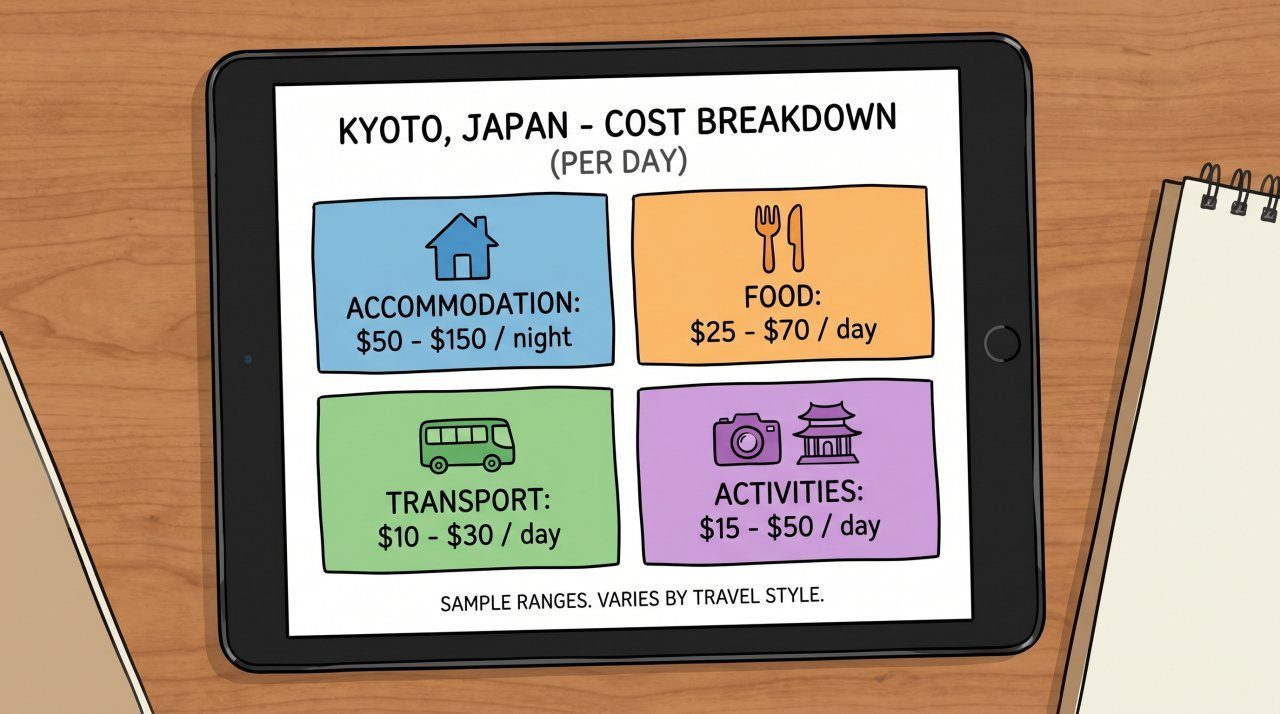
Most families I talk to end up somewhere around $200–$300 per day for lodging, food, transport, and activities if they use these strategies—sometimes less with road trips or camping, sometimes more in very expensive regions.
You may not be able to dodge peak season. But you can absolutely stop letting it dictate every part of your budget. The school calendar and travel pricing might be fixed. Your strategy isn’t.