
I used to land in new countries with either way too much cash (hello, anxiety) or almost none (hello, ATM hunt at 1 a.m.). Over time, I realized the real question isn’t How much money do I need?
but How much cash do I actually need in my hand each day?
This is the system I now use to set a realistic daily travel cash budget before I land, whether I’m going to Tokyo, Tbilisi, or a tiny surf town with one ATM that works when it feels like it.
1. Decide What Your Trip Really Costs Per Day (Not Just in Your Head)
Most people guess their daily budget. Then they’re shocked when the card bill arrives. Instead, think of your budget as something you build, not something you guess.
First, split your costs into two buckets:
- Trip cost overall – flights, insurance, big tours, long-distance trains, etc.
- On-the-ground daily spend – what you actually burn through each day once you arrive.
When you’re planning an international trip, that second bucket is what matters for how much cash per day when traveling. For a quick starting point, I pull a baseline from a few travel money guides: around $50–$100 per person per day works for many destinations and travel styles.
Then I adjust using three levers:
- Region: Southeast Asia on a budget might be $25–$40/day; Western Europe on a budget can easily be $80–$120/day. This is where your daily budget for Europe vs Asia really diverges.
- Style: hostel + street food vs. boutique hotel + wine every night. Same city, totally different realistic daily travel expenses.
- Day type: chill beach day vs. museum marathon + paid tours and activities.
If I want to be more precise, I plug rough numbers into a travel budget calculator (like the ones on Funify or MiniWebtool) to see:
- Average daily cost per person
- How much is locked in (flights, hotels) vs. flexible (food, activities, local transport)
- Which category is going to quietly eat my money (usually food or activities)
Once I know my total daily spend, I can finally answer the real question: What slice of this needs to be cash?
That’s the number that drives your travel daily budget by country in the real world.

2. Figure Out How Cash-Based Your Destination Actually Is
Not every country treats cash the same way. Some places are almost cashless; others will look at your card like it’s a UFO.
Before I book, I do a quick reality check to avoid common travel budgeting mistakes:
- Card acceptance: Are contactless payments common? Do small cafes and markets take cards, or is it cash-only?
- Tipping culture: Are tips expected in cash? How often, and for what?
- Small vendors: Street food, local buses, markets, public toilets – these are usually cash-only.
- Rural vs. city: Big cities = more cards. Small towns and rural areas = more cash.
I skim a few recent trip reports or forums and look for phrases like bring cash
, many places don’t take cards
, or contactless everywhere
. I also check whether certain networks (like Amex or Discover) are widely accepted, because in many countries they’re not.
Then I give the destination a rough cash-dependence level to guide my daily travel cash budget:
- Low cash (e.g., Scandinavia, parts of the UK, some big Asian cities): plan for about 10–25% of daily spend in cash.
- Medium cash (e.g., much of Western Europe, North America): around 25–40% in cash.
- High cash (e.g., rural areas, parts of South Asia, small towns in developing countries): roughly 40–70% in cash.
It’s not perfect, but it’s enough to avoid two extremes: landing with almost no cash in a cash-heavy country, or walking around with a brick of bills in a place where everyone taps their phone to pay.
3. Turn Your Daily Budget into a Daily Cash Number
Now it’s time to combine the two pieces: your daily spend and the cash-dependence level. This is where your international trip spending money per day turns into an actual cash figure.
Let’s say my total daily budget is $90 per person:
- Low-cash country (20% cash): I plan for about $20 in cash per day.
- Medium-cash country (30–35% cash): around $30–$35 in cash per day.
- High-cash country (50–60% cash): around $45–$55 in cash per day.
This lines up with a common rule of thumb: $50–$100 in cash per traveler per day as a starting point, then adjust down if the country is card-friendly or up if it’s cash-heavy. It’s a simple way to estimate daily travel costs before you land without overthinking it.
But here’s the twist: I almost never carry that full amount on me. I treat it as a cash needed
number, not a cash in my pocket
number.
My personal rules:
- I rarely need to carry more than about $50–$100 in cash on me at any time.
- I almost never plan to carry more than $200/day in cash, even in cash-heavy places – it’s just too risky.
- I withdraw enough for 2–4 days at a time, not the whole trip.
This way, my daily cash budget is realistic, but my risk stays low.
4. Decide How Much Cash to Land With (Day 0–2 Strategy)
The most stressful money moment of any trip is usually the first hour after landing. You’re tired, you don’t know the prices yet, and you’re standing in front of an ATM or currency booth wondering if you’re about to get ripped off.
I solve this by planning a simple Day 0–2 cash kit before I leave. It’s especially helpful on a multi-country trip, when your brain is juggling more than one currency and multi country trip daily budget planning gets messy fast.
Here’s what I want covered in cash the moment I land:
- Airport transport (train, bus, or taxi)
- First meal or snack
- Water/coffee and small essentials
- Tips (hotel, driver, porter)
In most places, that’s roughly 1–2 days of my cash budget. So if I’ve decided I need about $30/day in cash, I want $30–$60 worth of local currency ready to go.
How I get it:
- Option A: Home bank – I order some local currency before I leave. Often better rates than airport counters, and I can request small bills.
- Option B: Airport ATM – I withdraw enough for 2–3 days. I avoid currency exchange booths unless I’m desperate.
I also carry a small stash of my home currency (like $100–$200) as an emergency backup. It’s not for daily spending; it’s for everything went wrong
moments.
One more thing: I always try to know the approximate cost of airport transport before I land. That way, when a taxi driver says, No change, sorry
, I know whether I’m being played.

5. Choose the Right Mix of Cards and Cash (So You Don’t Panic When One Fails)
A daily cash budget only works if your card setup is solid. Otherwise, you’ll end up using cash for everything because your bank keeps blocking your card.
Here’s the system I use now, after learning the hard way:
- At least two debit/ATM cards from different banks, each with limited balances. If one is lost or blocked, I’m not stranded.
- At least one no-foreign-transaction-fee credit card for most purchases. Credit is safer than debit if something gets skimmed.
- One ATM-fee-reimbursing account if possible (like certain Schwab or Fidelity accounts) so I can withdraw smaller amounts more often without worrying about fees.
Then I decide what gets paid by card vs. cash. This is where the cash vs card abroad daily spending balance really shows up:
- Card by default: hotels, big restaurant bills, tours, train tickets, online bookings.
- Cash by default: street food, markets, local buses, tips, small shops, public toilets, some taxis.
This split keeps my daily cash needs predictable. I’m not suddenly dropping half my cash on a surprise card-only issue.
And yes, I still tell my bank I’m traveling, even though they’re not supposed
to need that anymore. I’d rather spend 5 minutes on an app than 45 minutes on bad hostel Wi‑Fi trying to unfreeze a card.
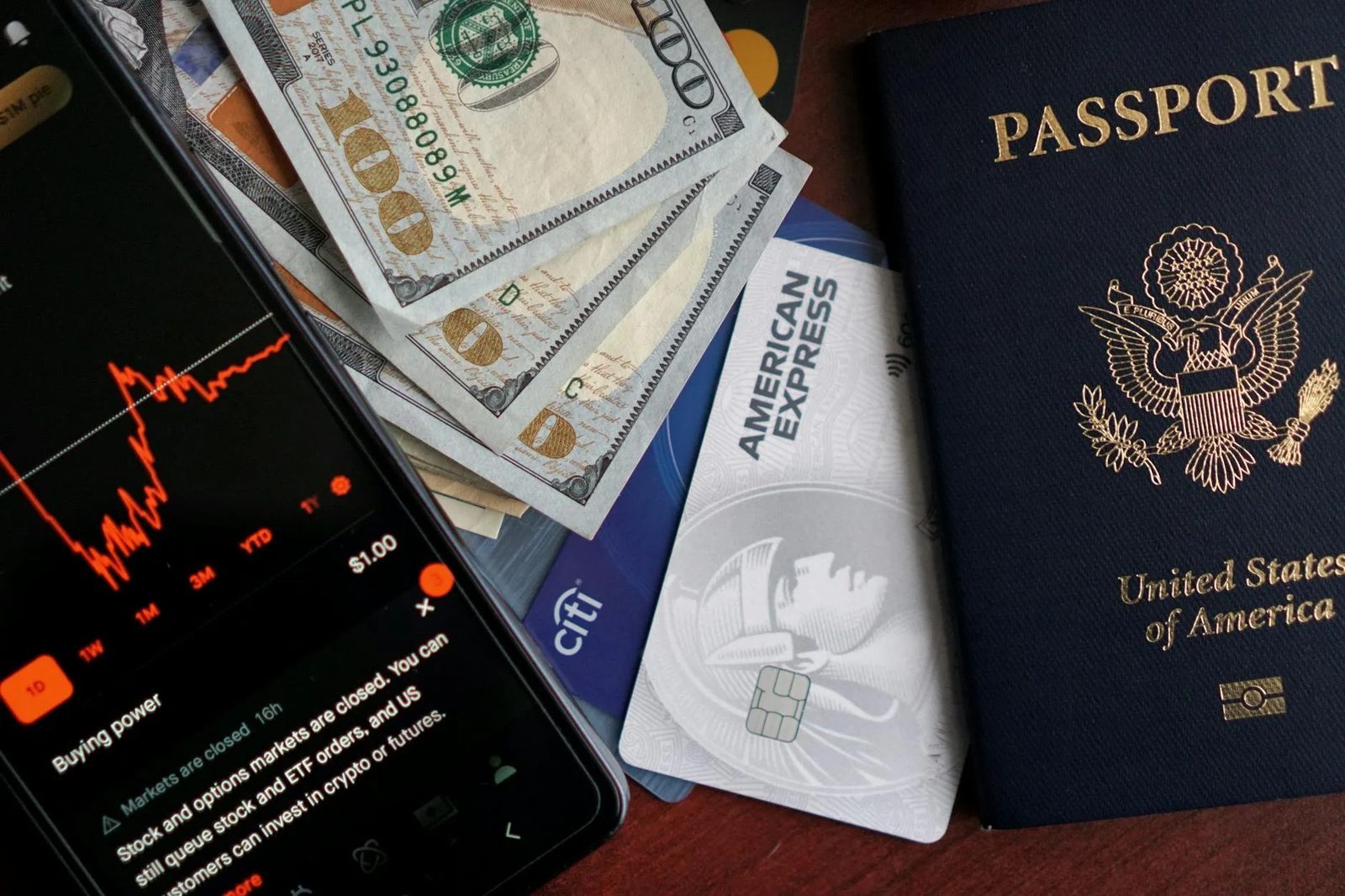
6. Decide How Much Cash to Carry vs. How Much to Stash
Now we’re at the part most people skip: how much cash is on you vs. how much is hidden. This matters whether you’re a flashpacker in Europe or on a tight backpacker daily budget by country in Asia or South America.
Even if my daily cash budget is, say, $40, I don’t walk around with exactly $40 every day. I think in three layers:
- On-body cash – what I actually carry.
- Room stash – locked in a safe or hidden in my luggage.
- Emergency reserve – separate, harder to access quickly.
My personal comfort zone:
- On me: usually the equivalent of $30–$80, depending on the country and the day’s plans.
- In the room: enough to cover 2–4 days of expenses if my cards suddenly stop working.
- Emergency reserve: a mix of local cash + home currency, split into at least two hiding spots.
To reduce risk, I also:
- Split cash between different bags and pockets.
- Carry a decoy wallet with a small amount of cash in pickpocket-prone cities.
- Keep only one card on me most days; the others stay hidden in the room.
And I always carry a mix of denominations. Big bills are useless if every vendor claims they have no change. I try to break large notes at supermarkets or bigger restaurants, not at tiny kiosks.
7. Adjust Your Cash Budget on the Fly (Without Losing Control)
No matter how well you plan, your first few days in a new country will teach you what your spreadsheet didn’t. Real life always edits your travel cost guide daily expenses.
So I treat my first 2–3 days as a calibration period:
- I track roughly what I spend in cash vs. card each day (even just in my phone notes).
- I ask myself:
Did I feel short on cash today?
orDid I carry way too much?
- I adjust my withdrawal pattern – maybe I only need to hit the ATM twice a week, or maybe I need smaller, more frequent withdrawals.
If I notice I’m consistently underestimating cash needs (more street food, more local buses, more tips than expected), I’ll bump my daily cash budget by 20–30% and cut somewhere else: fewer paid attractions, cheaper meals, or fewer taxis.
I also keep a mental red line: if I’m burning through cash faster than planned and dipping into my emergency stash, I pause and rework the budget. I’d rather adjust mid-trip than run out of money in the last week.
8. Put It All Together: A Simple Pre-Trip Cash Plan Template
If you want something you can literally copy into your notes app, here’s the framework I use before every trip. It works whether you’re comparing the average tourist daily spend by country or just trying to not overspend on a weekend away.
- Set your total daily budget per person (e.g., $80).
- Research cash dependence and pick a percentage (e.g., 30% cash).
- Calculate daily cash need: $80 × 0.30 = $24/day in cash.
- Decide landing cash: 2 days × $24 ≈ $50 in local currency on arrival.
- Plan withdrawals: withdraw enough for 3 days at a time (3 × $24 ≈ $75).
- Set carry vs. stash:
- On you: $30–$50 equivalent.
- Room stash: 3–4 days of cash + backup card.
- Emergency: $100–$200 in home currency + some local cash, hidden separately.
- Lock in your tools:
- 2+ debit cards with low balances.
- 1–2 credit cards with no foreign transaction fees.
- At least one account that reimburses ATM fees if you can get it.
Once you’ve done this a couple of times, something shifts. You stop obsessing over money every day. You know your numbers. You know how much cash you need. And you can actually enjoy the trip instead of constantly doing mental currency math in the back of a taxi.
That’s the real point of a daily travel cash budget: not to restrict you, but to give you enough structure that you can relax, splurge when it matters, and still land back home without a financial hangover.