
I don’t want a trip that only works if nothing goes wrong.
Flights get canceled, currencies wobble, strikes happen, and plans change. A solid travel budget doesn’t pretend otherwise. It assumes chaos is part of the deal.
In this guide, I’ll walk you through how I build a shock-proof travel budget that can handle currency swings, strikes, and last-minute changes—without turning into credit-card regret when I get home.
1. Start With Reality: How Much Can You Actually Risk?
Before I look at flights or dreamy hotels, I do something boring but essential: I decide how much money I can put at risk without touching my emergency fund or long-term goals.
Here’s the simple framework I use:
- Step 1 – Ring-fence your real emergency fund. That’s for job loss, medical issues, car breakdowns. Travel does not get to touch this. Ever.
- Step 2 – Add up truly available cash. Savings specifically for travel, side-hustle money, bonuses, cash-back rewards, gift money—anything you can spend without blowing up your future.
- Step 3 – Decide your risk tolerance. How much of that pile are you willing to spend if everything goes wrong and you end up using the full buffer?
Only then do I ask: What kind of trip fits inside this number?
Not the other way around.
Tools like the MyTimeCalculator Travel Budget Calculator or the planners mentioned on Jessie on a Journey help here. They force you to put a hard ceiling on your total spend and check whether your dream itinerary actually fits your income.
Shock-proof takeaway: A trip is only shock-proof if the total worst-case cost still fits inside money you can afford to lose—without touching your emergency fund or long-term savings.
2. Design a Three-Bucket Budget That Can Take a Hit
Most people carry one fuzzy number in their head: I’ll try to keep it under $X.
That’s how budgets crack. To build a shock proof travel budget, I split my travel money into three hard buckets, inspired by PreTravelCheck and others:
- Bucket A – Pre-trip costs
Passports, visas, vaccinations, travel insurance, gear, luggage, airport transfers, non-refundable deposits. These are mostly fixed and happen before I leave. - Bucket B – Trip costs (daily life on the road)
Accommodation, food, local transport, activities, data/SIM, small purchases, tips. - Bucket C – Travel emergency & disruption fund
This is not my home emergency fund. This is a trip-only shock absorber for things like rebooking flights, extra hotel nights, medical visits, or sudden route changes.
Then I assign rough percentages to keep my travel budget buffer strategy in check:
- Pre-trip: usually 10–20% of the total travel budget.
- Trip costs: 60–75%.
- Trip emergency buffer: at least 10–20% (more for complex or remote trips).
Many calculators, like the one on TvojKalkulator, automatically add a 15% safety buffer. I treat that as the minimum in a world where flights get canceled and currencies move overnight.
Shock-proof takeaway: If you don’t explicitly carve out a disruption fund, you’ll accidentally spend it on nicer hotels and dinners—and have nothing left when a strike hits.

3. Build a Daily Budget That Survives Currency Swings
Currency risk is sneaky. You think you’re fine, then your home currency drops 10% against the euro and suddenly every meal stings. Budgeting for currency fluctuations is part of protecting your travel budget, not an optional extra.
Here’s how I build a daily budget that can take a hit:
Step 1 – Start from total trip money, not vibes
I take my total amount available for trip costs + trip emergency buffer (Buckets B + C) and divide it by:
- Number of trip days, plus 2–4 extra days (in case I get stuck somewhere).
Then I only allocate 80–85% of that number as my working daily budget. The remaining 15–20% stays hidden as a built-in buffer, similar to the 10–20% suggested in tools like MyTimeCalculator and Kevmrc’s planning guide.
Step 2 – Price the trip in the destination currency
To avoid being blindsided by exchange rates, I do my math in the destination currency first:
- I use sites like Numbeo or Budget Your Trip to get realistic daily costs.
- I check local grocery chains, transit sites, and recent non-sponsored blogs for real prices, as suggested in the Monefy travel budgeting guide.
Then I convert that back to my home currency and ask: If my currency drops 10–15%, can I still afford this?
Step 3 – Stress-test the exchange rate
I run a simple stress test:
- Take the current exchange rate.
- Make a second version that’s 10–15% worse for me.
- Recalculate my daily budget and total trip cost at that worse rate.
If the trip only works at today’s perfect rate, it’s not shock-proof. When that happens, I either:
- Shorten the trip, or
- Downgrade my travel style (fewer paid activities, cheaper lodging), or
- Increase my savings before I go.
Shock-proof takeaway: A solid, flexible travel budget still works if your currency loses 10–15% against the destination currency while you’re there.
4. Choose the Right Financial Tools to Limit Currency Damage
Even a great budget can be shredded by bad financial tools: high FX fees, ATM charges, and terrible exchange rates. Travel budget risk management isn’t just about numbers—it’s also about how you move your money.
My checklist looks like this:
- Use multi-currency or low-FX-fee cards.
Many banks and fintech apps offer cards with 0–1% foreign transaction fees and decent exchange rates. The Monefy guide specifically recommends considering multi-currency accounts to minimize losses. - Carry at least two cards from different networks.
If one gets blocked or a network goes down, I’m not stranded. - Withdraw cash strategically.
I prefer fewer, larger ATM withdrawals to reduce per-withdrawal fees, but I never carry more cash than I’d be okay losing. - Avoid dynamic currency conversion (DCC).
When a terminal asks if I want to pay in my home currency, I say no. Thatconvenience
usually hides a bad rate. - Keep a small USD/EUR stash for emergencies.
In some regions, a bit of hard currency can help if ATMs or cards fail.
For longer trips, I sometimes park my travel fund in a separate high-yield savings account, as suggested in the solo travel budgeting article on Jessie on a Journey. It keeps the money out of sight, earns a little interest, and makes it easier to see exactly how much I’ve set aside for travel.
Shock-proof takeaway: The right cards and accounts can easily save 3–5% of your total spend—basically a built-in buffer against currency swings.
5. Plan for Strikes, Cancellations, and Sudden Route Changes
Strikes, storms, and airline chaos are no longer rare. If your trip involves flights or trains, assume at least one thing will go wrong. That’s where a travel cost buffer for flight changes and delays comes in.
Here’s how I budget for that:
Non-negotiable: travel insurance
These days, many advisors treat travel insurance as a fixed, non-negotiable cost, especially with increased cancellations and weather disruptions. The TvojKalkulator guide even calls it essential. I’m on the same page.
I look for policies that cover:
- Trip interruption and delay (extra hotels, meals, rebooking costs)
- Medical emergencies and evacuation
- Lost or delayed baggage
I treat this as part of Bucket A (pre-trip), not something I’ll see if I can afford later.
Build a disruption line into the budget
Inside my trip emergency bucket (Bucket C), I explicitly plan for:
- 1–3 extra hotel nights at my average nightly rate.
- One last-minute transport change (train, bus, or short-haul flight).
- Extra food costs for airport days and delays.
That’s on top of the 10–20% general buffer. It sounds conservative, but when a strike hits, I’m grateful I priced it in.
Prepay strategically, not blindly
Following advice from Kevmrc, I like to prepay big items (flights, key activities, some accommodation) to lock in prices and reduce on-trip decisions. But I avoid:
- Non-refundable bookings in high-risk seasons (winter storms, known strike periods).
- Over-scheduling with back-to-back non-refundable tours.
Shock-proof takeaway: A disruption fund + solid insurance turns a strike from a financial crisis into an annoying story you tell later.
6. Kill the Hidden Costs That Blow Up Your Buffer
Most budgets don’t fail because of one huge surprise. They fail because of 20 small, predictable leaks nobody bothered to plan for. That’s where a lot of travel money mistakes happen.
From the calculators and guides above, here are the big ones I always price in:
- Resort fees and local taxes.
US hotels love daily resort fees. Some cities add per-night tourist taxes. I read the fine print and add them to my nightly rate. - Baggage fees.
Budget airlines can turn a cheap fare into an expensive one with luggage charges. I either travel carry-on only (as PreTravelCheck suggests) or I fully price in checked bags. - Tipping norms.
In the US, 20–25% is standard at sit-down restaurants now, and some destinations have service charges plus tips. I treat this as part of my food budget, not an afterthought. - Visas, vaccinations, passport renewal.
These are classic pre-trip costs that can easily create a 5–10% shortfall if you forget them, as TvojKalkulator warns. - Data and connectivity.
eSIMs, local SIMs, or roaming passes. I pick one strategy and price it in.
I also adjust for trip length:
- For trips over 30 days, I expect lower nightly lodging (long-stay discounts) but higher miscellaneous costs (workspace, extra health insurance, more local transport).
Shock-proof takeaway: Every small
cost you ignore is quietly stealing from your disruption buffer.
7. Track in Real Time and Course-Correct Before It Hurts
A shock-proof budget isn’t set and forget.
It’s a living thing. I track as I go, but I keep it simple so I’ll actually stick with it.
My on-the-road system looks like this:
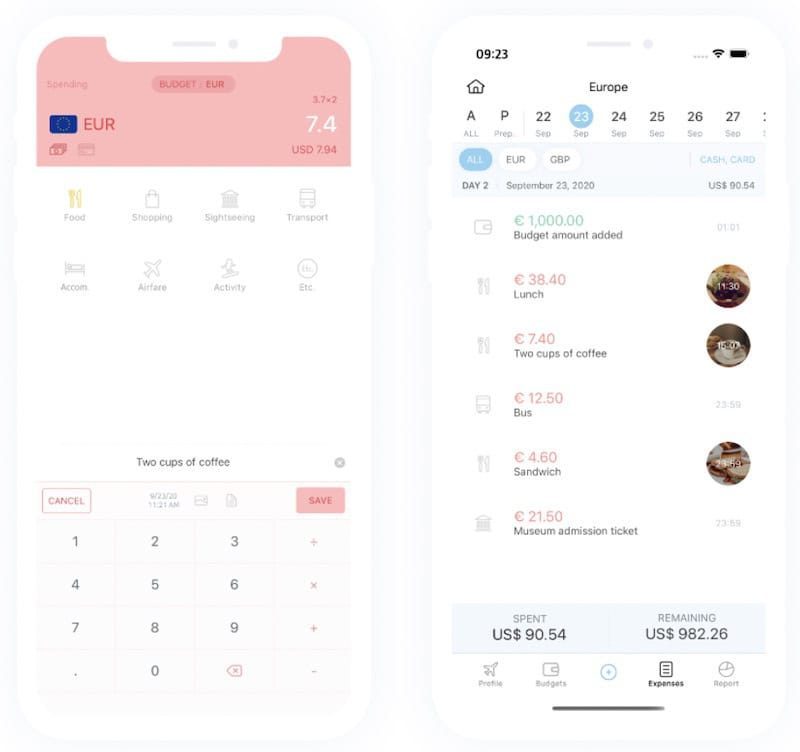
- Daily check-in (5 minutes).
I log the day’s spending in a notes app, spreadsheet, or a travel budget app. I compare it to my daily target. - Category-level awareness.
I track at least: accommodation, food, transport, activities, misc. If one category is consistently high, I adjust the next few days. - Planned vs actual review.
Tools like the MyTimeCalculator Planned vs Actual tab or Jessie’s free calculator help me see where my assumptions were wrong. That’s gold for the next trip.
I don’t micromanage every coffee. I just want to know: Am I burning through my buffer faster than expected?
If yes, I pull a few levers:
- More self-catered meals (kitchen or mini-fridge stays can cut food costs by 40–60%, as Monefy notes).
- Cheaper or free activities for a few days.
- More public transport, fewer taxis.
Shock-proof takeaway: Tracking isn’t about guilt. It’s about catching problems early enough that a small adjustment saves the whole trip.

8. Decide What You’ll Protect—and What You’ll Sacrifice
Finally, a shock-proof budget is not just numbers. It’s priorities. I decide in advance what I’ll protect if things go wrong, and what I’m willing to sacrifice when unexpected travel costs pop up.
I ask myself:
- What matters most on this trip?
Is it the hotel, the food, the activities, or the freedom to change plans? - What am I willing to downgrade first?
Fewer restaurant meals? Cheaper accommodation? Skipping shopping? - What is absolutely non-negotiable?
Maybe it’s a once-in-a-lifetime activity, or staying in a safe, central area.
Financial planners like Ameriprise and Evergreen Financial Group both emphasize this: a good trip is one you don’t regret financially. That means:
- No vacation debt.
- No raiding retirement or emergency funds.
- No
we had an amazing time but I’m sick to my stomach about the bill
feeling afterward.
Shock-proof takeaway: Decide your trade-offs before you leave, not in a panic at an airport gate.
Putting It All Together
If you want a worst case scenario travel budget that can survive currency swings, strikes, and sudden plan changes, build it like this:
- Start from what you can truly afford—without touching your emergency fund.
- Split your money into pre-trip, trip, and trip emergency buckets.
- Stress-test your daily budget against a 10–15% worse exchange rate.
- Use the right financial tools to minimize FX and ATM damage.
- Price in hidden costs and treat travel insurance as non-negotiable.
- Track spending lightly but consistently, and adjust early.
- Know in advance what you’ll protect and what you’ll cut if things go sideways.
The goal isn’t a perfect
budget. It’s a resilient one. The kind that lets you handle bad news, shrug, and say: We planned for this.
When you build an emergency fund for travel into your plans and give yourself a realistic buffer, you’re not just protecting your travel budget—you’re buying peace of mind for the whole trip.