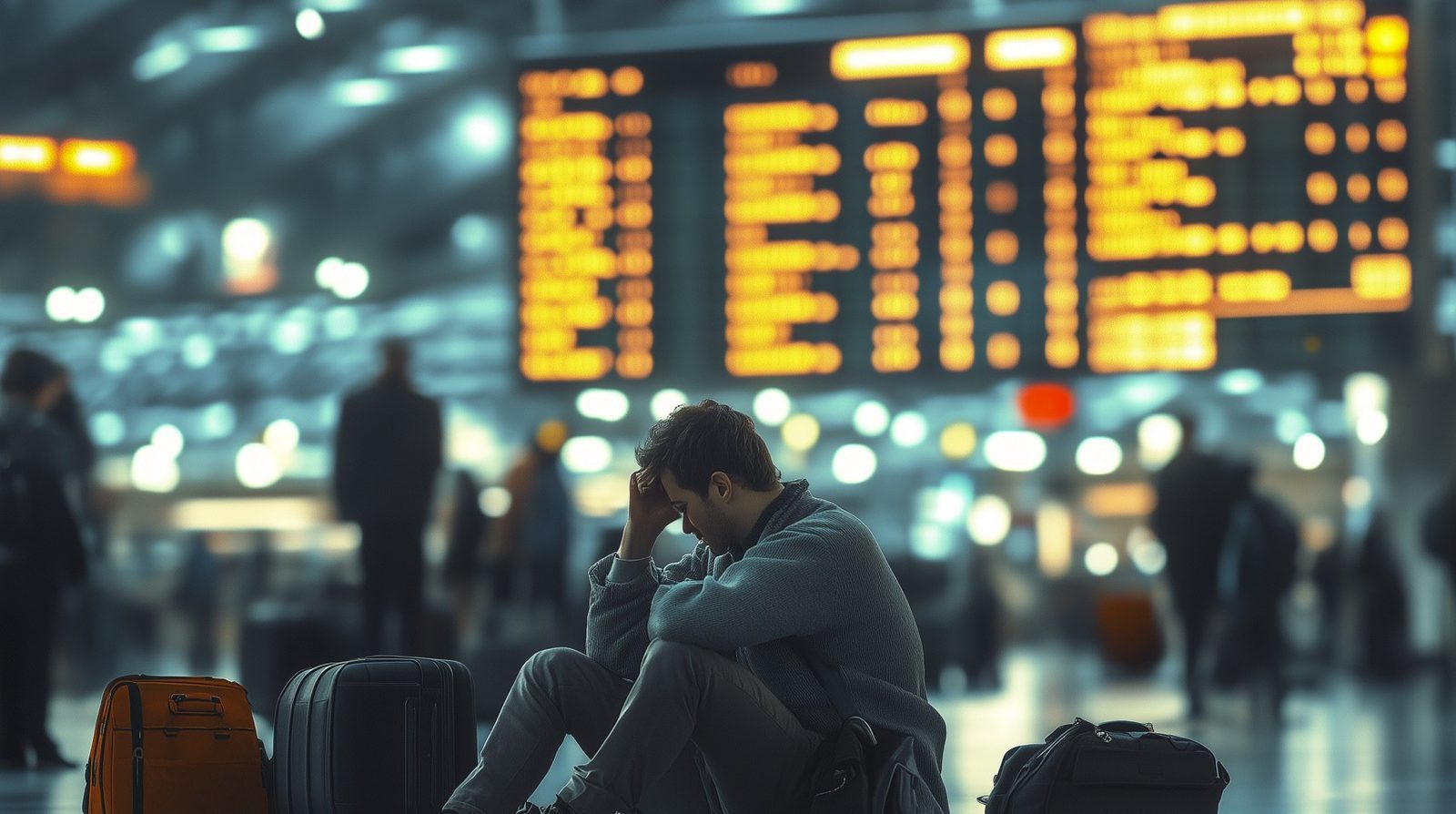
I buy travel insurance for some trips and skip it for others. The difference isn’t luck. It’s knowing exactly when a policy will actually pay out for flight delays—and when it’s just expensive peace of mind.
In this guide, I’ll walk through the questions I ask myself before every big trip. By the end, you should be able to look at your flights and say, with a straight face: Yes, travel insurance is worth it for this itinerary
or Nope, I’ll self-insure and keep the cash.
1. Start Here: What Your Airline Really Owes You (Hint: Not Much)
Before you even think about travel insurance for flight delays, you need to know what you already get for free.
In the U.S., airlines have very limited legal obligations when your flight is delayed or canceled. If they cancel your flight or cause a significant delay
and you decide not to travel, they must refund your ticket. That’s it. No law says they have to pay for your hotel, meals, missed tours, or that nonrefundable excursion you were excited about.
When the delay is due to weather or air traffic control, most U.S. airlines will simply rebook you on the next available flight. You might get a meal voucher if they’re feeling generous. But that overnight airport hotel? The $80 taxi? The nonrefundable safari you miss because you arrive a day late? That’s on you.
In Europe, it’s a different game. Under EC 261/UK261, you may be entitled to cash compensation and care (meals, hotels) for many delays and cancellations on eligible flights, especially when the disruption is within the airline’s control. But even there, extraordinary circumstances like severe weather or air traffic control restrictions often let airlines off the hook for compensation, though they may still owe basic care.
So the first question I ask myself is simple:
“If this flight melts down, how much will the airline realistically cover?”
If the honest answer is not much
, that’s when travel insurance vs airline compensation starts to matter.
2. Trip Delay Coverage: When a Long Delay Actually Puts Cash Back in Your Pocket
This is the benefit most people think they’re buying, but few really understand.
Trip delay insurance reimburses reasonable
extra expenses when your flight is delayed beyond a certain number of hours for a covered reason. That usually includes:
- Meals and snacks
- Hotel nights when you’re stranded
- Local transport (taxis, rideshares, airport transfers)
- Small necessities (toiletries, a change of clothes)
Sounds great, right? Here’s where people get tripped up. Three details usually decide whether you actually get paid:
- The delay threshold – Coverage only kicks in after a minimum delay, often 3–12 hours. Some policies start at 5–6 hours; better ones at 3. If your policy says 12 hours and you’re delayed 8, you get nothing, even if you spent $200 on food and a hotel.
- Daily and total caps – Many plans cap delay benefits at about $150–$300 per person per day, with an overall trip maximum. Book a $400 airport hotel and a $70 dinner? Don’t be surprised if you only get part of that back.
- Covered reasons only – Weather, mechanical issues, strikes, natural disasters, and air traffic control problems are often covered. You arriving late, booking a ridiculous connection, or ignoring travel advisories is not.
Some plans go further. For example, certain Allianz policies offer SmartBenefits that automatically pay a flat amount (like $100 per insured person per day) for a covered delay on a monitored flight, sometimes without receipts. If your actual expenses are higher, you can still submit receipts up to the policy limit.
Here’s how I decide if trip delay coverage is worth the cost:
- If I’m on a simple domestic hop with flexible plans and I can afford a surprise hotel, I often skip it.
- If I’m on a tight connection to a cruise, tour, or event, or traveling with kids where an overnight delay means hundreds in extra costs, I want strong delay coverage with a low threshold and decent per-day limits.
Key move: Before you buy, find the section in the policy that says Trip Delay
and look for three numbers: the minimum delay hours, the per-day limit, and the maximum total benefit. Those numbers quietly decide how useful your flight delay reimbursement will be.
3. Trip Cancellation & Interruption: When Flight Chaos Wrecks the Rest of Your Trip
Flight delays rarely exist in isolation. They knock over everything else you’ve booked.
That’s where trip cancellation and trip interruption coverage come in—and where people often misunderstand what covered reasons for flight cancellation insurance actually look like.
Trip cancellation protects you before you leave. If a covered reason forces you to cancel—serious illness, injury, death in the family, certain natural disasters, sometimes job loss—the policy can reimburse your prepaid, nonrefundable costs: flights, hotels, tours, cruises, rail passes, and more.
Trip interruption kicks in after departure. If you have to cut your trip short or miss segments for a covered reason, it can reimburse:
- Unused, nonrefundable trip components
- Extra transport to catch up to your itinerary
- Last-minute flights home
Now, here’s where flight disruptions matter. Imagine:
- A weather delay makes you miss the first two days of a prepaid tour.
- A mechanical issue causes you to miss your cruise departure.
- Air traffic control chaos means you arrive after a major event you flew for.
Depending on the policy, a covered delay can trigger trip interruption insurance for cancelled flights and missed segments, reimbursing those lost, nonrefundable pieces. This is where insurance can quietly save you thousands.
There’s also Cancel For Any Reason (CFAR) coverage, usually an add-on. It lets you cancel for reasons not normally covered—like fear of travel, changing your mind, or a messy personal situation—and get back a portion of your costs (often around 75%). It’s more expensive and usually requires buying the policy soon after your first trip payment.
My rule of thumb:
- If most of my trip is refundable or flexible, I don’t pay extra for cancellation/interruption.
- If I’ve prepaid nonrefundable flights, cruises, or tours that would really hurt to lose, I want solid cancellation/interruption coverage—and I at least consider CFAR if my plans are shaky.
4. Flight-Only Insurance vs. Full Trip Coverage: Which One Is a Waste?
At checkout, airlines and online travel agencies love to flash a little box: Add flight protection for $27?
It’s tempting. It’s also often the worst value on the page.
Here’s the catch: that flight-only insurance usually focuses narrowly on the flight ticket itself. It may help if you need to cancel the flight for certain reasons, but it often doesn’t fully protect:
- Your hotels and vacation rentals
- Prepaid tours and activities
- Cruises and rail passes
- Medical emergencies or evacuation
Meanwhile, a comprehensive travel insurance policy from an independent provider often costs roughly the same ballpark but covers the entire trip, not just the time you’re in the air. That usually includes:
- Trip cancellation and interruption
- Trip delay
- Emergency medical and evacuation
- Baggage loss and delay
- Sometimes accidental death and dismemberment
For a $2,500 international trip, sample comprehensive policies can run in the range of about $50–$90 for a healthy 40-year-old—just a small percentage of the trip cost. And they cover far more than that little airline checkbox.
So when is flight-only insurance worth it? Honestly, almost never. I might consider it only if:
- I’m taking a very cheap, flight-only trip with no other prepaid costs, and
- The airline’s policy is unusually generous for the price (rare).
Most of the time, I either buy a full trip policy or I skip insurance entirely and accept the risk. When you compare credit card travel insurance vs standalone policy vs airline add-ons, that little box at checkout usually comes in last.
5. When You Probably Don’t Need Travel Insurance for Flight Disruptions
Let’s be blunt: sometimes travel insurance is just a donation to the insurance company.
Here are situations where I usually skip it for flight-related issues and self-insure:
- Short, simple domestic trips where I can easily rebook or drive if needed.
- Mostly refundable bookings – flexible hotel rates, refundable tickets, or points bookings I can redeposit cheaply.
- Low total trip cost – if the entire trip is $300 and I’m being asked to pay $40 for insurance, the math rarely works.
- Strong built-in protections – for example, I’m flying an EU carrier on an EU route with EC 261 rights, and my credit card already includes decent trip delay and interruption coverage.
Another big one: short delays. Many policies only start paying after a 3–12 hour delay. If your typical risk is a 1–2 hour delay that just makes you grumpy but doesn’t cost you money, insurance won’t help.
And remember, you can’t insure against your own choices. Policies routinely exclude:
- Arriving late to the airport
- Booking unrealistically tight connections
- Traveling against government advisories
- Buying insurance after a storm, strike, or other disruption is already known
If your main risk is your own procrastination or optimism, no policy will fix that. This is one of the most common travel insurance mistakes for flight claims: assuming the policy will cover poor planning.
6. When Travel Insurance for Flight Disruptions Is Absolutely Worth It
Now the flip side: when I see these factors, I lean hard toward buying coverage.
1. Complex or high-stakes itineraries
- International trips with multiple connections
- Trips that connect to a cruise or guided tour with fixed departure times
- One-way or open-jaw itineraries that are expensive to rebook
One long delay can cause a domino effect of missed segments and rebooking fees. Trip delay and interruption coverage can turn a financial disaster into an annoying story.
2. Big nonrefundable costs
- Nonrefundable flights (especially basic economy)
- Prepaid hotels, villas, or vacation rentals
- Expensive tours, safaris, or experiences
If losing that money would really hurt, I want cancellation and interruption coverage tied to clear covered reasons. This is where non refundable tickets and travel insurance actually make sense together.
3. Families, seniors, and tight budgets
Delay costs multiply fast when you’re not alone. A single overnight delay for a family of four can mean:
- Two hotel rooms
- Four sets of meals
- Extra transport
That can easily hit $400–$800 in a single night. For seniors with prepaid tours or travelers on tight budgets, a $20–$80 policy that covers delays and interruptions can be the difference between a stressful inconvenience and a financial crisis.
4. Destinations prone to disruption
Think: winter storms, hurricane seasons, or regions with frequent air traffic control issues. Airlines often treat these as extraordinary circumstances
, which means no compensation—exactly where travel insurance is designed to step in.
7. How to Read the Fine Print So Your Claim Doesn’t Get Denied
Most denied claims come down to one thing: the traveler never really read the policy.
When I evaluate a plan, I focus on a few critical sections:
- Covered reasons – Look for weather, mechanical issues, strikes, natural disasters, and illness/injury. Check what’s excluded: pre-existing conditions, known events, civil unrest, etc.
- Delay threshold – Is it 3 hours, 6 hours, 12 hours? This number decides whether your delay is just annoying or actually covered.
- Benefit limits – Per person, per day, and total trip caps for delay, cancellation, and interruption.
- Timing rules – Many policies require purchase within 7–21 days of your first trip payment for full benefits (especially CFAR and pre-existing condition waivers).
- Documentation requirements – You’ll usually need receipts and written proof from the airline stating the cause and length of the delay.
During a disruption, I treat it like a mini audit:
- Save every receipt (meals, hotels, taxis, rebooking fees).
- Get written confirmation from the airline about the delay and its cause before you leave the airport.
- Note times: when the delay was announced, when you actually departed, and any rebooking details.
One more nuance: you generally can’t double-dip. If the airline already paid for your hotel or gave you a meal voucher, you can’t claim those same expenses from insurance. You can, however, often claim the extra costs beyond what the airline covered, up to your policy limits.
Understanding these details up front helps you avoid the most frustrating travel insurance claim denial reasons.
8. A Simple Framework: Should You Buy, or Skip, Travel Insurance for Flight Disruptions?
When I’m on the fence, I run through this quick checklist:
- What’s my total nonrefundable cost?
If losing it would seriously sting, I lean toward coverage. - How complex is my itinerary?
More connections and moving parts = more ways a delay can snowball. - What protections do I already have?
Check your credit card benefits and passenger rights (EC 261/UK261, etc.). No need to pay twice for the same thing. - What’s the delay threshold and limit in the policy?
If it only kicks in after 12 hours with a tiny daily cap, it may not be worth it. - Can I comfortably self-insure?
If you can absorb a worst-case delay or cancellation without stress, skipping insurance is a rational choice.
Buying travel insurance timing for flights also matters. If you want perks like CFAR or coverage for pre-existing conditions, you usually need to buy soon after your first payment, not the night before you fly.
Travel insurance isn’t about eliminating risk. It’s about deciding which risks you’re willing to keep and which ones you’d rather pay someone else to hold.
The next time you’re staring at that Add insurance?
box, don’t guess. Think about the cost of travel insurance for flights compared with your nonrefundable bookings, check what your airline and credit card already offer, and decide with your eyes open. That’s when travel insurance really pays off—and when you can confidently skip it and rely on an airline refund instead of a travel insurance payout.