I don’t buy travel insurance because I’m optimistic. I buy it because I’ve read the fine print. After you’ve seen how many claims get denied on technicalities, you start reading those policies with a very different attitude.
This guide is about finding travel insurance that actually pays out when your trip goes off the rails—delays, cancellations, missed tours, and all the messy in-between. I’ll show you how I read policies, what I ignore, and the exact phrases that make me either pull out my card or close the tab.
1. The Big Myth: “If My Flight Is Canceled, I’m Covered”
Most travelers assume: If my flight is canceled, insurance will reimburse me.
That’s usually wrong.
Travel insurance doesn’t cover flight cancellations
as a broad idea. It covers specific, named reasons for canceling or interrupting your trip. If your situation doesn’t match one of those reasons, the insurer doesn’t care how awful your day was.
Here’s how I break it down before I buy any policy:
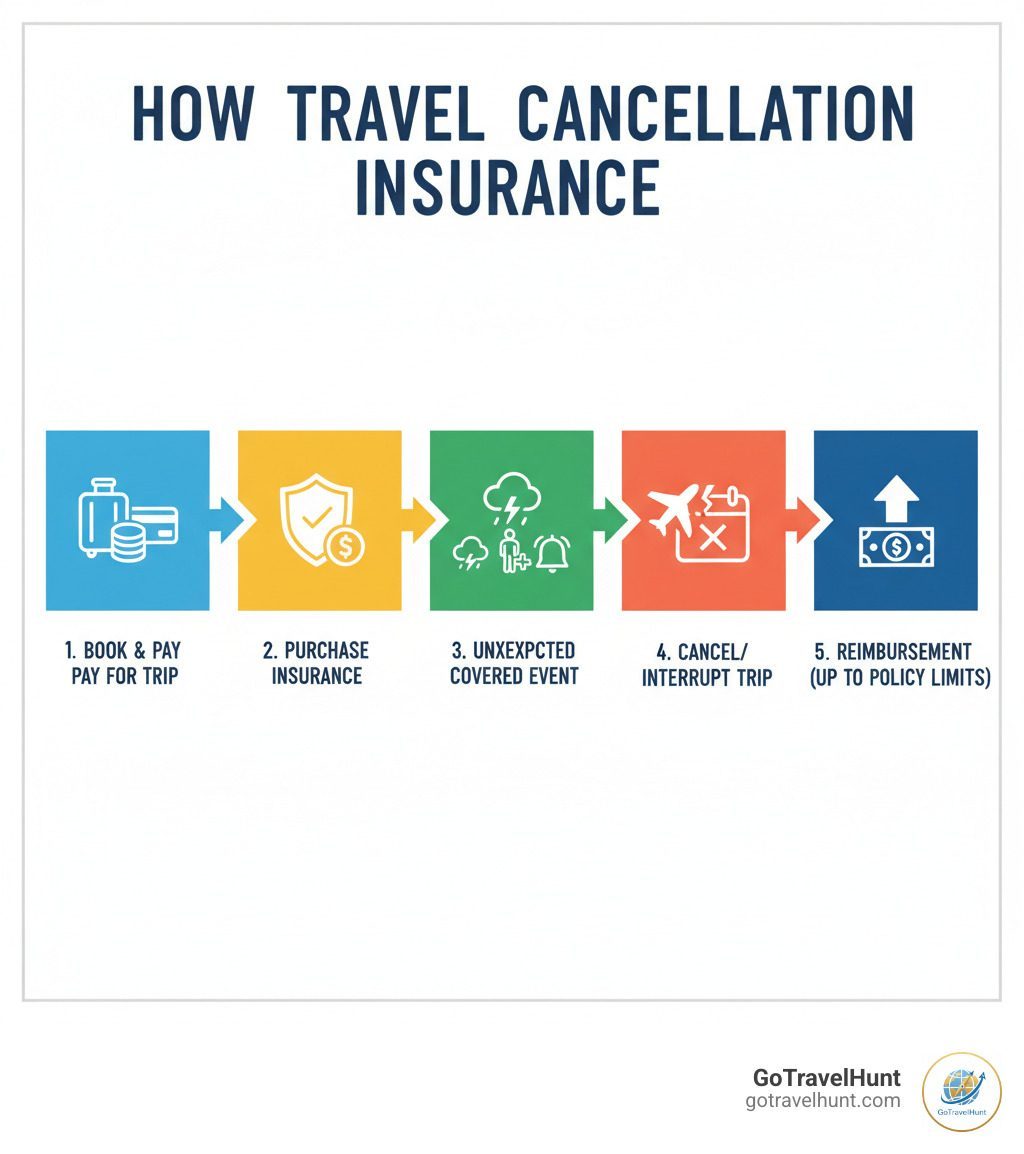
- Trip Cancellation – before you leave. Protects prepaid, non-refundable costs if you have to cancel the trip entirely.
- Trip Interruption – after you’ve started traveling. Kicks in if you have to cut the trip short or miss big chunks of it.
- Travel Delay – when you’re stuck in transit. Covers meals, hotels, and sometimes missed tours after a minimum delay.
All three usually require a covered reason. That phrase is everything when you’re trying to get trip delay and cancellation insurance to actually pay.
Typical covered reasons include:
- Serious illness or injury (you or a covered family member)
- Death in the family
- Involuntary job loss or required military duty
- Home becomes uninhabitable (fire, flood, etc.)
- Recent terrorism at your destination (often with strict time and distance rules)
- Severe weather or natural disaster that directly shuts down your carrier or destination
- Supplier bankruptcy or financial default (with timing conditions)
Now look at what’s missing:
I changed my mind.
Work got busy.
I’m nervous about the news.
The airline canceled for operational reasons, but I could technically still travel later.
If you remember one thing, make it this: the policy doesn’t care that your flight was canceled; it cares why it was canceled and how that reason is defined in the contract. When I compare travel insurance policies, I always open the full wording and read the Trip Cancellation and Trip Interruption sections line by line before I pay.
2. Weather, Strikes, and Meltdowns: When Delays Actually Pay
Weather and airline chaos are where people get burned the most. You see a storm on the radar and think, At least insurance will cover this.
Maybe. Maybe not.
To avoid the classic travel insurance traps, here’s how I read the fine print for delays and cancellations caused by weather, strikes, or system failures:
Check 1: Is the event actually covered?
In the policy wording, I look for phrases like:
- “Inclement weather that causes complete cessation of services” – usually means the airport or airline has to be effectively shut down, not just delayed.
- “Common carrier mechanical breakdown” – often limited to sudden, unforeseen issues, not long-running problems the airline already knew about.
- “Labor strike” – often only if the strike is unannounced at the time you bought the policy.
If the policy says cessation
or shutdown
, a day of rolling delays might not qualify. Some plans give examples like airport closed for 24 consecutive hours
. That’s the kind of detail I want when I’m trying to understand travel insurance exclusions for delays.
Check 2: What’s the minimum delay?
Travel delay coverage usually kicks in only after a certain number of hours. Common thresholds:
- 6 hours
- 8 hours
- 12 hours
If your policy says 12 hours
and you’re delayed 9, you’re paying those costs yourself. When I’m planning tight connections or complex itineraries, I want a lower threshold. That’s part of how I judge whether a plan is truly affordable travel insurance with good coverage or just cheap on paper.
Check 3: What expenses are actually reimbursed?
Travel delay coverage can be surprisingly generous—or surprisingly useless. I look for:
- Per-day limit (e.g., $150 per day for meals and lodging)
- Total trip limit (e.g., $500 or $1,000 max)
- Whether it covers missed prepaid activities (tours, tickets, excursions)
Some policies will reimburse a missed prepaid tour if the delay is for a covered reason. Others only cover your hotel and dinner while you’re stuck at the airport. I want that spelled out clearly in the travel insurance fine print.
My rule: If I’m booking expensive, non-refundable tours on tight schedules, I won’t buy a policy that’s vague about missed activities.
3. Missed Tours and Non-Refundable Activities: The Silent Money Pit
Flights get all the attention, but the real financial pain often comes from missed tours, tickets, and experiences. Think: a $400 non-refundable cooking class, a $600 dive trip, or a $300 museum tour that sells out months in advance.
Want travel insurance for missed connections and missed activities that actually helps? Here’s how I check whether those are protected:
Step 1: Are your activities even included in “trip cost”?
When you buy a policy, you usually enter your total prepaid, non-refundable trip cost. If you leave out your tours and activities, the insurer may argue they’re not covered. I always:
- Add up flights, hotels, trains, tours, and tickets that are non-refundable.
- Insure the full amount, not just the flights.
Some policies require you to insure 100% of prepaid costs to unlock certain benefits (especially CFAR). Underinsuring can bite you later when you file a claim for missed tour travel insurance coverage.
Step 2: Which benefit would pay for a missed tour?
Missed tours can fall under different sections of the policy:
- Trip Cancellation – if you cancel the whole trip before departure.
- Trip Interruption – if you’re already traveling and miss a chunk of the trip for a covered reason.
- Travel Delay – if a covered delay causes you to miss a prepaid activity.
I look for explicit language like reimbursement of unused, non-refundable, prepaid trip costs
under interruption or delay. If it only mentions additional transportation and lodging
, that’s a red flag for missed tours and a sign of tight travel insurance payout limits.
Step 3: Are there sub-limits hiding in the fine print?
Some policies quietly cap certain categories. For example:
- Maximum per activity or per ticket
- Lower limits for
event tickets
orexcursions
- Daily caps that make long, expensive tours only partially reimbursable
I always scan the Schedule of Benefits and any section labeled “sub-limits” or “special limits”. If I’m planning a big-ticket experience, I want to know exactly how much I’d get back if a delay or illness ruins it—and whether my trip interruption insurance for tours is actually worth anything.
4. CFAR: The Only Way to Cancel for Your Own Reasons (But Read This Twice)
If you want the freedom to cancel because you’re uneasy about the news, your partner can’t get time off, or you just don’t feel like going anymore, you’re looking for Cancel For Any Reason (CFAR) coverage.
CFAR is the closest thing to real flexibility in travel insurance, but it comes with strings. I treat CFAR like a contract with a timer and a checklist.
Typical CFAR rules you can’t ignore
Most CFAR add-ons require that you:
- Buy the policy within a short window of your first trip payment (often 10–21 days).
- Insure 100% of your prepaid, non-refundable costs.
- Cancel at least 48 hours before your scheduled departure.
- Accept that you’ll only get back 50–75% of your trip cost, not 100%.
Miss any of those conditions and CFAR might as well not exist. The policy will revert to standard covered reasons only, and you’re back to the usual travel insurance fine print explained the hard way.
When CFAR is worth the extra cost
I consider CFAR when:
- The trip is expensive and heavily non-refundable.
- There’s a high chance of
soft
reasons to cancel (relationship issues, work volatility, political uncertainty, evolving health concerns). - I’m booking far in advance and the world feels unpredictable (which is most of the time now).
But I also do the math. If CFAR adds, say, 40–50% to the premium and only reimburses 75% of costs, I ask myself: Am I really likely to cancel for a non-covered reason?
If the answer is probably not
, I skip it and put that money toward stronger standard coverage or a better cost of trip cancellation insurance elsewhere.
5. The Claims Trap: Documentation or It Didn’t Happen
Most denied claims aren’t about the event itself. They’re about paperwork. Insurers live and die by documentation, and they expect you to play by their rules.
When I read a policy, I always find the “How to File a Claim” or “Claims Procedure” section and look for traps like:
- Strict deadlines – e.g.,
notify us within 24 hours
orsubmit documentation within 20 days
. - Original receipts only – not screenshots or bank statements.
- Pre-authorization – especially for medical treatment or evacuation.
- Vague discretion language – phrases like
at our sole discretion
oras we deem appropriate
.
For delays, cancellations, and missed tours, I assume I’ll need:
- Boarding passes and flight confirmations (original and updated)
- Written proof from the airline of the reason for delay/cancellation
- Receipts for meals, hotels, and transport during the delay
- Invoices and proof of payment for tours and activities
- Any refund or credit documentation from airlines, hotels, or tour operators
For illness-related claims, policies often require a doctor’s note that explicitly says you were medically unfit to travel on the departure date, not just that you were sick. That wording matters—and it’s a common reason for denied travel insurance claim outcomes.
My habit: I create a simple “Trip Docs” folder (cloud + email) and drop everything in as I go—receipts, confirmations, screenshots of airline messages. When something goes wrong, I also take photos of airport screens and keep any paper vouchers. It feels obsessive until a claim gets paid quickly and you realize how many common travel insurance claim mistakes you just avoided.

6. Overlap and Gaps: Don’t Pay Twice, Don’t Assume You’re Covered
Before I buy any standalone travel insurance, I map out what I already have. Otherwise, I’m either overpaying or leaving a big hole in my coverage.
What I check first
- Credit cards – Many premium cards include trip cancellation, interruption, and delay coverage if you pay for the trip with that card. I read their guide to benefits carefully and compare it to standalone policies.
- Airline and hotel policies – Flexible fares, vouchers, and rebooking rules can sometimes make separate cancellation coverage less critical.
- Health insurance – Does it cover emergencies abroad? What about evacuation? Many U.S. plans don’t.
- Homeowners/renters insurance – Sometimes covers baggage or personal items, even when you’re traveling.
Then I look at what’s missing:
- Medical care abroad and emergency evacuation
- Coverage for non-refundable tours and activities
- Higher limits for delays and interruptions
- CFAR flexibility if I really need it
My goal is simple: use existing protections where they’re strong, and buy a policy that fills the real gaps, not just duplicates what I already have. That’s how I compare travel insurance policies without getting lost in marketing language.

7. A 10-Minute Fine-Print Checklist Before You Buy
You don’t need to read every word of a 40-page policy. But if you want travel insurance that actually pays out, you do need to read the right parts. Here’s the quick pass I use before I ever click purchase
:
- Schedule of Benefits
Check the limits for trip cancellation, interruption, delay, baggage, medical, and evacuation. Do they match your trip cost and risk? Pay attention to the cost of trip cancellation insurance versus what it would actually reimburse. - Covered Reasons
Read the full list for cancellation, interruption, and delay. Does it clearly cover the scenarios you’re most worried about—weather, illness, strikes, missed connections? - Exclusions
Look for pre-existing conditions, high-risk activities, known events, pandemics, and destination exclusions. Anything that obviously applies to you? This is where many travel insurance traps to avoid are hiding. - Definitions
Pay attention to how they definepre-existing condition
,family member
,inclement weather
,financial default
, andcommon carrier
. Reading travel insurance policy wording here saves a lot of pain later. - Claims Process
Note deadlines, required documents, and any pre-authorization rules. Ask yourself:Will I realistically be able to follow these if I’m stressed and tired?
- Time-Sensitive Benefits
If you care about CFAR or pre-existing condition waivers, confirm the purchase window and requirements. Miss the window and those benefits vanish.
If anything feels vague or too good to be true, I either:
- Call or chat with the insurer and ask them to point me to the exact clause, or
- Pick a different policy that spells things out more clearly.
Travel insurance isn’t about trusting the marketing. It’s about understanding the contract. Once you start reading it that way, you’ll run into fewer nasty surprises—and you’ll have a much better chance of getting your claim paid when your trip doesn’t go to plan.