Choosing the United States: Why Rule Change Shock Matters More Than You Think
When people ask why so many immigrants choose the United States, the usual answers are clear: higher wages, famous universities, family already there, and relative safety. But under all those pull factors sits a quieter risk: immigration rule change shock.
Rule change shock happens when a government suddenly tightens or reinterprets immigration rules after you have already invested money, time, and emotional energy into one path. In the U.S., this is not just theory. In recent years, we have seen sudden shifts in student visa checks, work visa processing, and travel bans that hit certain nationalities and categories.
This article is a Destination-focused analytical guide. Instead of listing tourist spots, it explains how the U.S. behaves as a destination when policies come under stress. I want to help you decide whether, when, and how to pursue U.S. entry (study, work, or family) while managing the risk that rules change halfway through your journey.
We will focus on three main decision tensions:
- Which main route (work, school, family, safety, diversity) best balances opportunity and rule-change risk for you.
- How visa refusal vs rejection can affect your future trips and long-term plans.
- How to build flexibility into your plan so that a sudden rule change hurts less.
Decision 1: Choosing Your Primary Route – Work, Study, Family, Safety, or Diversity?
U.S. immigration runs through five main legal channels: work, school, family, safety (refugees/asylum), and diversity. Each one offers different benefits and a different level of exposure to rule change shock.
From a decision-intelligence point of view, you are not just choosing a visa. You are choosing a risk profile and a timeline. The same pull factors that draw people to the U.S. also shape which route is realistic for you.
How the main routes differ in stability and risk
| Route | Main pull | Typical status | Rule-change exposure | Who it suits |
| Work | Higher wages, career growth | Mostly temporary (e.g., H-1B, seasonal) | High: caps, policy shifts, employer behavior | Skilled workers, in-demand occupations |
| Study | Education, future earnings | Temporary (F-1, J-1) | High: visa scrutiny, post-study work rules | Students, especially from Asia |
| Family | Reunification, support networks | Often leads to permanent residency | Medium: backlogs, category changes | Those with U.S. citizen/PR relatives |
| Safety | Protection from persecution | Refugee/asylee, then possible PR | High: political mood, enforcement | Those with credible fear claims |
| Diversity | Lottery-based opportunity | Direct path to PR if selected | Very high: program can be cut or altered | Nationals of eligible countries |
Why work and study routes carry more rule-change shock
Work has been the main reason for authorized immigration since around 2006. For some nationalities, especially China and India, school sometimes overtakes work. That popularity brings both opportunity and vulnerability.
- Work routes depend on employer sponsorship, annual caps, and changing definitions of “specialty occupation” or “essential worker.” A policy shift can suddenly make a job category that once worked much harder to sponsor.
- Study routes are sensitive to visa interview standards, security concerns, and geopolitical tensions. For example, flows of Chinese students have dropped when relations and visa policies tightened, even though demand for U.S. education stayed strong.
Family-based routes are usually more stable in principle. But they face long backlogs and category limits. Safety and diversity routes are very exposed to political mood. Authorities can expand, restrict, or slow them down through administration without changing the law itself.
Decision trade-off: maximize opportunity vs minimize rule-change risk
When you choose your primary route, you balance:
- Speed vs predictability: Work and study can move faster but face more sudden policy shifts. Family is slower but often more predictable once you are in the queue.
- Control vs dependence: Work routes depend heavily on employer behavior. Study routes depend on school policies and funding. Family routes depend on your relative’s status and income. The more third parties involved, the more vulnerable you are to rule changes that hit them.
- Temporary vs permanent: Many work and study visas are clearly temporary. They can be steps toward permanent residency, but that step is not guaranteed and rule changes can block it.
Practical implication: If you have more than one possible route (for example, a U.S. citizen spouse and a potential employer sponsor), the lower rule-change shock path (often family) may be strategically safer, even if the work route looks faster at first.
Decision 2: Work vs Study as an Entry Strategy – Short-Term Access vs Long-Term Security
For many would-be immigrants, especially from Asia, the real question is not “U.S. or not?” but “work first or study first?” Both routes are popular because they match the main reasons people choose the U.S.: higher earnings, better career paths, and access to global networks.
But work and study routes react very differently to rule changes and shape your long-term options in different ways.
Work-first strategy: advantages and vulnerabilities
Advantages:
- Immediate income in U.S. dollars, often far above wages at home.
- Direct entry into the U.S. labor market, which can support later sponsorship for permanent residency.
- A clearer link between your skills and your immigration status.
Vulnerabilities to rule change shock:
- Caps and lotteries: Some work visas have strict numerical caps. A policy change can tighten eligibility or change selection methods, making outcomes more random.
- Employer dependence: If rules change and your employer cannot or does not want to sponsor you anymore, your status may be at risk even if you perform well.
- Sector-specific shifts: Policy can target certain industries (for example, tech, agriculture, healthcare), changing which occupations are favored or closely checked.
Study-first strategy: advantages and vulnerabilities
Advantages:
- Access to U.S. education, which can raise your earning power worldwide, even if you do not stay in the U.S.
- Time to build networks, improve English, and learn how the U.S. labor market works.
- In some cases, post-study work options that act as a bridge to longer-term status.
Vulnerabilities to rule change shock:
- Visa scrutiny: Consular officers can tighten standards for proving non-immigrant intent or financial capacity. This can lead to more refusals for some nationalities.
- Post-study work uncertainty: Rules around practical training or post-study work can change. This affects your chance to gain U.S. work experience after graduation.
- Geopolitical risk: Tensions between the U.S. and your home country can bring targeted limits on certain fields of study or research ties.
Decision trade-off: front-loading cost vs front-loading risk
Study-first strategies usually front-load financial cost (tuition and living expenses) in exchange for a possibly smoother long-term path. Work-first strategies front-load regulatory risk (caps, employer dependence) while bringing in income sooner.
Because we do not have precise cost data by route, treat this as a structural comparison, not a budget. The key questions are:
- If a rule change cuts off my post-study work option, will the degree still be worth it?
- If a rule change tightens work visa criteria, do I have a backup plan in another country or through remote work?
Practical implication: If your main goal is long-term settlement in the U.S., study-first can look attractive but is fragile. You should judge the degree’s value even in a scenario where you must leave the U.S. right after graduation.
Decision 3: Understanding Visa Refusal vs Rejection – Impact on Future Trips
Many travelers and would-be immigrants underestimate how one visa decision can echo through their future plans. The difference between visa refusal and rejection matters a lot when you try to manage rule-change shock over time.
Conceptual difference: refusal vs rejection
Different countries and agencies use these terms in different ways, and the U.S. system is complex. Without creating new legal definitions, we can still draw a useful line for decisions.
- Visa refusal usually means your application was not granted under the current rules and evidence. Common reasons include weak documentation, failure to prove ties to your home country, or doubts about your stated purpose.
- Visa rejection often means your application was not accepted or processed to completion. This can be due to technical issues (incomplete forms, missing fees) or ineligibility that blocks further review.
In both cases, you do not get the visa. The key decision question is: how does each outcome affect your future trips and applications?
How refusals and rejections shape your risk profile
For future planning, the main differences are:
- Signal to future officers: A prior refusal can signal that a previous officer had concerns about your eligibility or intent. Future officers may look at your case more closely, especially if your situation has not changed.
- Correctability: Some rejections (for example, missing documents) may be easier to fix in a new application than refusals based on deeper concerns, such as suspected immigrant intent on a short-term visa.
- Interaction with rule changes: If rules tighten after your refusal, stricter standards plus your history can make approval harder. If rules loosen, a well-prepared new application may overcome the earlier decision.
Decision trade-off: apply early vs apply when your case is strong
Many applicants face a timing dilemma.
- Apply early, with weaker documents or less stable circumstances, to try to “get in before rules change.”
- Wait until your case is stronger (better finances, clearer travel history, more stable employment), even if that means facing a stricter future environment.
Because a refusal can increase scrutiny later, applying too early can hurt you. But waiting too long can expose you to new restrictions that did not exist before.
Practical implication: Treat each application as part of a long-term record. Before you apply, ask yourself: “If this is refused, will it seriously damage my chances for the route I care about most?” If yes, focus on strengthening your profile first instead of racing against possible rule changes.
Decision 4: Building a Shock-Resilient Plan – Diversifying Routes and Destinations
Because U.S. immigration rules can change fast, a robust plan treats the United States as one option in a wider strategy, not the only path. This matters even more if your main motivation is economic opportunity rather than a specific family tie.
Why diversification matters for U.S.-focused plans
Research shows that immigration flows react strongly to policy tightening and geopolitical tensions. When student visa policies or safety perceptions shift, flows from affected countries can drop even if demand stays high. This means your personal plan is exposed to several kinds of shocks.
- Country-specific shocks: New restrictions that target your nationality or region.
- Category-specific shocks: Changes that hit students, certain work categories, or family preferences.
- Systemic shocks: Broad policy shifts that slow processing or raise refusal rates across the board.
Practical diversification strategies
Without using specific numbers or programs, we can outline structural strategies that lower your exposure to U.S. rule-change shock.
- Multi-country applications: Apply to universities or employers in more than one country. If U.S. rules tighten, you still have other options.
- Multi-route thinking: If you have possible family, work, and study routes, treat them as parallel options, not just a list of hopes. For example, you might pursue a family-based petition while also building a career profile that could support future work sponsorship.
- Portable skills and credentials: Choose degrees, certificates, or work experience that are valuable in several countries, not only in the U.S. This lowers the cost of a U.S.-specific rule change.
- Financial buffers: Because we lack precise cost data, assume any U.S. plan needs a buffer for delays, repeat applications, or sudden policy-driven expenses, such as extra travel for interviews.
Decision trade-off: focus vs flexibility
Focusing hard on the U.S. can raise your chances in that one system. You might get better test scores, build targeted networks, or gain specialized skills. But this focus also makes you more vulnerable if rules turn against you.
Flexibility—through multiple destinations, routes, and portable skills—reduces that vulnerability but may weaken your U.S.-specific edge.
Practical implication: If a failed U.S. plan would seriously disrupt your life, put flexibility first. If you can absorb a failed attempt without major damage, a more focused U.S. strategy may be acceptable.
Risk and Uncertainty: How Policy Whiplash Can Hit Different Groups
Rule change shock does not hit everyone in the same way. One policy shift can be a small hassle for one group and a major crisis for another. Knowing where you fit helps you set a realistic risk level.
Segmented risk by origin and route
Research suggests that:
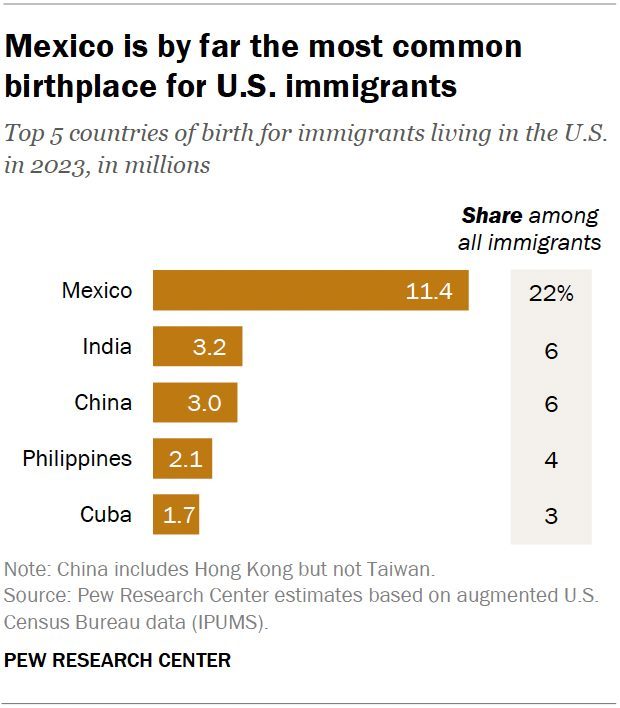
- Mexico dominates work-based immigration, especially in sectors like agriculture and construction.
- Asia, particularly China and India, dominates school-based immigration and a large share of family-based immigration.
This pattern means:
- Work-focused rule changes in low-wage sectors may hit Mexican and Central American workers hardest.
- Student visa or research-related changes may hit Chinese and Indian nationals hardest.
- Family-based backlog or category adjustments may hit countries with high demand for reunification visas.
Edge cases and high-uncertainty scenarios
Some situations are especially exposed to rule change shock.
- Mid-course students: Students already in a degree program when post-study work rules change, leaving them with fewer options than they expected when they enrolled.
- Workers in transition: People moving from one temporary status to another (for example, from study-related work to a longer-term work visa) when eligibility criteria tighten.
- Mixed-status families: Families where some members are citizens or permanent residents and others are on temporary visas. They are vulnerable to changes that affect only part of the household.
The U.S. system is administratively fragmented. The State Department handles visas, while the Department of Homeland Security handles many status decisions. Rule changes can appear in one part of the system before others adjust. This can create temporary contradictions or gaps that are hard for individuals to navigate.
Managing uncertainty without overreacting
You need to see these risks clearly, but overreacting can also cost you. Constantly changing plans because of every rumor or proposal can waste time and money.
Instead, focus on:
- Structural trends: Long-term patterns, such as steady demand for certain skills or ongoing political debates about specific categories.
- Official changes: Rules that are actually in force, not just discussed.
- Reversibility: Some changes are easier to reverse than others. Administrative slowdowns, for example, can sometimes be undone faster than legal caps.
Practical implication: Treat U.S. immigration as a moving target. Build plans that can handle delays and partial failures. Avoid committing resources you cannot afford to lose based on the idea that current rules will stay the same.
Putting It All Together: A Decision Framework for U.S. Immigration Rule Change Risk
To decide realistically about the United States as your destination, you need a simple framework that links your motivations, your route options, and your risk tolerance.
Step 1: Clarify your primary motivation
- If your main goal is economic opportunity, ask whether similar wage gains exist in other countries with more stable or clearer rules.
- If your main goal is education, judge whether the degree’s value justifies the cost even if you must leave the U.S. right after graduation.
- If your main goal is family reunification, map the exact categories and backlogs that apply to your case.
- If your main goal is safety, understand that policy and enforcement changes can strongly affect timelines and outcomes.
Step 2: Map your realistic routes
List all routes that are realistically open to you: work, study, family, safety, diversity. For each one, note:
- Whether it is mainly temporary or potentially permanent.
- How dependent it is on third parties (employers, schools, relatives).
- How exposed it is to political and policy shifts that affect your nationality or sector.
Step 3: Assess your tolerance for rule-change shock
Ask yourself:
- How much time and money can I afford to lose if rules change against me?
- How would a refusal or rejection affect my future plans, including options outside the U.S.?
- Do I have emotional and financial support if my first attempt fails?
Step 4: Choose a primary route and at least one backup
Based on your answers:
- If you have low risk tolerance, prioritize more stable routes (often family-based) and keep at least one non-U.S. option.
- If you have moderate risk tolerance, a study-first or work-first strategy may work, but only with clear backup plans and portable skills.
- If you have high risk tolerance, you may choose competitive or politically sensitive categories, but you should do this knowing that rules can change mid-process.
Step 5: Treat every application as part of a long-term record
Because visa refusal vs rejection can shape future trips, do not treat each application as a one-time bet. Instead:
- Apply only when your case is as strong as you can reasonably make it.
- Document changes in your situation between applications (better finances, stronger ties, improved qualifications).
- Assume that future officers may review your history and ask what has changed.
If you see the United States as a high-opportunity but high-volatility destination, you can make clearer decisions about whether and how to pursue it. The goal is not to remove risk—that is impossible—but to understand where it comes from, how it interacts with your chosen route, and how to design a plan that can survive the shocks that will come.