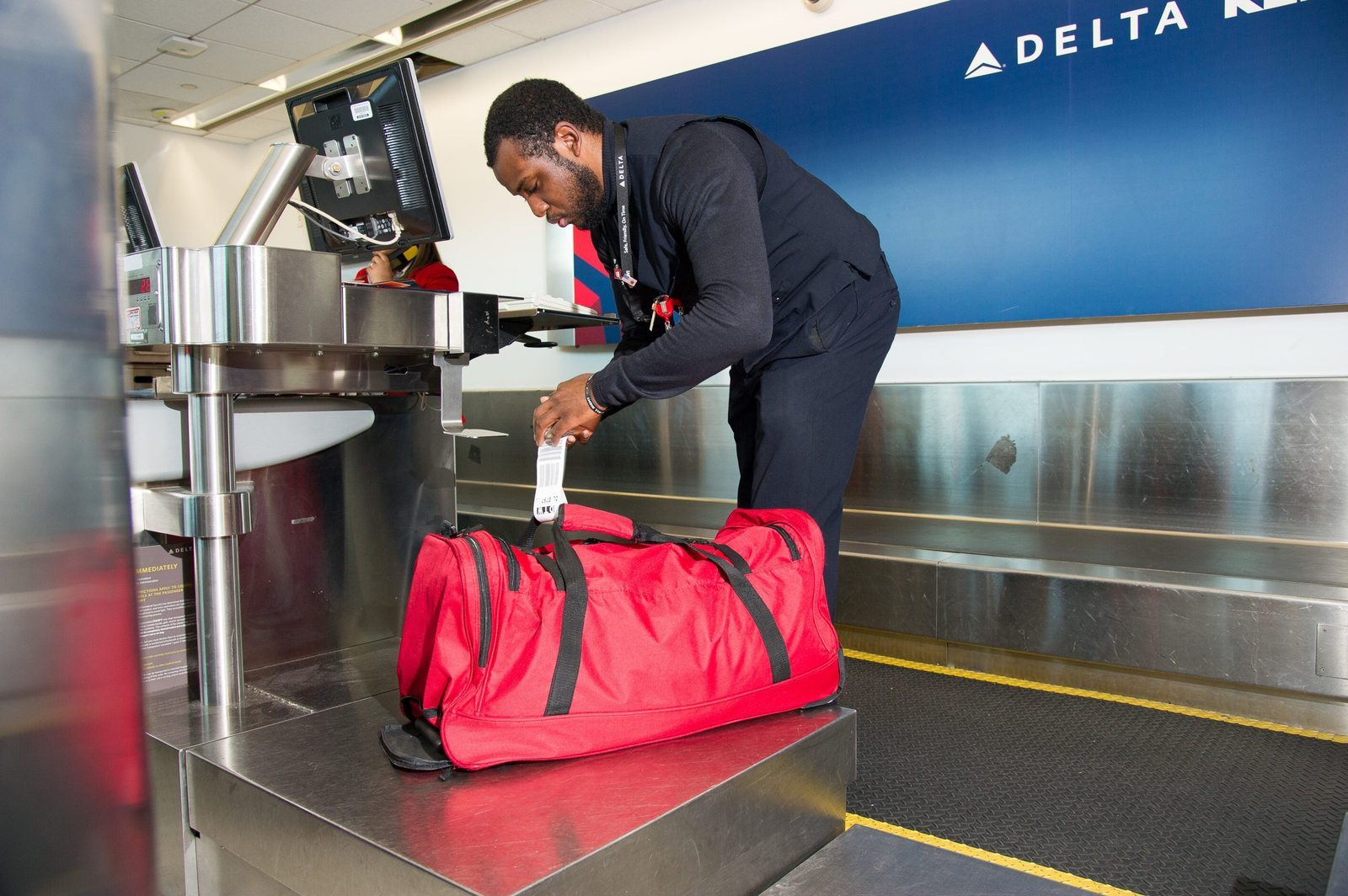
If an airline offers to cover your checked bag for a few thousand miles, it feels painless. No card swipe, no $30 charge, just a quick tap and you’re done.
But here’s the question that always nags at me:
Am I trading a $30 bag fee for a $300 future flight?
This guide walks through when it actually makes sense to use miles for baggage fees and when you’re better off paying cash and saving those miles for flights. Think of it as a simple strategy to optimize your airline miles redemptions instead of burning them on low-value perks.
1. What Are Your Miles Really Worth?
Before you decide whether to use miles for baggage fees or flights, you need a rough value in mind. Without that, every redemption feels fine, even when it isn’t.
Here’s the basic framework I use for the value of airline miles:
- Economy award flights: often around 1.2–1.6 cents per mile, sometimes more on the right routes (source).
- Long-haul premium cabins: can reach 2–3+ cents per mile when you find good partner awards.
- Non-flight redemptions (checked bags, gift cards, Wi‑Fi, etc.): usually in the 0.3–1.0 cents per mile range.
Now compare that to what airlines offer when you redeem miles for checked bags:
- Delta: 3,000 SkyMiles to cover a first checked bag that typically costs about $30 (source). That’s roughly 1 cent per mile.
- United: also lets you use MileagePlus miles for checked bags on some U.S. itineraries, usually at a similar value (source).
So when you redeem miles for bags, the value of airline miles for checked bags is often about half of what you could get on a solid award flight. That’s the trade-off at the heart of the miles for bags vs flights decision.
Quick rule of thumb: if you can regularly get around 1.5–2+ cents per mile on flights, then using miles at ~1 cent per mile for baggage charges is like giving yourself a discount on your own points.
2. The Baggage Redemption Trap: Why Airlines Want You to Do It
Airlines love when you use miles for low-value redemptions. It quietly lowers their liability and feels “free” to you.
Take Delta. You can redeem 3,000 SkyMiles for your first checked bag during check-in on the app, website, or kiosk (source). It’s smooth, convenient, and increasingly available across U.S. airports.
But look at what’s really happening when you use miles for baggage fees instead of flights:
- You’re giving up 3,000 miles that could be part of a premium cabin or partner award worth 2–3+ cents per mile.
- In return, you’re getting about $30 in value — roughly 1 cent per mile, sometimes less.
- On a family trip for 4, that’s 12,000 miles for bags on one itinerary. On a group of 9, it could be 27,000 miles just to avoid baggage fees.
United plays a similar game. You can prepay bags online, sometimes with miles, and it’s framed as a way to save money and time
(source). The convenience is real. The value usually isn’t.
Why this matters: every time you accept a 1-cent-per-mile redemption, you’re quietly lowering the average value of your entire mileage balance. Over time, that adds up.
So in my own frequent flyer miles redemption strategy, baggage redemptions are a last resort tool, not a default habit.
3. When Using Miles for Bags Actually Makes Sense
Even though the math is usually weak, there are times when redeeming miles for baggage charges is perfectly reasonable. The key is to be honest about your situation, not just the theoretical maximum value of your miles.
Here’s when I’d seriously consider using miles instead of cash for bags.
Scenario A: You Have a Small, Orphan Mileage Balance
If you’ve got 2,000–8,000 miles sitting in an account you rarely use, and you’re not likely to top it up with transfers or future flights, those miles are at risk of becoming dead weight.
- Redeeming 3,000 Delta miles for a bag you’d pay $30 for anyway? That’s fine if you’ll never reach a meaningful award level.
- Same logic with United or any other airline that lets you use miles for bags.
In that case, the cost comparison of miles vs cash for bags changes. You’re not comparing 1 cent vs 2 cents per mile. You’re comparing 1 cent per mile vs 0, because you might never use those miles for an award flight.
Scenario B: You’re Exiting an Airline Ecosystem
Maybe you’re moving away from a Delta or United hub, changing jobs, or shifting loyalty to another alliance. If you don’t plan to build that mileage balance again, it can be rational to burn down the account on bags, seat fees, or whatever is available.
In that situation, I’d rather get mediocre value now than watch miles devalue or expire later. It’s not the best use of airline miles, but it’s better than nothing.
Scenario C: You Need to Protect Cash, Right Now
If your cash flow is tight, the math changes again. I’ve been there. In that moment, the “optimal” move on paper might not be the right move for your wallet.
- Use miles for bags to keep $30–$60 in your pocket today.
- Accept that you’re trading some long-term value for short-term breathing room.
Is it ideal from a points-nerd perspective? No. Can it still be the smartest real-world choice? Absolutely.
4. When You Should Almost Never Use Miles for Bags
Most of the time, I avoid using miles to pay baggage fees. If you care about the best use of airline miles, this is where the award flight vs baggage redemption trade-off becomes obvious.
Case 1: You Have a Meaningful Balance and Real Travel Goals
If you’re sitting on tens of thousands of miles and you actually plan to travel, you’re almost always better off doing this:
- Pay the $30–$40 bag fee in cash.
- Save miles for flights where you can get 1.5–3+ cents per mile.
For example, AwardWallet estimates Delta SkyMiles can be worth around 2.18 cents per mile on average, and about 3.2 cents per mile on long-haul premium cabins (source). Burning those same miles at 1 cent per mile on bags is a big haircut.
If you’re serious about a smart frequent flyer miles redemption strategy, this is where you draw the line.
Case 2: You Have or Can Get Free-Bag Benefits
Before you ever spend miles on bags, ask yourself a few quick questions:
- Do I already get a free checked bag from elite status?
- Does my co-branded credit card cover a bag for me and my travel companions?
- Am I flying an airline like Southwest that includes two free checked bags anyway?
On Delta, for example, some co-branded Amex cards offer a free checked bag, but the Delta SkyMiles Blue Amex does not (source). On United, Premier elites and some premium cabins get complimentary or increased baggage allowances (source).
If you’re eligible for a free bag and still burning miles on baggage, you’re just lighting value on fire. This is one of the most common mistakes using miles to pay for bags.
Case 3: You’re Close to a High-Value Redemption
Picture this: you’re 10,000 miles away from a business-class award you actually want. Using 3,000 miles on a bag now pushes that goal further away for a tiny short-term win.
In that situation, I’d rather:
- Pay the bag fee in cash.
- Protect every mile for that big redemption.
When you’re close to a great award, the trade-off of using miles for bags or flights isn’t even close. Flights win.
5. A Simple Framework: Cash vs. Miles for Bags vs. Flights
When I’m deciding what to do at check-in, I run a quick mental checklist. If you like numbers, you can turn this into your own mini airline miles value calculator for bags and flights.
Step 1: Calculate the Value of the Redemption
Use this basic cents-per-mile formula:
(Cash price – taxes/fees you still pay) ÷ miles used
For a bag:
- Bag fee: $30
- Miles required: 3,000
- Value: $30 ÷ 3,000 = 1.0 cent per mile
For a flight, say a $600 ticket plus $50 in taxes on a 25,000-mile award:
- Value: ($600 – $50) ÷ 25,000 = $550 ÷ 25,000 = 2.2 cents per mile
Many banks and blogs consider around 2 cents per mile a strong redemption (source). Baggage redemptions rarely come close.
Step 2: Check Your Cash Situation
If money is tight, I give more weight to preserving cash, even if the cents-per-mile math isn’t ideal. If money is fine, I focus on maximizing long-term value and saving miles for flights.
This is where the airline baggage fees miles vs money decision becomes personal. The “right” answer depends on your budget as much as the numbers.
Step 3: Look at Your Travel Goals and Flexibility
Ask yourself:
- Do I have a specific trip in mind where miles could unlock a premium cabin or an expensive route?
- Am I flexible enough to hunt for good award space and partner redemptions?
If the answer is yes, treat your miles as strategic assets, not coupons for bags. That mindset alone will improve how you optimize airline miles redemptions.
Step 4: Consider Flexibility and Risk of Devaluation
Miles-based bookings often have better cancellation flexibility than cash tickets, and miles can devalue over time (source).
- Use miles for meaningful trips where flexibility and value both matter.
- Don’t hoard miles forever, but also don’t waste them on the lowest-value options like bags if you have better uses in sight.
6. Airline-Specific Quirks You Should Know
Each airline has its own baggage and mileage rules. If you’re trying to fine-tune your credit card miles for baggage fees and flights, a few details matter.
Delta
- You can use SkyMiles to pay for standard checked bags on most domestic flights during check-in via app, website, or kiosk.
- You cannot use miles for overweight or excess baggage fees (source).
- Some Delta Amex cards offer a free checked bag; the Delta SkyMiles Blue version does not.
United
- United’s bag fee calculator shows what you’ll pay and sometimes lets you prepay bags with miles on U.S. itineraries (source).
- Premier elites and some premium cabins get free or extra bags.
- If the first operating carrier on your itinerary changes to a non-United airline, that other airline’s baggage rules apply.
Other Carriers
- Southwest: two free checked bags on all fares. Using miles for bags isn’t even a question here.
- Ultra-low-cost carriers (Spirit, Frontier, etc.): they charge for almost everything, including carry-ons. Here, the best strategy is often packing smarter (personal item only) rather than trying to pay with miles.
One more practical tip: many airlines treat a backpack that fits under the seat as a personal item. If you can travel with just that, you avoid the baggage decision entirely.
7. How to Get Free (or Cheaper) Bags Without Burning Miles
If you hate paying bag fees but also hate wasting miles, there’s a middle path: reduce or eliminate bag fees without touching your mileage balance.
Here are a few options to consider before you ever use miles for bags:
- Co-branded airline credit cards: Many offer a free checked bag for you and sometimes companions on the same reservation. On Delta and United, this can easily save $60+ per round-trip for a couple.
- Elite status: Even low-tier status often includes at least one free checked bag.
- Cabin choice: Premium cabins (business, first, some premium economy) often include at least one checked bag.
- Pack lighter: Use a personal item or carry-on only when possible, especially on airlines that don’t charge for overhead bags.
These strategies protect your miles for what they’re best at: flights. Pair that with flexible bank points that transfer to multiple partners, and your miles go even further (source).
8. The Bottom Line: A Practical Trade-Off Checklist
Next time you’re staring at the check-in screen and the airline offers to cover your bag for miles, pause for five seconds and run through this checklist:
- What value am I getting?
If it’s around 1 cent per mile for bags and you can get 1.5–2+ cents per mile on flights, lean toward paying cash. - Do I have a real plan for these miles?
If yes, save them for flights. If no, and it’s a small orphan balance, using miles for bags can be fine. - How’s my cash situation?
If you need to protect cash right now, it’s okay to accept a weaker redemption. - Do I already have free-bag benefits?
Status, credit cards, or cabin class might make paying with miles totally unnecessary. - Am I close to a high-value redemption?
If you’re within striking distance of a great award, don’t touch those miles for bags.
If you treat your miles like a currency instead of a coupon book, you’ll find that bags are almost never the best use. But in the right circumstances—small balances, exit strategies, or tight cash—they can still be a deliberate, sensible trade-off.
The key is that you decide, not the check-in screen.