
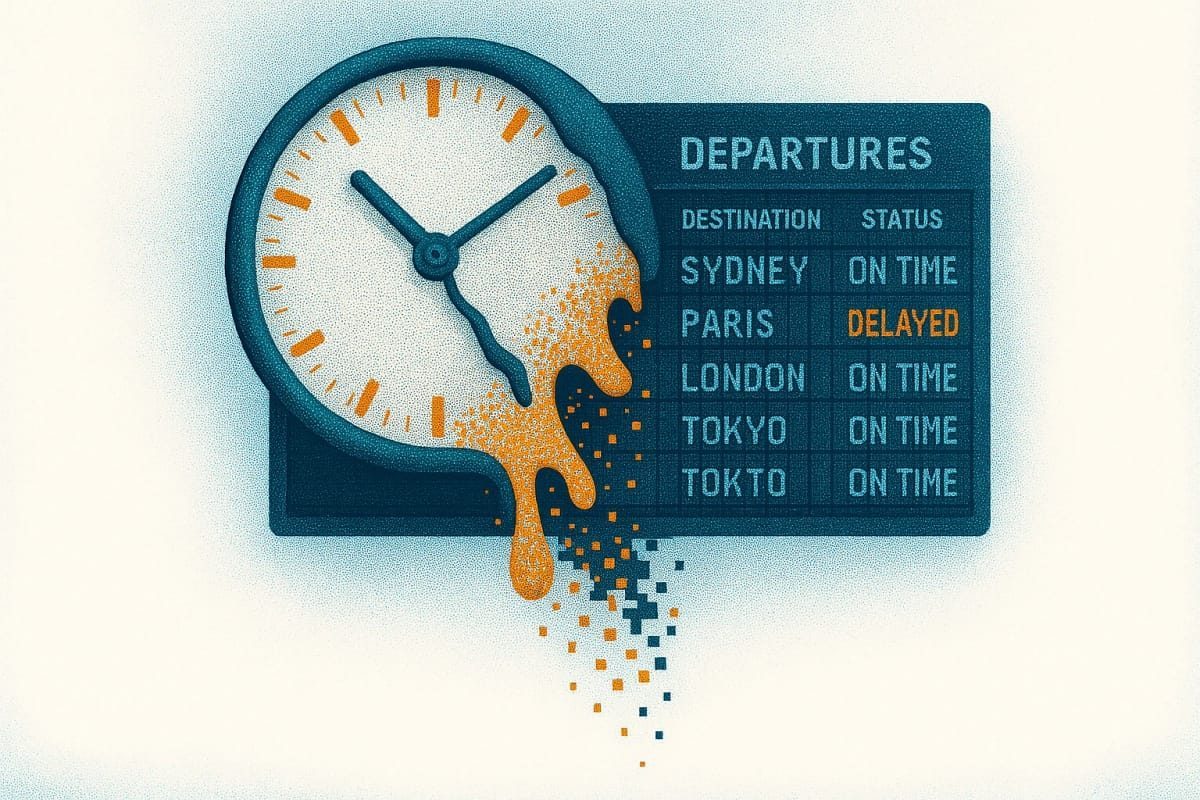
I don’t buy travel insurance for peace of mind. I buy it for math.
Will this policy actually pay when my flight melts down, my tour sails without me, or a storm wipes out day one of my trip? Or am I just tipping the insurance industry?
Let’s walk through the real situations where travel insurance does pay for delays, cancellations, and missed tours – and the quiet traps that kill claims before they ever get approved.
1. The 5-Hour Delay That Pays (and the 5:45 That Doesn’t)
Most travelers assume: If my flight is delayed, I’m covered.
Not quite.
Trip delay coverage is basically a stopwatch with fine print. Three things have to line up:
- Your policy is active before the disruption happens.
- The delay is long enough to hit the policy’s minimum hours.
- The cause is listed as a covered reason in the policy.
Across multiple policies and sources like MilePro and Lamora, I usually see:
- Basic plans: delay must be 10–12 hours.
- Mid-tier plans: around 6 hours.
- Premium plans: sometimes 3–5 hours.
Here’s the painful part: if your policy says 6-hour minimum
and your delay is 5 hours 45 minutes, you get nothing. Even if you spent $200 on food and a day pass at the airport hotel. That’s where the whole travel insurance cost vs payout equation can feel brutal.
When the delay does qualify, you can usually claim:
- Meals and snacks
- Hotel for an overnight delay
- Ground transport (airport–hotel–airport)
- Rebooking fees or change fees
But there are caps. Many policies limit you to around $100–$300 per person, per day, with an overall trip maximum. Business-focused plans often go higher because last-minute city hotels and rideshares add up fast.
How I decide if delay coverage is worth it:
- If the delay threshold is 12 hours and I’m on a short-haul trip, I assume I’ll never see that money.
- For complex itineraries, winter travel, or tight connections, I look for a 3–6 hour trigger. That’s where flight delay travel insurance coverage starts to feel realistic.

2. Covered Reasons vs. Bad Luck: Why the Cause Matters More Than the Delay
Even if you hit the hour threshold, the insurer still wants to know: Why were you delayed?
Most policies only pay for specific covered reasons, such as:
- Severe weather that makes flying unsafe
- Mechanical breakdown of the aircraft
- Air traffic control delays or airport closures
- Crew shortages or strikes (sometimes limited)
- Natural disasters or security events
What’s not covered is just as important:
- You arrived late to the airport.
- You misjudged traffic or security lines.
- You booked a
hero connection
with 35 minutes to change terminals. - You ignored government warnings and traveled anyway.
In those cases, the insurer sees it as your decision, your risk. No payout, no matter how frustrating the outcome.
Some policies, especially those with epidemic endorsements (for example, certain Allianz plans described here), may cover delays caused by denied boarding for suspected contagious illness. But that’s not universal, and it depends heavily on the exact wording in your plan.
My rule: I read the Covered Reasons
section like a contract I’m signing with my future, stressed-out self. If the cause of delay I’m most worried about isn’t listed, I assume I’m on my own.
3. When the Airline Helps – and When Insurance Fills the Gap
In the U.S., airlines are legally required to do less than most travelers think. As MilePro points out, if your flight is canceled or significantly delayed and you decide not to travel, the airline must refund your ticket. That’s it.
For weather or air traffic control issues, airlines often only owe you:
- A seat on the next available flight
- Maybe a meal voucher or hotel, if they feel generous
They’re usually not obligated to cover:
- Your hotel if you’re stuck overnight
- Meals beyond a small voucher
- Lost prepaid tours, show tickets, or excursions
- Extra transport to catch up with a cruise or group tour
This is where travel insurance can actually shine and where you see real travel insurance payout scenarios:
- Trip delay coverage reimburses extra hotel, meals, and local transport during a covered delay.
- Trip interruption coverage can pay to get you to your destination or to rejoin a missed cruise or tour.
- Some plans (like certain Allianz policies) reimburse unused prepaid trip costs if a covered delay makes you miss them.
One interesting twist: some insurers now offer fixed payments for delays. For example, Allianz’s SmartBenefits can pay a flat $100 per person, per day for a covered delay with no receipts, just proof of the delay. It’s not on every plan, but it’s a good example of how affordable travel insurance that actually pays is evolving.
Key point: insurance doesn’t replace airline compensation; it fills the gaps. If the airline already gave you a hotel or meal vouchers, your insurer won’t pay for the same expenses twice.
4. The Missed Tour Problem: When Your Excursions Are Actually Insured
Here’s a scenario I see all the time: someone misses a $300 non-refundable tour because of a flight delay and assumes travel insurance will cover it. Often, it doesn’t – but not for the reason you think.
According to InsureMyTrip, for activities and excursions to be covered, they usually must be:
- Prepaid before you travel
- Non-refundable
- Included in your total insured trip cost when you buy the policy
If you buy a last-minute excursion on the ship or after you arrive, it’s often not covered. If you never added that $300 tour to your insured trip cost, the insurer treats it as if it doesn’t exist.
When you do it right, though, coverage can be powerful. This is where trip cancellation insurance examples and missed tour travel insurance claim stories start to look good:
- Trip cancellation: you get reimbursed if a covered reason (illness, injury, certain disasters) forces you to cancel before departure.
- Trip interruption or delay: you may be reimbursed for missed, prepaid activities if a covered delay or event prevents you from using them.
How I handle excursions:
- When I buy a policy, I include every prepaid, non-refundable activity in the trip cost: tours, show tickets, park passes, cruise excursions.
- If I add a big-ticket activity later, I update the policy (if allowed) so it’s included.

5. Credit Card Coverage vs. Standalone Insurance: Which Actually Pays More?
Many premium credit cards quietly include trip delay coverage. That’s great – but it’s not a full replacement for standalone travel insurance.
From guides like Kudos and others, here’s how I think about it:
Credit card trip delay benefits typically:
- Trigger after a 6–12+ hour delay or an overnight stay.
- Cover necessary expenses like meals, hotels, and transport.
- Have per-trip caps (often $300–$500 per person).
- Require you to pay for the trip with that card.
Standalone or comprehensive travel insurance usually adds:
- Trip cancellation and interruption for covered reasons.
- Coverage for prepaid tours and excursions (if you include them in the insured cost).
- Medical and evacuation coverage abroad.
- More flexible delay triggers (sometimes as low as 3 hours).
In practice, I often use both:
- I let my credit card handle moderate delays and basic expenses.
- I use a travel insurance policy to protect the big stuff: non-refundable trip costs, medical, and the risk of having to abandon or cut short the trip.
And yes, you can sometimes claim from both – as long as you’re not double-dipping for the same expense. If your card covers $300 of a $600 hotel bill, your travel insurance might cover the remaining $300, depending on the policy. That’s where travel insurance vs airline compensation and card benefits really start to overlap.

6. Documentation: The Boring Step That Makes or Breaks Your Claim
Most denied claims I see don’t fail on coverage. They fail on paperwork.
Insurers like Generali openly say that complete documentation is the difference between a quick payout and a long, painful back-and-forth. Their average claim time is about 13 days when everything is in order.
For delays, missed connections, and missed tours, I treat documentation like evidence in a court case:
- Proof of delay: screenshots of airline emails/app notifications, photos of airport boards, written confirmation from the airline stating the cause and duration.
- Receipts: every meal, hotel, taxi, train, and rebooking fee. No receipt often means no reimbursement.
- Proof of prepayment: invoices and confirmations for tours, shows, excursions, and hotels.
- Proof of non-refundability: terms showing you wouldn’t get your money back otherwise.
Then I file the claim as soon as possible. The longer you wait, the easier it is to lose receipts, forget details, or run into policy deadlines. This is one of the big travel insurance mistakes to avoid.
My personal system:
- I keep a dedicated
Trip Docs
folder in my phone’s cloud storage. - Every time something goes wrong, I drop screenshots and photos in there immediately.
- When I get home, the claim practically writes itself.
7. When Travel Insurance Is Actually Worth Buying (and When I Skip It)
So when does travel insurance for delays, cancellations, and missed tours actually make sense? When does the trip interruption insurance cost feel justified?
I’m more likely to buy it when:
- I have high non-refundable costs: cruises, safaris, multi-day tours, expensive excursions.
- I’m traveling during storm seasons or through delay-prone hubs.
- I have tight connections to cruises or tours that are expensive to rejoin.
- I’m traveling with family, where delay costs multiply per person.
I sometimes skip or go minimal when:
- My trip is mostly refundable or booked on points.
- I’m just doing a simple, cheap domestic hop with no prepaid activities.
- My credit card already has strong delay coverage and I’m not worried about medical or big cancellations.
But even then, I try to be realistic. Travel insurance is not a magic refund button. It’s a contract with specific triggers, limits, and exclusions. It pays when:
- The delay is long enough.
- The cause is covered.
- The costs are reasonable and documented.
- The event was unforeseen when you bought the policy.
If you understand those levers, you can stop guessing and start doing the math: What’s the worst realistic scenario on this trip, and how much would it cost me out of pocket? If that number makes you uncomfortable, that’s when travel insurance – used smartly – actually pays. That’s also when reading real travel insurance claim success stories becomes more than just curiosity; it becomes part of your planning.

8. Quick Checklist Before You Buy (or File a Claim)
If you’re about to buy a policy – or you’re already delayed and wondering if it’s worth filing – run through this quick list. It will help you understand how much travel insurance pays for delays in your specific case.
Before you buy:
- What is the minimum delay (in hours) for benefits to kick in?
- Which causes of delay are covered – and which are excluded?
- What are the per-day and total limits for delay expenses?
- Have you included all prepaid, non-refundable tours and activities in your trip cost?
- Does your credit card already cover some of this?
When something goes wrong:
- Get written or screenshot proof of the delay and its cause.
- Save every receipt for extra expenses.
- Contact your insurer’s 24/7 assistance if you’re unsure what’s covered.
- File the claim as soon as you can after the trip.
Travel insurance isn’t about hoping something goes wrong. It’s about knowing, in advance, which disasters you’ve actually outsourced – and which ones you’re still self-insuring. Once you see it that way, the decision to buy (or not) becomes a lot clearer, and you’ll have a better sense of when travel insurance actually pays and when it doesn’t.