I’ve watched students lose entire semesters and professionals miss dream jobs for one simple reason: the visa didn’t arrive in time. Not refused. Just delayed until the opportunity disappeared.
If you’re applying for a study visa or work permit, your real deadline isn’t your first class or first day at work. It’s the day your visa is approved. This guide—and the pre‑submission checklist below—helps you work backwards from that reality so you can avoid visa delays as much as possible.
Use this as your personal visa checklist for workers and students. If you can’t honestly tick off most of these points, you’re taking a bigger risk with your timeline than you think.
1. Are You Starting Early Enough for This Year’s Processing Reality?
Many people still plan using old timelines they found in a random forum post. That’s how a small delay quietly turns into a deferral or a lost job offer.
For 2026, student visa processing in many countries is already running 2–3 weeks slower than in 2025. Some U.S. F‑1 student visas and work visas can take months, especially if there’s extra security screening or a Request for Evidence (RFE).
Here’s the mental model I use when planning a student visa timeline and requirements or a work permit application:
- Students: aim to submit your visa application 12–16 weeks before your program start date, not the old 8‑week rule (source).
- U.S. F‑1 students: add extra buffer for
administrative processing
or security checks, which can add 6–12 weeks for some nationalities and fields (source). - Workers (H‑1B, L‑1, etc.): your biggest risk isn’t just processing time. It’s missing filing windows or RFE deadlines. One missed date can cost you an entire year’s cycle.
Before you start gathering documents, ask yourself:
- What is the current average processing time for my visa type and consulate?
- Am I applying in a peak season (May–August for students, H‑1B cap season for workers)?
- Have I added at least 4–6 weeks of buffer for surprises?
If you don’t know these answers, pause. Your first task is to check official processing times and appointment availability for your consulate, then move your personal deadline earlier. You can’t speed up a system you never planned around.

2. Is Your Timeline Aligned: School/Job, Documents, and Embassy?
Most visa processing delays for students and workers don’t come from one dramatic mistake. They come from small misalignments between three moving parts:
- Your institution or employer (admission, offer letter, I‑20, CAS, CoE, contract).
- Your documents (transcripts, financials, tests, medicals, police checks).
- The embassy/consulate (appointment slots, processing times, policy changes).
Before you submit, check that these three timelines actually work together. Here’s how I break it down in a practical student visa pre submission checklist and work visa application checklist:
- Students – U.S. F‑1
- I‑20 issued and correct (name, SEVIS number, program dates, funding).
- SEVIS fee paid and receipt saved.
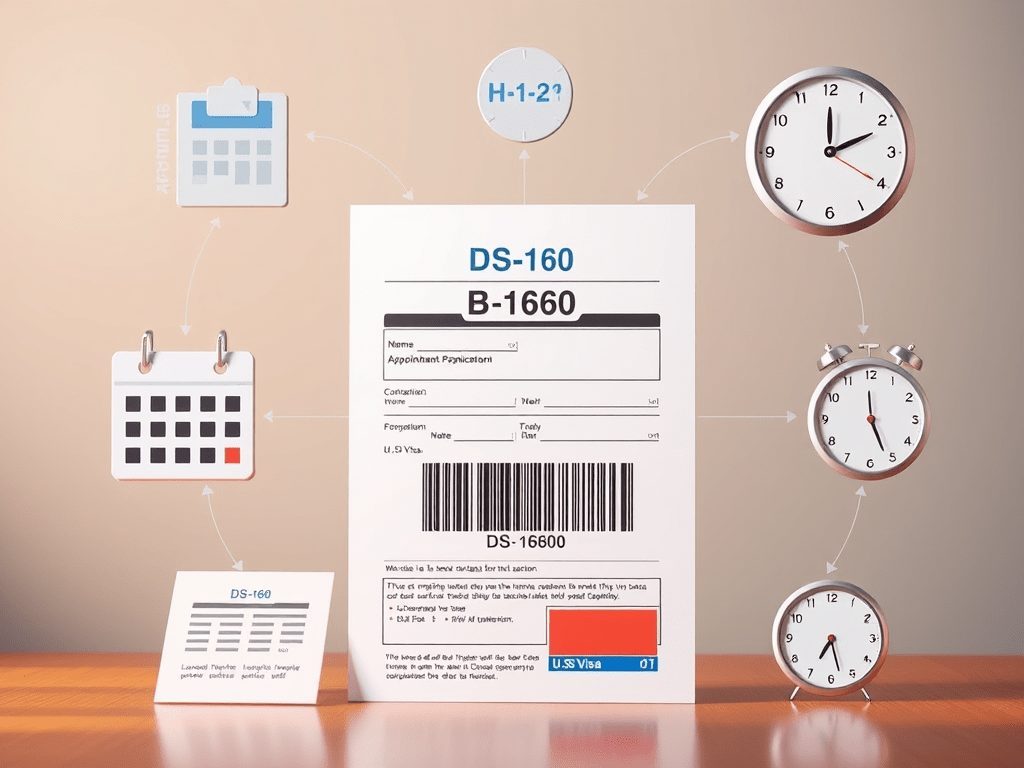
- DS‑160 completed with identical details to passport and I‑20.
- Interview slot booked early enough to allow for delays before your start date.
- Students – UK
- CAS is valid and within the 6‑month window for applying.
- Course start date, CAS, and visa application timing all line up.
- Students – Canada
- Decided between SDS (faster, but requires prepaid tuition + GIC) and regular stream (slower).
- Funds and documents match the stream you’re using.
- Students – Australia
- CoE dates and OSHC insurance dates match exactly. This is a surprisingly common delay trigger.
- Workers – U.S. H‑1B / L‑1
- Employer’s petition (e.g., I‑129) is filed within the correct window.
- Job start date leaves room for RFEs and consular processing.
If any of these dates clash, the consulate can’t fix it for you. You’ll just sit in limbo. Align everything before you hit submit.
3. Are Your Documents Complete, Current, and Consistent?
Most visa application errors to avoid are boring: a missing page, an expired test, a name spelled slightly differently. Boring, but costly.
When I review a file, I look for three things: completeness, validity, and consistency. That’s where many common visa mistakes for students and workers hide.
3.1 Completeness: Are You Actually Sending Everything?
For students, the most commonly forgotten items in a study visa delay prevention plan are:
- Final, unconditional admission letter (not just a conditional offer).
- Full academic records: all transcripts, diplomas, backlog summaries if required.
- Valid English test scores (IELTS/TOEFL/PTE) within the accepted date range.
- Medical reports and Police Clearance Certificate where required.
- Photos that match embassy specifications (size, background, recency).
- Statement of Purpose / Letter of Intent that matches your course and history.
For workers, the usual culprits in a work permit application are:
- Incomplete forms (e.g., missing signatures or unchecked boxes on I‑129).
- Missing degree equivalency evaluations for foreign qualifications.
- Weak or missing job descriptions that don’t prove a specialty occupation.
- Insufficient proof of employer’s ability to pay (tax returns, payroll records).
3.2 Validity: Are Your Documents Still “Fresh”?
Consulates care about dates. A document can be technically correct and still useless if it’s too old by the time someone reviews it.
- Bank statements often must be recent (for example, last 28 days or 3–6 months).
- English tests usually have a 2‑year validity.
- Medical exams and police checks may have strict validity windows.
If you’re applying close to the limit, ask yourself: Will this still be valid if my case is delayed by a month or two?
That simple question can help you avoid visa delays caused by expiring documents.
3.3 Consistency: Do All Details Match Exactly?
This is where many strong applications fall apart. Modern systems auto‑flag mismatches, and that can slow everything down.
- Is your name spelled identically on passport, admission/offer letter, bank statements, and application forms?
- Do course details (name, duration, institution) match across CAS/I‑20/CoE and your visa form?
- Do your stated funds and sponsors match the names on bank statements and letters?
Even small inconsistencies can trigger manual review, which means delays. In some systems, it can even lead to automatic refusal.

4. Is Your Financial Story Strong, Verifiable, and Boring?
Money is one of the biggest work visa processing delay reasons and a major issue in almost every international student visa guide. Consulates aren’t just checking if you have enough funds. They’re checking whether your financial story makes sense.
For students, my financial checklist looks like this:
- Amount: funds clearly cover tuition + living costs for the required period (often 1 year).
- Format: statements, fixed deposits, GICs, or sponsor letters follow the exact embassy rules.
- History: bank statements show a stable pattern, not sudden unexplained large deposits.
- Ownership: the account holder matches the declared sponsor(s).
- Recency: documents are within the required date range at the time of submission.
For workers, the focus shifts:
- Employer can prove ability to pay the prevailing wage (tax returns, audited accounts, payroll).
- Job offer and salary are consistent with market norms and the petition.
One more thing: do not use fake or altered financial documents. Many consulates now verify bank statements and sponsor letters through third‑party checks. If they find fraud, you’re looking at immediate refusal and possibly a multi‑year ban from that country.
Your goal? A financial story that is strong, simple, and honestly a bit boring. No drama. No surprises. That’s how you speed up visa processing instead of inviting extra scrutiny.
5. Have You Prepared for the Interview (or RFE) You Hope You Won’t Get?
Many applicants treat the interview as a formality. It isn’t. For workers, the equivalent is the RFE (Request for Evidence). Both are moments where weak preparation turns into long delays—or a denial.
5.1 Students: The Three Questions You Must Nail
In 2026, U.S. student visa interviews are heavily focused on three areas:
- Why this program and institution? Can you explain your choice logically, not just emotionally?
- How are you funding your studies? Do your answers match your documents exactly?
- What are your post‑graduation plans? Are they realistic and clearly temporary?
Implying that you plan to stay permanently or work full‑time long‑term is a common reason for F‑1 denials. You’re applying for a non‑immigrant visa; your answers need to reflect that.
For other countries, the themes are similar: genuine student intent, credible finances, and a clear, coherent plan that matches your paperwork. This is where a good international student visa guide or advisor can help you practice.
5.2 Workers: Are You Ready for an RFE?
For U.S. work visas, an RFE isn’t always a bad sign. But it is a test of how organized you were from the start—and a common source of work visa processing delay reasons.
Before filing, I ask:
- If USCIS questions the specialty occupation, do we already have detailed job duties and industry evidence ready?
- If they doubt the employer’s ability to pay, do we have strong financials prepared?
- Do we have a system to track RFE deadlines so we don’t miss them?
Missing an RFE deadline usually means automatic denial. That’s not a delay; that’s a reset of your entire work permit application.

6. Are You Using Official Checklists and Tracking Tools, Not Just Advice?
Guides like this are useful, but consulates don’t approve visas based on advice. They approve based on their own rules.
Before submission, I always do two things to avoid the most common visa mistakes for students and workers:
- Download the official checklist from the embassy or visa center website for my exact visa type and country.
- Use their tracking tools once the application is in.
Why this matters:
- Official checklists often include small but critical items (photo specs, document order, specific forms) that generic guides miss.
- Tracking tools (UKVI app, VFS/USCIS portals, etc.) help you spot abnormal delays early, so you can follow up instead of just waiting.
If possible, get a second pair of eyes on your file: a school advisor, HR/immigration team, or a reputable consultant. Not to outsource your thinking, but to catch the tiny errors that cause big delays.
7. Quick Pre‑Submission Checklist You Can Actually Use
Here’s a condensed visa checklist for workers and students you can run through right before you submit or attend your appointment. Think of it as your last line of defense against avoidable delays.
- Timing
- I’m applying at least 12–16 weeks before my start date (students) or with enough buffer for RFEs and consular processing (workers).
- I’ve checked current processing times and interview availability for my consulate.
- Alignment
- My admission/offer letter, I‑20/CAS/CoE or petition, and visa application dates all match.
- Insurance (where required) matches my course or employment dates.
- Documents
- All required documents are present, valid, and in the correct format.
- Names, dates, and details match exactly across all documents.
- Financial documents are recent, sufficient, and logically explained.
- Credibility
- My study or work story is clear: why this course/job, why this country, what next.
- I can explain my finances and plans without contradicting my paperwork.
- Compliance
- I’ve followed the official embassy checklist for my visa type.
- I know how to track my application and what to do if it’s delayed.
If you can tick most of these boxes, you’ve done a lot to avoid visa delays and reduce the chance of having to fix mistakes on visa applications later. Visa systems aren’t perfect—backlogs and policy changes happen—but a well‑timed, well‑documented, and internally consistent application is still your best defense against the kind of delay that quietly kills opportunities.