I used to think long-term travel was all about cheap flights and hostel deals. Then I checked my bank statements. Quietly, in the background, fees and bad exchange rates were eating the equivalent of weeks of travel every year.
If you’re planning to travel for months (or years), your banking setup is not a boring side detail. It’s a core part of your budget and a big part of how you manage money on the road. In this guide, I’ll walk through how I (and many other long-term travelers) handle cards, cash, and currencies without getting fleeced by the banking system.
1. The Real Cost of “Just Using Your Card” Abroad
Let’s start with the uncomfortable truth: your default bank probably isn’t built for long-term travel. It’s built to make money off you the moment you leave home.
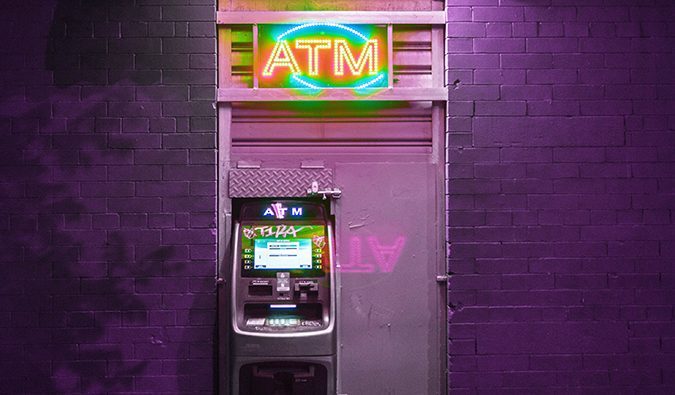
Every time you hit an ATM abroad, you can get hit with:
- Your bank’s ATM fee (often $3–5 per withdrawal)
- The foreign bank’s ATM fee (another $2–5)
- Currency conversion markup (hidden in the exchange rate)
That’s easily $7–10 per withdrawal. If you’re on the road for a year and withdraw cash twice a week, you’re handing over hundreds of dollars. In some parts of Southeast Asia, that’s a month of rent.
Credit cards can be just as sneaky. Many add a foreign transaction fee of around 3% on every non-local purchase. Spend $10,000 over a year and you’ve tipped your bank $300 for nothing. That’s not a rounding error; that’s a chunk of your long-term travel budget.
So here’s the mindset shift: Bank fees are not a minor annoyance. They’re a line item in your travel budget.
And with the right banking for long term travelers, you can shrink that line item dramatically.
2. Choosing the Right Bank Cards (Before You Leave)
Once you accept that your default bank is probably not your friend, the next step is to build a travel-friendly toolkit. Think of it like packing: you don’t need 10 cards, but you do need the right mix for long term travel money management.
Here’s the setup I recommend aiming for (adjusted to your country):
- Primary debit card with no foreign ATM fee and ideally ATM fee reimbursements
- Backup debit card from a different bank (in case of blocks, fraud, or a lost card)
- Primary credit card with no foreign transaction fees
- Optional: a multi-currency account (like Wise) with a debit card for better FX rates and local bank details
Some examples often mentioned by experienced long-term travelers:
- In the U.S., Charles Schwab is famous for reimbursing all ATM fees worldwide and charging no foreign ATM fee itself.
- In Europe/UK, banks like Starling or cards like Halifax Clarity and Wise are popular for low or no FX fees.
- Some big banks join the Global ATM Alliance, which can reduce or waive ATM fees at partner banks abroad (though they may still charge a separate FX fee).
When comparing low fee travel bank accounts and cards, I look at:
- Foreign ATM fee (per withdrawal)
- Foreign transaction fee (percentage on purchases)
- ATM fee reimbursements (do they refund third-party ATM fees?)
- FX rate (do they use the mid-market rate or add a hidden spread?)
- Monthly/annual fees
One more thing: tell your bank you’re traveling. Many still flag foreign transactions as suspicious. A 5-minute call or app notification before you leave can save you from trying to fix a frozen card over terrible hostel Wi‑Fi.
3. Cash vs Cards: How Much to Carry and Where to Hide It
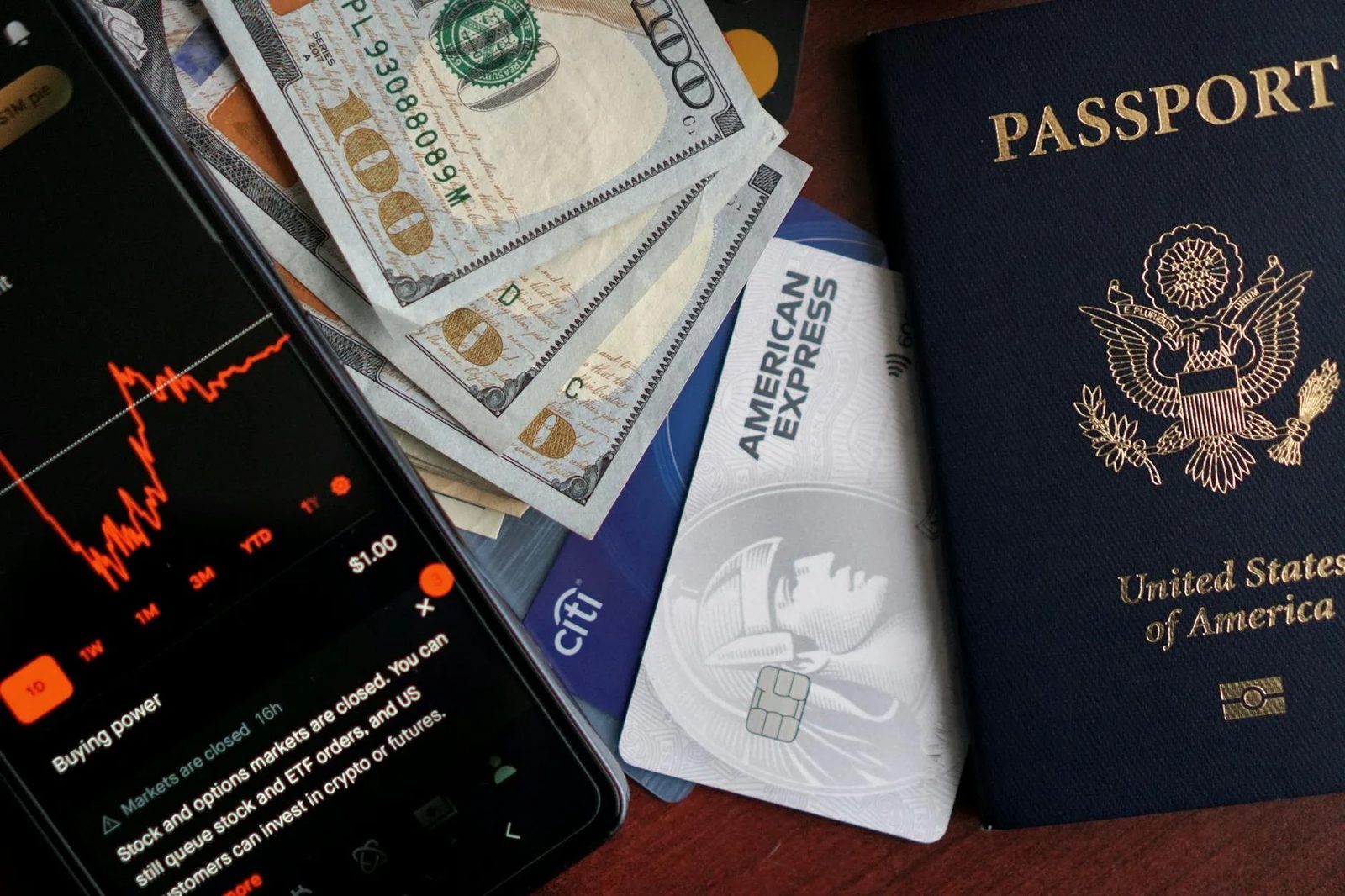
Even in 2026, cash is still king in a lot of places: markets, small restaurants, local buses, random fees at borders. If you rely only on cards, you’ll eventually get stuck at a ticket window or food stall that’s cash-only.
But walking around with a thick wad of bills is asking for trouble. So I use a simple system for managing cash and cards while traveling long term:
- Everyday wallet: small amount of local cash + 1 card
- Backup stash: more cash + backup card, hidden in my bag or room
- Emergency USD/EUR: a few crisp notes hidden separately (widely accepted in emergencies)
To reduce the impact of theft or loss, I:
- Split cash across multiple hiding spots: wallet, inside a toiletry bag, deep in my backpack, even in a boring sock in my luggage
- Keep at least one card completely separate from my main wallet
- When traveling with a partner, we divide money between us so one incident doesn’t wipe us out
Some travelers swear by money belts or hidden pouches. I use them selectively in higher-risk areas or on long bus rides. They’re not comfortable, but they’re better than losing everything on a night bus.
One advanced trick: a decoy wallet with a bit of cash and some fake cards. If you’re ever mugged, you hand that over. Just don’t put expired real cards in there; they still contain your data.
4. FX Rates, ATMs, and the Dynamic Currency Conversion Trap
This is where a lot of long-term travelers quietly bleed money: bad exchange rates, ATM fees abroad, and classic currency traps for budget travelers.
ATMs: your best bad option
In most countries, the cheapest way to get local cash is still a decent debit card at a bank ATM. But there are traps:
- Tourist ATMs in hostels, bars, or super touristy areas often have higher fees and worse rates.
- Some ATMs push
guaranteed exchange rates
on-screen. That’s usually code for terrible rates.
My rules for an international ATM withdrawal strategy:
- Use ATMs attached to major banks, ideally during business hours.
- Withdraw larger amounts less often to reduce per-withdrawal fees (but balance this with safety).
- Always decline the ATM’s conversion and let your bank do it instead.
Dynamic Currency Conversion (DCC): the polite scam
At shops, hotels, and ATMs, you’ll often see a friendly screen asking:
Would you like to pay in your home currency?
It looks helpful. It’s not. This is called Dynamic Currency Conversion, and it usually means:
- A terrible exchange rate (sometimes 3–8% worse than your bank’s)
- Possibly extra fees on top
My rule is simple: always pay in the local currency. If a waiter or cashier insists, I insist back. If they still push it through in my home currency, I take a photo of the receipt and dispute it later.
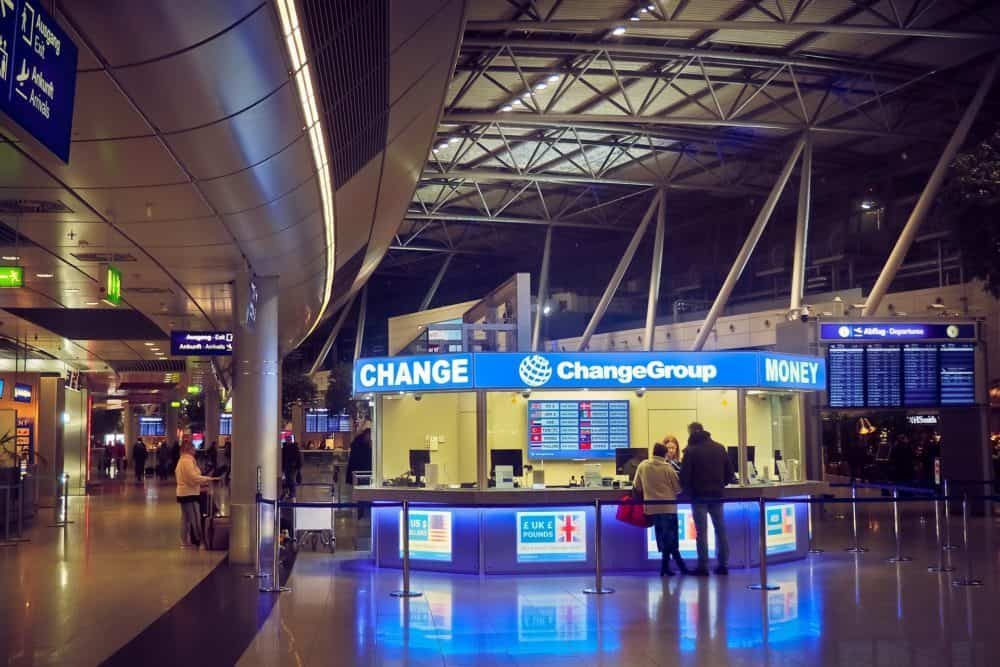
Exchange booths and airport kiosks
Airport exchange counters are convenient, but you pay for that convenience. The rate is often awful, and there may be hidden commissions. Over a long trip, those currency exchange costs for travelers add up fast.
If I land with no local cash, I’ll:
- Withdraw a small amount from an airport ATM to get into town
- Then do a larger withdrawal from a better-located bank ATM later
5. Multi-Currency Accounts, Wise, and Getting Paid on the Road
If you’re just on a 2-week vacation, you can ignore this section. But if you’re traveling long-term, working remotely, or getting paid in different currencies, multi-currency accounts can completely change how you handle money systems for long term travel.
Services like Wise (formerly TransferWise) let you:
- Hold balances in multiple currencies
- Convert between them at the mid-market rate with a small, transparent fee
- Get local bank details in several currencies (e.g., USD, EUR, GBP) so clients can pay you like a local
- Use a debit card to spend or withdraw from those balances
Why this matters for long-term travelers:
- If you’re earning online, you can get paid in the currency that makes sense and convert when rates are decent.
- You avoid the double conversion trap (client pays in one currency, your bank converts badly, then your card converts again abroad).
- You can often withdraw cash locally with lower fees than your home bank.
I don’t use multi-currency accounts as my only solution, but as a flexible middle layer between clients, my home bank, and my travel spending. It’s especially useful if you’re bouncing between regions with different base currencies and want to keep the cost of accessing money abroad under control.
6. Budgeting, Apps, and Not Running Out of Money in Month Three
Most people don’t run out of money on the road because of one big mistake. They run out because of small leaks they never track: fees, impulse buys, daily overspending, and foreign transaction fees on long term travel purchases.
Before I leave, I do two things:
- Decide on a realistic daily budget for each region (including a buffer).
- Set up a simple tracking system I’ll actually use.
You don’t need spreadsheets if you hate them. There are travel-focused apps that make this easier:
- TravelSpend: lets you track expenses by trip, see daily averages, and handle multiple currencies. Great if you want visuals instead of rows and columns.
- Trail Wallet (iOS): built specifically for travelers to track spending by day and category.
- Splitwise: useful for group trips to split costs, though the free version is clunky with multiple currencies.
Whatever you use, the key is consistency. I log expenses the same day, ideally right after I pay. It takes 2 minutes and saves me from the where did my money go?
panic later.
And yes, I include bank fees and FX costs as their own category. It’s a good way to see if your travel debit card vs credit card fees are actually under control or quietly draining you.
7. Safety, Redundancy, and What Happens When Things Go Wrong
At some point, something will go wrong: a card gets skimmed, an ATM eats your debit card, your wallet disappears on a night bus. The goal isn’t to avoid all risk; it’s to make sure one incident doesn’t end your trip.
Here’s the redundancy I aim for:
- At least two debit cards from different banks
- At least one credit card with no FX fees
- Emergency cash in a major currency (USD/EUR) hidden separately
- Scans of passports, cards, and important documents stored securely online
Before I leave home, I also:
- Test my cards at home ATMs to make sure PINs work and accounts are properly linked.
- Move money into the account my debit card actually pulls from (many foreign ATMs don’t let you transfer between accounts).
- Set up online banking and alerts so I can move money and spot fraud quickly.
When something does go wrong, I want options:
- If one card is blocked, I switch to the backup.
- If all cards fail, I use my emergency cash and a service like Wise or a trusted friend to bridge the gap.
- If a card is lost or stolen, I cancel it immediately and have it reissued to a reliable address (friend, family, or a long-stay accommodation).
8. Putting It All Together: A Simple Money System for Long-Term Travel
Let’s turn this into something you can actually implement. Here’s a simple, robust system you can adapt to avoid bank fees when traveling internationally and keep your long term travel money management sane:
- 3–6 months before departure
- Research and open a travel-friendly bank account (no ATM fees, or reimbursements).
- Get a no-foreign-transaction-fee credit card.
- Set up a multi-currency account (e.g., Wise) if you’ll be earning or moving money internationally.
- 1–2 months before departure
- Test all cards at home.
- Set up online banking and alerts.
- Decide on your daily budget by region and install a tracking app.
- Photocopy and scan important documents and cards.
- On the road
- Use bank ATMs, avoid tourist machines.
- Always pay in local currency, never your home currency.
- Withdraw larger amounts less often, but split and hide your cash.
- Track spending and bank fees regularly; adjust if they’re higher than expected.
Long-term travel doesn’t require a huge bank account. It requires a smart system. When you stop leaking money to fees, bad FX rates, and preventable mistakes, you buy yourself something much better than a fancy card: more time on the road.

If you take nothing else from this, take this: Every dollar you don’t give to your bank is a dollar you can spend on your actual trip.
Build your money system like your trip depends on it—because it does.