
I used to chase the lowest fare like it was a game. Tuesday night bookings, 2 a.m. departures, brutal layovers in random hubs – if the number on the screen was smaller, I told myself I was “winning.”
Then I started adding up everything else I was paying for those so-called savings. Extra meals. Airport hotels. Surge-priced Ubers at 4 a.m. Lost vacation days because I was a zombie. Suddenly, that cheap ticket didn’t look cheap at all.
This is about the real cost of cheap flights – not just what you hand over to the airline, but what you spend in time, energy, and all the little extras that quietly wreck your travel budget.
1. The Myth of the Magic Booking Day (and What Actually Matters)
Let’s start with the classic: Flights are cheapest on Tuesday.
You’ve heard it. I’ve heard it. It used to be true decades ago, when airlines updated fares in batches once a week.
Now? Prices are set by algorithms that can change fares multiple times a day based on demand, competition, and how full a flight is. There’s no universal “cheap day” to book anymore. Sites like KAYAK have shown this over and over with their own data (example).
What actually matters more for the true cost of cheap travel days:
- Day you fly – Midweek departures (Tuesday–Thursday) are often cheaper than Fridays and Sundays because fewer people want them.
- Time of day – Early mornings, late nights, and awkward mid-day flights can be cheaper than prime morning or after-work slots.
- How far in advance – For many routes, the sweet spot is roughly 2–3 months out. Too early or too late can both cost more.
The trap? If you’re fixated on booking on Tuesday
, you might ignore a great fare that pops up on Thursday, or wait for a mythical drop that never comes. That’s one of those quiet flight timing mistakes that waste money.
Takeaway: Stop worshipping the calendar. Watch patterns instead: midweek travel, off-peak times, and a realistic booking window that fits your life.

2. When a Cheaper Flight Day Makes Your Trip More Expensive
Here’s where it gets sneaky. You see a flight that’s $60 cheaper if you leave on Wednesday instead of Friday. Easy choice, right?
Not always.
Ask what that “cheap” day does to the rest of your trip – and your budget.
- Extra time off work? If you have to burn an extra vacation day to fly on a cheaper Wednesday, what is that day worth to you? If your daily pay is $200 and you save $60 on the ticket, you didn’t save – you paid.
- Extra nights of accommodation? A cheaper outbound flight that forces you to add a hotel night can erase the savings instantly.
- Weekend vs midweek pricing at your destination – Some cities are cheaper midweek (business hotels), others are more expensive (conferences, events, festivals). Your “cheap” flight might drop you into the priciest nights on the ground.
When I compare cheap flights vs direct flights or different travel days now, I do a quick reality check:
- Compare the total cost of the trip if I leave on the “cheap” day vs the “convenient” day.
- Include: hotel nights, lost work income (if relevant), airport transfers, and any prepaid activities I might miss or need to move.
Sometimes the cheapest flight day really is the best deal. But often, the cheapest ticket day is not the cheapest trip day.
Takeaway: Always price the whole itinerary, not just the flight. If the cheaper day forces extra costs elsewhere, it’s not actually cheaper.
3. Red-Eye Flights: Ticket Savings vs “Vampire Costs”
Red-eye flights – those late-night departures that land before sunrise – are a classic budget move. They’re often 10–35% cheaper than daytime flights on the same route, especially on long domestic routes and busy long-haul corridors.
On paper, that looks great. In real life, red-eyes come with what I think of as “vampire costs” – expenses and energy drains that only show up once you’re stumbling through an airport at 4:30 a.m.
Here’s what can quietly eat your savings and blow up the budget impact of early morning flights:
- Late-night and early-morning transport – At 3–5 a.m., public transit may not be running. You’re stuck with taxis or rideshares, often at surge pricing.
- The “zombie gap” before check-in – You land at 6 a.m., but your hotel check-in is at 3 p.m. That can mean paying for early check-in, a day-use room, or spending money just to have somewhere to sit and stay awake.
- Lost first day – If you arrive wrecked, you might waste your first day napping instead of exploring. If you’ve prepaid tours or activities, that’s real money at risk.
Red-eyes can be smart when:
- You can actually sleep on planes.
- You have a clear plan for what you’ll do between landing and check-in.
- You’re using it to gain a full extra day at your destination or to avoid paying for a hotel night.
They’re usually a bad idea when:
- You have something important the next morning (meeting, wedding, exam).
- You’re traveling with young kids or anyone who doesn’t handle sleep disruption well.
- The flight is short (under ~3 hours) and you won’t get meaningful sleep anyway.
Takeaway: Don’t just compare red-eye vs daytime ticket prices. Add in transport, early check-in, and the value of your first day. If the “vampire costs” are higher than the savings, skip the red-eye.

4. Layovers: The Hidden Budget Killers You Probably Don’t Track
Long layovers are another classic “cheap” trick. You see a flight that’s $80 less but adds a 6-hour stop in a hub airport. It feels like a win – until you’re actually living that layover.
This is where the hidden costs of layovers show up and quietly wreck your travel budget.
Here’s what I factor in whenever a long layover appears:
- Airport food and drinks – Even if you’re frugal, a coffee + snack + basic meal can easily hit $30–$50 per person in a major airport.
- Day rooms or lounges – If you end up paying for a lounge pass or a day-use hotel to shower and rest, that can wipe out the fare difference instantly.
- Missed connections risk – Tight layovers can lead to missed flights, rebooking fees, and sometimes an unplanned hotel night.
- Time cost – A 6–8 hour layover can turn a reasonable travel day into a 20-hour slog. That’s a full day of your trip gone.
There are times when a layover is worth it:
- You intentionally plan a stopover to see another city and you’ve budgeted for it.
- The savings are substantial (not $40, but maybe $300+), and you’re okay trading time for money.
But if you’re only saving a small amount, ask yourself:
Would I pay $80 to avoid sitting in an airport for 7 hours?
If the honest answer is yes, then the “cheaper” flight isn’t actually cheaper for you. That’s the cost of long layover flights in a nutshell.
Takeaway: Put a price on your time and comfort. If the layover costs you more in food, fatigue, and lost hours than you save on the ticket, it’s a bad deal.

5. Airport Choice: The Low-Cost Airport That Costs You More
Many cities give you a choice: a main airport and a “budget” one further out. The budget airport often has cheaper fares, especially with low-cost carriers. But the ground costs can be brutal.
This is where airport choice and total trip cost really shows up. A cheap ticket to the wrong airport can be one of the biggest cheap airfare traps for travelers.
When I compare airports now, I look at:
- Transport time and cost – How much is the train, bus, or taxi from each airport to where I’m actually staying? A $40 cheaper ticket can vanish in one long taxi ride.
- Arrival and departure times – If the cheap airport only has very early or very late flights, you might be forced into expensive taxis or an extra hotel night near the airport.
- Reliability and delays – Some secondary airports have fewer backup options if your flight is canceled. That can mean longer delays and more out-of-pocket costs.
Here’s a simple way to think about it:
Total trip cost = Flight + Airport transfers (both ends) + Time value + Any extra nights caused by bad timing.
Sometimes the main airport with a slightly higher fare is actually the budget choice once you add everything up. That’s the real alternative airport vs main airport cost comparison most people skip.
Takeaway: Don’t just sort by price and pick the cheapest airport. Map the whole journey door-to-door and price the transfers and timing.

6. Dynamic Pricing: Why Chasing the Absolute Lowest Fare Backfires
Because airlines use dynamic pricing, there is no stable “floor” price you can reliably hit. Fares move based on demand, season, and how the route is performing. Waiting for the absolute rock-bottom price can be a trap.
Here’s how I approach it now when I’m calculating the total cost of a flight and trying not to outsmart myself:
- Set a realistic target price for the route based on past searches and general benchmarks.
- Start tracking 2–4 months out for most trips (longer for peak seasons and holidays).
- Use price alerts (Google Flights, KAYAK, Skyscanner, etc.) instead of manually checking every day.
- When a fare hits my target and the schedule works for my life, I book instead of waiting for a mythical extra $20 drop.
Why this matters for your budget: the longer you wait, the more likely you are to end up with:
- Awkward flight times that force you into red-eyes or long layovers.
- Less choice of airports and routes.
- Higher fares as the plane fills up.
In other words, chasing the absolute lowest fare often pushes you into the very flight times and layovers that make your total trip more expensive. The cheap flight days cost comparison you thought you were winning ends up costing you more in the end.
Takeaway: Aim for good and sane
, not perfect and painful.
A fair price on a schedule that doesn’t wreck your sleep or add hidden costs is usually the real bargain.
7. A Simple Framework: How to Compare Real Trip Costs
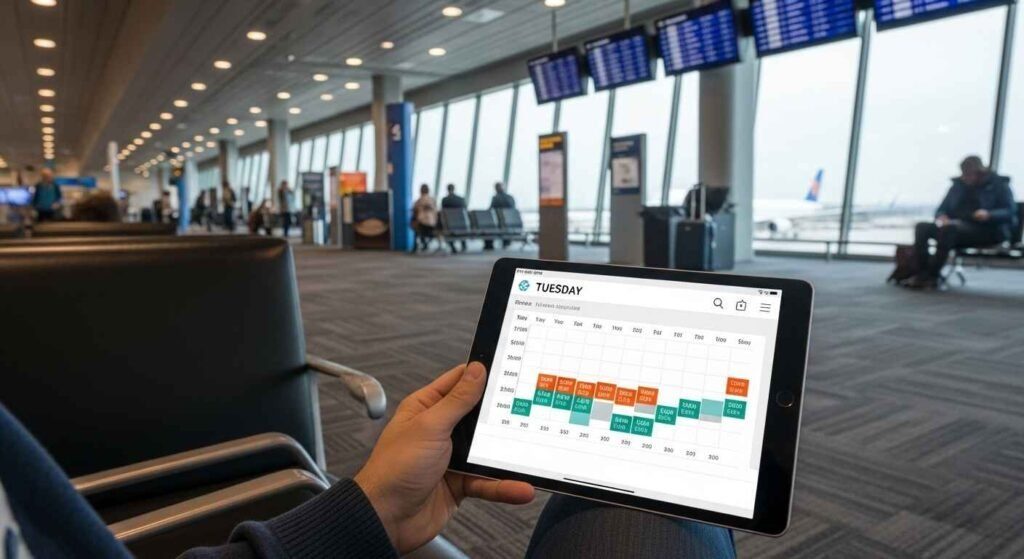
When I’m torn between a “cheap” itinerary and a “sensible” one, I run them through a quick framework. You can do this in a notes app or spreadsheet in five minutes.
This is how I look at the real cost of cheap flights instead of just the headline fare.
For each option, list:
- Flight cost – Base fare + bags + seat fees.
- Ground transport – To and from each airport, at the actual times you’ll travel. Include those 4 a.m. rideshares.
- Accommodation impact – Extra nights, early check-in fees, airport hotels.
- Food during travel – Especially for long layovers or weird hours when you’re stuck buying airport meals.
- Time cost – How many usable hours of your trip you lose to red-eyes, layovers, or awkward arrival times.
- Risk cost – Tight connections, important events the next day, or routes with limited backup options.
Then ask yourself two questions:
If I ignore the flight price for a moment, which itinerary would I actually want to live through?
Is the savings on the cheaper option big enough to justify the extra hassle and hidden costs?
Most of the time, the answer becomes obvious once you see the whole picture. You can literally see how layovers wreck your travel budget or how a “deal” flight quietly adds transport costs to distant airports.
Final takeaway: A cheap ticket is not the same as a cheap trip. When you factor in layovers, red-eyes, airport choices, and timing, the “expensive” flight often turns out to be the smarter, cheaper decision in real life.