I used to click the cheapest fare without thinking. If it said Basic Economy, I’d shrug and tell myself, It’s the same seat, why pay more?
Then I started adding up the bag fees, seat fees, change penalties, and lost miles. That deal
wasn’t a deal at all.
This is the real cost of Basic Economy, and why a slightly higher Main Cabin fare often saves you money, time, and stress.
1. Same Seat, Very Different Trip: What You Actually Buy
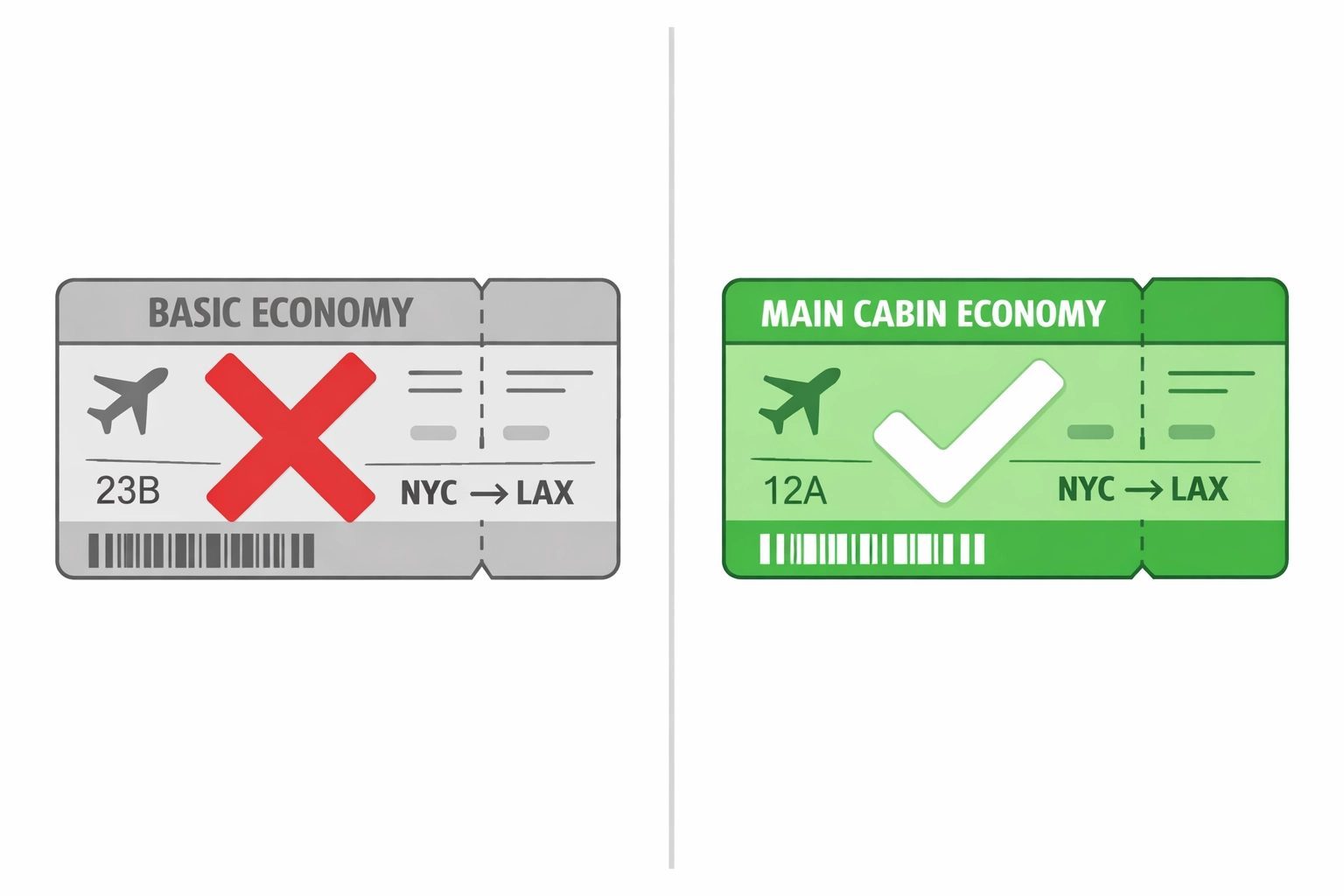
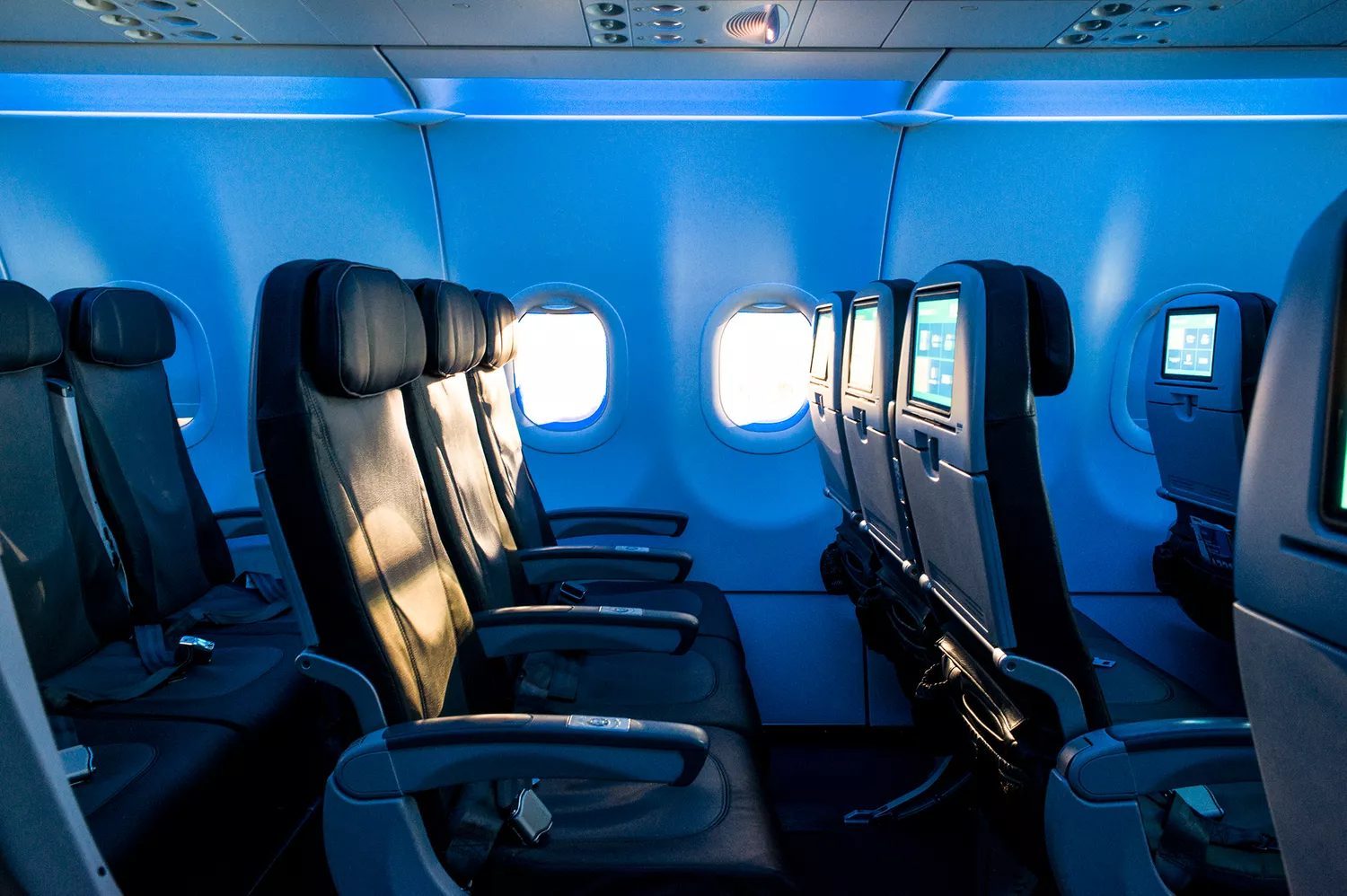
On most major U.S. airlines, Basic Economy and Main Cabin put you in the same physical seat in the same cabin. The difference isn’t the chair. It’s everything wrapped around it.
With Main Cabin (regular economy), you usually get:
- One full-size carry-on + one personal item
- Advance seat selection (often free or low cost)
- Ability to change or cancel (fare difference may apply)
- Full mileage and elite-qualifying credit on most airlines
- Eligibility for upgrades if you have status
Basic Economy strips that down. You often get:
- Same seat, but usually in the back and often a middle seat
- No advance seat selection (or you pay extra for whatever is left)
- Little or no ability to change or cancel after 24 hours
- Reduced or no miles/status credit on many airlines from 2026 onward
- Last boarding group, with a higher chance of losing overhead bin space
Airlines know you’re sorting by price. Basic Economy exists to win that first click, then charge you later for the things Main Cabin quietly includes.
Key question to ask yourself: Am I buying a seat, or am I buying a trip? Basic Economy sells you the seat. Main Cabin sells you the trip.
2. The Bag Trap: How Carry-Ons Turn Cheap Fares Into Expensive Ones
Bags are where Basic Economy quietly eats your savings and hides its real cost.
On many routes, the rules look like this:
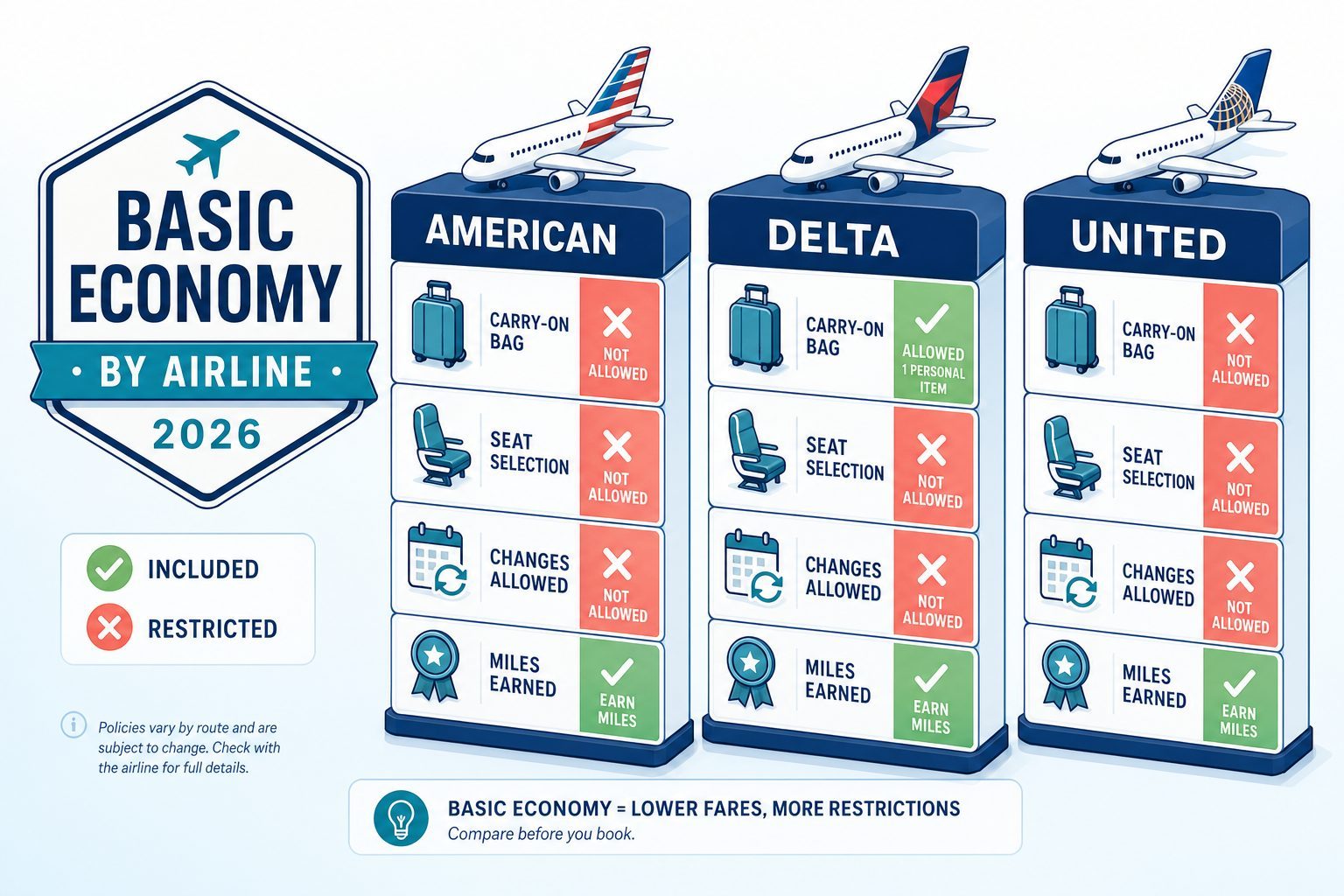
- American & Delta Basic Economy: usually allow a full-size carry-on + personal item, but you still board late, so overhead space is not guaranteed.
- United Basic Economy: often no full-size carry-on unless you have status or a co-branded card. Just a personal item. Bring a roller bag and you may pay a checked-bag fee plus a gate penalty.
Now compare that to Main Cabin:
- Carry-on is clearly included.
- You board earlier, so your bag actually makes it into the overhead bin.
- If you have airline status or the right credit card, you may get a free checked bag too.
Here’s how the total cost of a Basic Economy ticket often looks in real life:
- Basic Economy is $60 cheaper than Main Cabin.
- You need a carry-on and a checked bag.
- United Basic Economy: pay for the checked bag and risk a gate-check fee for your carry-on.
- Suddenly that $60 savings is gone, and you’re paying more than the Main Cabin fare would have cost.
My rule: If I’m bringing anything more than a small under-seat bag, I immediately compare the fare difference vs bag fees. If the Main Cabin fare is within the cost of one bag fee (often $30–$40 each way), I almost always book Main Cabin. In a basic economy baggage fee comparison, Main Cabin wins more often than you’d think.
3. Flexibility vs. Rigidity: The Hidden Cost of Use It or Lose It
Basic Economy is designed as a use it or lose it
product. After the 24-hour federal cancellation window, most Basic Economy tickets on U.S. airlines are:
- Nonchangeable (or changeable only with huge penalties)
- Nonrefundable
- Ineligible for price-drop credits or automated repricing tools like Refare
Main Cabin is the opposite. On most major airlines now:
- You can change flights without a change fee (you just pay any fare difference).
- You can often cancel for a credit.
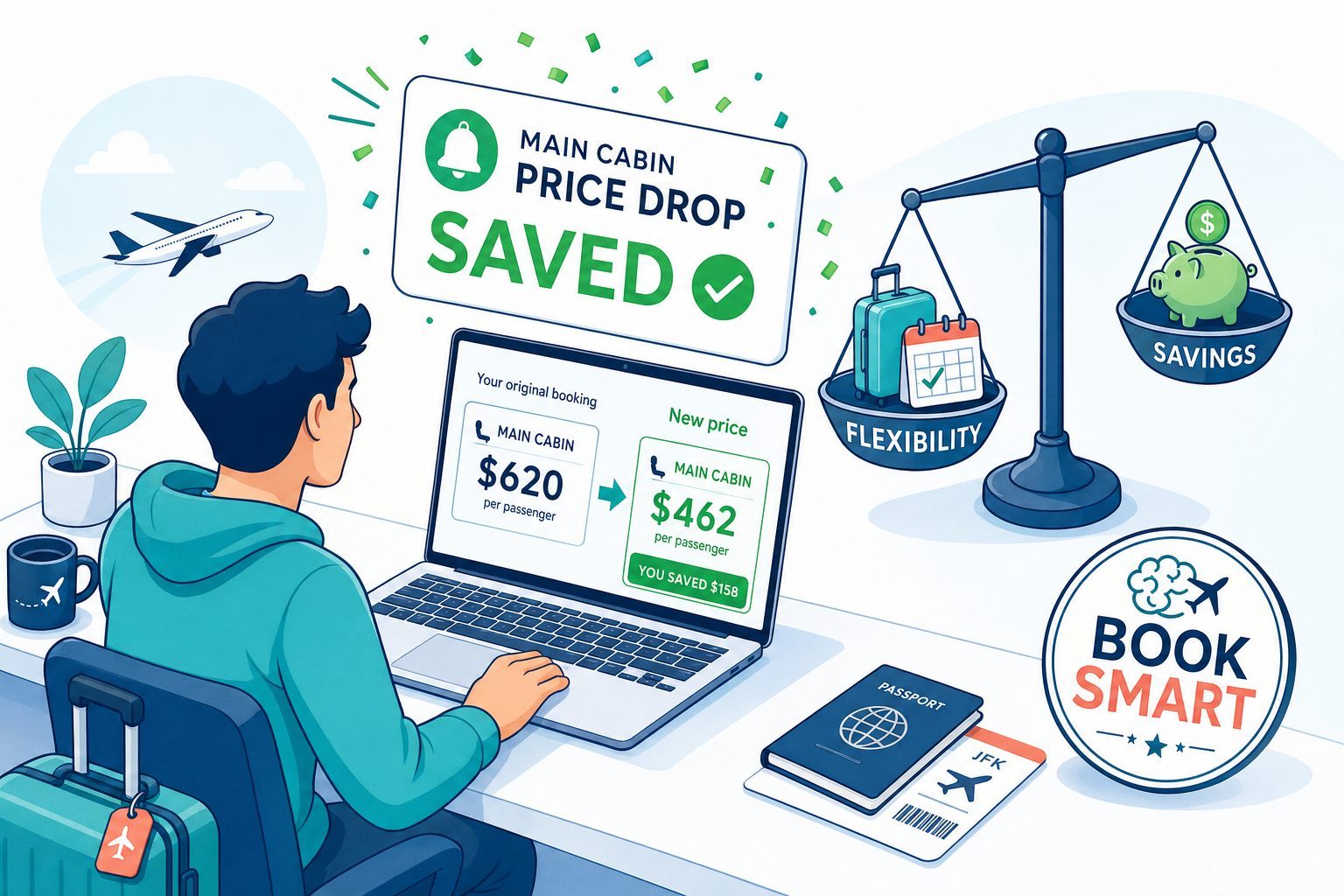
- Your ticket can be repriced if the fare drops, so you can capture savings later.
Think about what that means. If you book Basic Economy and:
- Your work schedule shifts
- You get sick
- A better flight time appears
- The fare drops by $80 a week later
…you’re usually stuck. No credit. No refund. No reprice. The cheap
ticket becomes a sunk cost.
With Main Cabin, that same situation might look like this instead:
- You rebook to a better time and just pay the fare difference.
- Or you cancel and keep the value as a travel credit.
- Or a fare-monitoring tool automatically grabs you a credit when the price drops.
Key takeaway: Main Cabin behaves like built-in trip insurance. Basic Economy behaves like a lottery ticket: once you’ve bought it, the money is gone.
4. Seat Selection & Boarding: How Much Is Comfort (and Certainty) Worth?
Airlines love to say, Same great seat!
But in a real basic economy vs main cabin comparison, Basic Economy quietly changes where you sit and when you board.
With Basic Economy, you’re usually looking at:
- No advance seat selection (or only paid scraps at the back)
- Seats assigned at check-in or at the gate
- High chance of middle seats
- Families and groups split up, especially on fuller flights
- Last boarding group, when overhead bins are already packed
Some airlines let you pay to pick a seat on Basic Economy. Others (like Delta on many routes) simply don’t. You’re rolling the dice.
Main Cabin flips that:
- You can usually choose seats at booking.
- Families have a much better chance of sitting together.
- You board earlier, so your carry-on stays with you.
Here’s the trap: you buy Basic Economy to save $50, then pay $25 each way for a seat that isn’t terrible. If you’re traveling with a partner or kids, multiply that by 2–4 people. Suddenly, Main Cabin would have been cheaper and less stressful.
Ask yourself: If I’m going to pay for seat selection anyway, why not just buy the fare that includes it and gives me flexibility too?
5. Miles, Status & Upgrades: The Long-Term Value You Might Be Throwing Away
If you fly even a few times a year, Basic Economy can quietly sabotage your loyalty strategy and turn into one of the biggest basic economy hidden costs.
On American, Delta, and United, the trend is clear:
- Basic Economy earns reduced or no miles.
- Basic Economy often earns no elite-qualifying credit from 2026 onward.
- Basic Economy is usually not upgrade-eligible, even if you have status.
Main Cabin, on the other hand:
- Earns full redeemable miles on most airlines.
- Counts toward elite status.
- Is eligible for complimentary or paid upgrades if you have status.
So that $60 you saved on Basic Economy might cost you:
- Thousands of miles you could have used for a future trip.
- Progress toward elite status (and the free bags, better seats, and priority lines that come with it).
- Any chance at an upgrade on this flight.
If you’re a once-a-year flyer, maybe that doesn’t matter. If you fly 3–4+ times a year, it absolutely does. You’re trading long-term value for a short-term headline price.
My personal rule: If I care at all about miles or status with that airline, I avoid Basic Economy unless the price gap is huge and my plans are rock solid.
6. The Real Math: When Basic Economy Actually Makes Sense
Basic Economy isn’t always bad. It’s just often misused. There are situations where it genuinely saves you money and the basic economy add on fees don’t bite.
Basic Economy can be a smart choice when:
- You’re traveling solo.
- You only have a small under-seat bag.
- Your plans are truly fixed (no work, family, or health variables).
- You don’t care where you sit and don’t mind boarding last.
- You don’t care about miles or elite status.
In that narrow scenario, Basic Economy is exactly what it claims to be: a cheaper way to get from A to B.
But for everyone else, I like to run a quick mental model before I click. It’s my simple flight ticket cost breakdown for Basic Economy vs Main Cabin:
- Start with the fare difference.
How much more is Main Cabin? $30? $60? $120? - Add the extras Basic Economy will trigger.
Bags, seat selection, change risk, lost miles. - Assign a realistic cost to change risk.
If there’s even a 20–30% chance I’ll need to change, I mentally price that risk at at least $50–$100. - Compare the total.
If Main Cabin is within $30–$50 of the real Basic Economy cost, I almost always choose Main Cabin.
Once you think in trip cost instead of ticket price, the decision gets much clearer. That’s where paying a bit more up front can genuinely mean paying more to save on flight costs overall.
7. A Simple Checklist: Should You Pay More for Main Cabin?
When I’m staring at that tempting Basic Economy price, I run through this quick checklist. If I answer yes
to any of these, I treat it as a sign of when to avoid Basic Economy fares and pay more for Main Cabin:
- Do I need a full-size carry-on or checked bag?
- Am I traveling with someone I actually want to sit next to?
- Is there any real chance my plans might change?
- Do I care about earning miles or elite status?
- Would I be annoyed if I ended up in a middle seat at the back?
- Would losing the entire ticket value really sting if something came up?
If I answer no
to all of those, Basic Economy might be fine. But that’s rare. Life is messy. Flights change. Kids exist. Work calls.
Bottom line: Basic Economy is built for the perfect
trip where nothing goes wrong and you need nothing extra. Main Cabin is built for the trip you’re actually going to have. In a real-world regular economy vs Basic Economy pricing comparison, Main Cabin usually wins once you factor in all the Basic Economy mistakes to avoid.
8. The Mindset Shift: Stop Chasing the Lowest Fare, Start Buying the Right One
Airlines are playing a simple game: show you the lowest possible number, then charge you later for everything that makes travel tolerable. Basic Economy is the tool they use to do that.
When you stop asking, What’s the cheapest ticket?
and start asking, What’s the cheapest trip that still works for my life?
the answer changes fast.
Most of the time, that answer is Main Cabin. That’s where an honest airline fare class cost comparison lands once you include bags, flexibility, and miles.
So next time you’re booking and you see that Basic Economy fare winking at you, pause for 10 seconds and run the checklist. Think about bags. Think about changes. Think about where you’ll sit and whether miles matter to you.
Because paying a little more now is often the only way to avoid paying a lot more later—and that’s when Basic Economy vs Main Cabin stops being a mystery and starts being a clear choice.