I used to treat checking a bag like a personal failure. If it didn’t fit in a carry-on, it didn’t come. Then baggage fees exploded, airlines rewrote the rules mid-game, and I realized something important:
The cheapest way to travel with luggage isn’t always carry-on only. The real savings come from choosing a packing strategy that fits your route, airline, fare type, and how you actually travel.
Now, before every trip, I decide whether to go carry-on, checked, or a mix of both with one goal in mind: cut the total cost of the trip – not just the baggage line on the receipt.
1. Start With the Real Price: Fare + Bags, Not Just the Ticket
Comparing flights by base fare alone is how you get burned.
Airlines have turned baggage into a second ticket. A first checked bag on many U.S. airlines is now around $45 each way. Some budget airlines even charge more for a carry-on than a checked bag. On a roundtrip for two people with one bag each, that “cheap” fare can quietly grow by $180 or more once you add luggage.
So I start with a simple move: build a quick bag-cost table for each flight option.
- How many bags do I realistically need? (Not hope. Need.)
- Does the fare include a carry-on? A checked bag? Neither?
- Is upgrading from Basic Economy to Main Cabin cheaper than paying baggage fees separately?
- On budget airlines, is a checked bag actually cheaper than a carry-on?
Once I add baggage costs to the ticket price, the “cheapest” airline often changes. Sometimes by a lot. That’s when the real carry-on vs checked bag comparison starts to matter.
The right question isn’t ‘How do I avoid bag fees?’ It’s ‘Which combination of fare + bags is cheapest for the way I actually travel?’
Takeaway: Before you even think about packing, compare the total trip cost (fare + bags) across airlines and fare types. The winner is rarely the one with the lowest base fare.
2. Decode Your Airline’s Rules Before You Pick a Bag Strategy
This is where a lot of people overpay: they assume all airlines treat luggage the same. They don’t. Not even close.
Once you start digging into baggage policies and those little baggage calculators, a few patterns show up in the airline baggage pricing game:
- Standard U.S. economy (non-basic) usually includes a free carry-on plus a personal item.
- Basic Economy on some airlines bans full-size carry-ons on certain routes. Show up with one and you’ll pay a checked bag fee plus a gate-handling penalty.
- Budget airlines often charge more for overhead carry-ons than for checked bags, especially if you wait until check-in or the gate.
- Carry-on size and weight limits vary. What counts as a carry-on on one airline might be a checked bag on another.
So I do a quick pre-trip audit before choosing a carry-on vs checked luggage cost strategy:
- Look up the airline’s carry-on size, weight, and Basic Economy rules.
- Check whether my fare includes a carry-on, a checked bag, both, or neither.
- Note any gotchas: gate-check fees, overweight penalties, no overhead bin access, or strict personal-item rules.
Only then do I decide: is this a carry-on game, a checked-bag game, or a hybrid?
When carry-on wins: airlines that allow a free overhead bag on your fare, high checked baggage fees, and routes where you can pack light.
When checked wins: budget carriers that charge more for carry-ons, longer trips where you’d need more than one small bag anyway, or when you’re traveling with gear that will never fit overhead.
Takeaway: Your packing strategy should follow the rules of the airline and fare you actually booked, not the rules you wish they had.
3. Price Out Your Personal Situation: Solo, Couple, or Family?
Most “carry-on only” advice comes from solo travelers. Add a partner or kids and the math changes fast.
Here’s how I think about how to reduce airline baggage fees based on who’s traveling.
Solo traveler
- Carry-on only often wins, especially on major airlines that include a free overhead bag.
- On ultra-low-cost carriers, a single checked bag can be cheaper and less stressful than paying for a carry-on and fighting for bin space.
Couple
- Two people, one checked bag is often the sweet spot: share toiletries, split space, and each carry a personal item.
- Compare the cost of two paid carry-ons vs. one checked bag. In many cases, the checked bag wins on price and simplicity.
Family
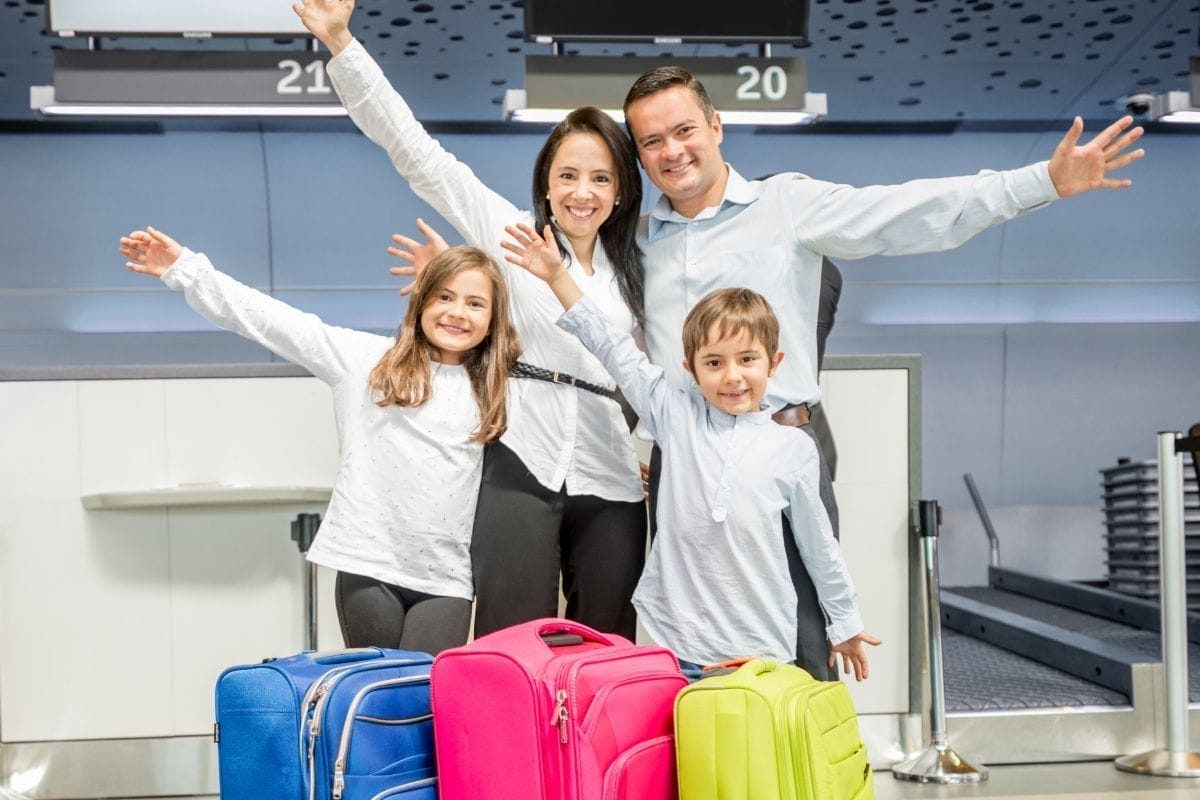
- Kids + gear + snacks + random “essentials”? Checked bags can be cheaper and far easier than juggling four borderline-oversized carry-ons.
- Some airlines or credit cards waive bag fees for companions, which can flip the whole flight cost with baggage included equation.
There’s also the energy cost. Dragging three rolling carry-ons, a stroller, and a diaper bag through a crowded airport to “save” $30 can be a terrible trade.
Sometimes the cheapest strategy in dollars is the most expensive in stress.
Takeaway: Run the numbers per person, not per bag. For couples and families, shared checked bags often beat multiple paid carry-ons on both cost and sanity.
4. Use Credit Cards and Status Strategically (or Skip Them On Purpose)
There’s a quiet cheat code in the whole carry-on vs checked bag debate: the right credit card or airline status can make checked bags effectively free.
Two main angles:
1. Airline co-branded cards
- Often include a free first checked bag for you and sometimes for companions on the same reservation.
- On a roundtrip for two people, that can easily save $100+ in checked baggage fees.
2. Premium travel cards
- Offer broad annual travel credits that can reimburse baggage fees on many airlines.
- Some also include lounge access and travel protections that make delays and lost bags less painful.
If I already have a card with a travel credit, I treat bag fees as prepaid
up to that amount. That changes the calculus: I might choose to check a bag for comfort, knowing the fee will be reimbursed.
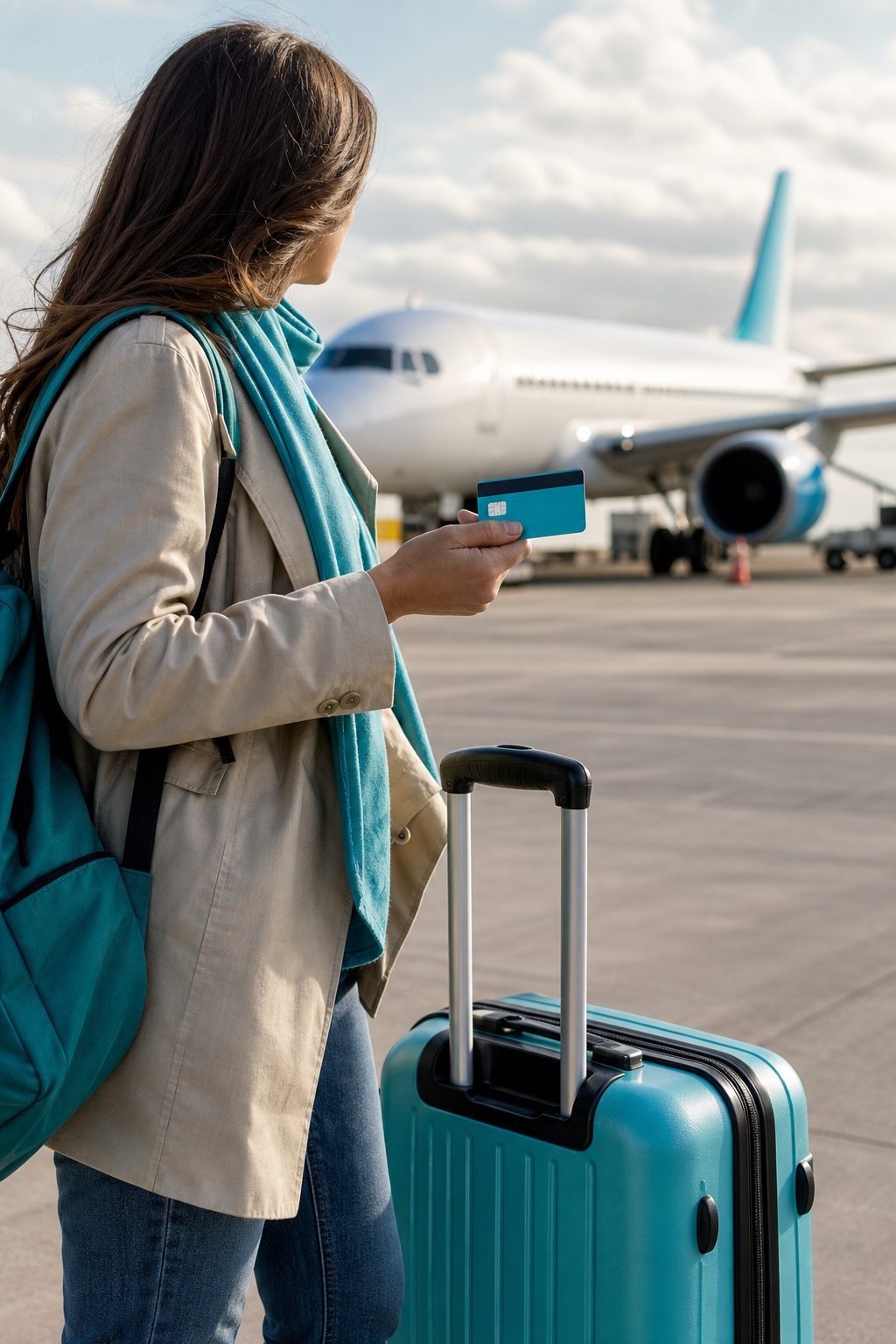
But here’s the part that matters: don’t sign up for a premium card just to avoid bag fees unless you’ve done the math. A high annual fee only makes sense if you’ll actually use the credits and perks.
Takeaway: If you already have the right card or status, checked bags might be your cheapest and most comfortable option. If you don’t, don’t chase plastic just to dodge a $45 fee.
5. Design a Packing System That Fits the Strategy (Not the Other Way Around)
Most people do this backwards: they pack first, then try to force everything into whatever bag they emotionally prefer.
I flip it. I choose the packing strategy to lower flight cost based on price and rules, then build a packing system to match.
If I commit to carry-on only
- I build a capsule wardrobe: dark, quick-dry, mix-and-match pieces that work in different combinations.
- I switch to solid toiletries or tiny decants to dodge liquid limits.
- I cap it at two pairs of shoes: one on my feet, one in the bag.
- I plan to do laundry or buy basics at the destination instead of packing “just in case” extras.
If I decide to check a bag
- I still pack deliberately – a bigger suitcase is not a license to bring my entire closet.
- All irreplaceable items (meds, electronics, one change of clothes, valuables) stay in my personal item.
- I use the checked bag for bulky or liquid-heavy items that would be annoying or impossible in a carry-on.

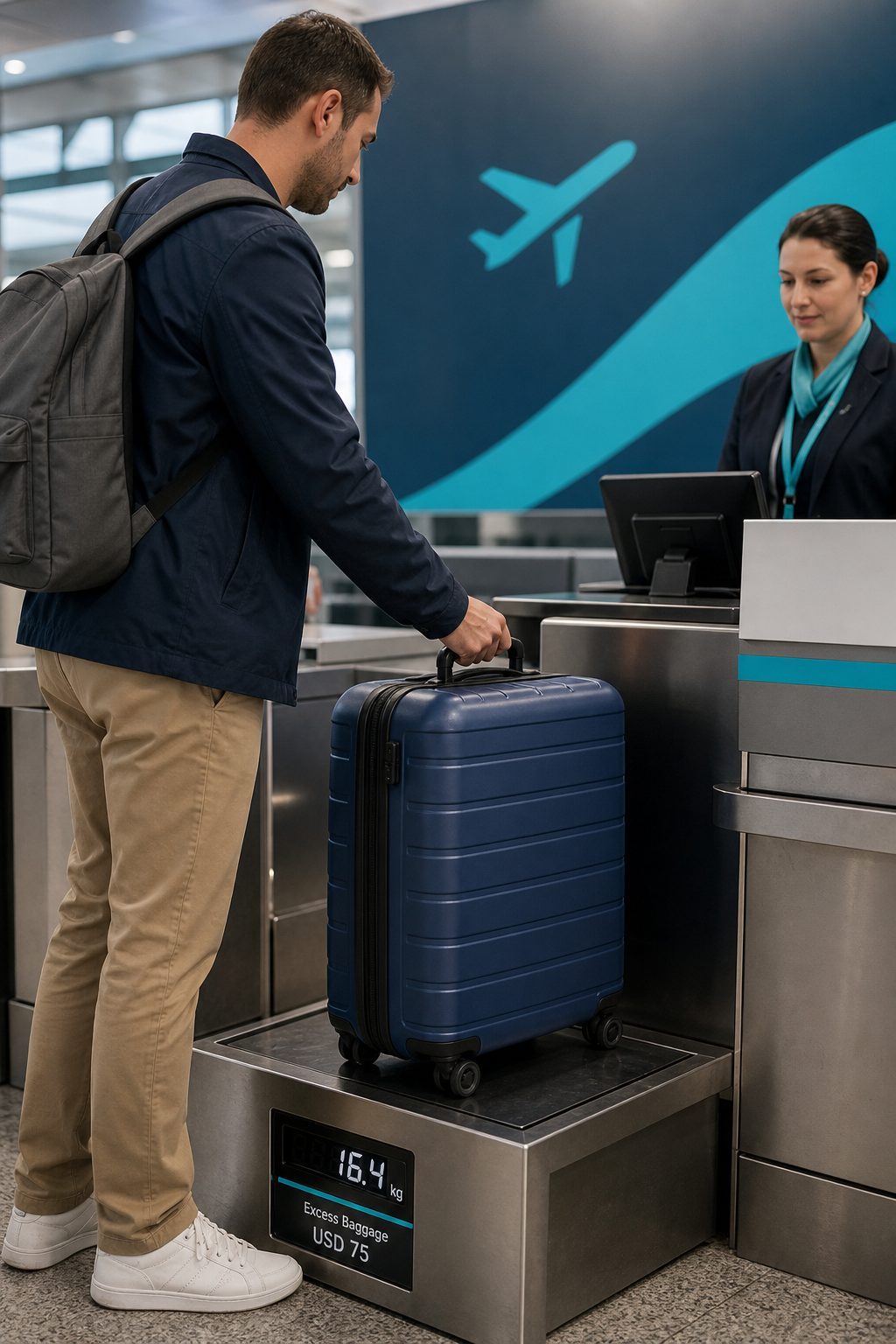
In both cases, I weigh the bag at home. Overweight fees are one of those hidden baggage charges on flights that can be brutal – sometimes more than the original bag fee.
Takeaway: Decide your bag strategy first, then pack to fit it. Don’t let last-minute overpacking push you into the most expensive option at the airport.
6. Factor in Risk: How Much Do You Trust This Airline and Itinerary?
Cost isn’t the only variable. There’s also risk: lost bags, tight connections, weather delays, and misrouted luggage.
I’m much more willing to check a bag when:
- I’m flying a carrier with a good baggage track record and quick delivery at my destination.
- My itinerary is simple: nonstop, or a long connection on the same airline.
- I have travel insurance or card protections that cover delayed or lost bags.
I avoid checking bags when:
- I have tight or multiple connections, especially across different airlines.
- I’m going somewhere where replacing essentials would be difficult, slow, or expensive.
- I’m carrying gear I absolutely can’t afford to lose (beyond what’s allowed in the cabin).
Modern baggage tracking and clearer compensation rules help, but they don’t erase the hassle of arriving without your stuff. So I treat checked bags as a calculated risk, not a default.
Takeaway: If your itinerary is complex or high-risk, a carry-on only flight strategy may be worth paying a bit more for. On simple, reliable routes, checking a bag can be the cheaper and more comfortable move.
7. Play the Long Game: Outbound vs Return, Shopping, and Souvenirs
Here’s a small tweak that saves money and stress: don’t treat your outbound and return flights the same.
On the way out, I usually go carry-on only:
- There’s less to lose if something goes wrong with the airline.
- I can get out of the airport faster when I’m tired, jet-lagged, or just ready to start the trip.
On the way back, I’m more relaxed about checking a bag:
- I probably have souvenirs, gifts, or extra clothes that won’t fit in a carry-on.
- If the bag is delayed, I’m at home, not stuck without clothes in a new city.

Sometimes I pack a foldable duffel inside my carry-on. Outbound: no checked bag. Return: the duffel becomes a checked bag for everything I picked up along the way. It’s a simple, cheap way to pack for flights when you know you’ll shop.
Takeaway: You don’t need one strategy for the whole trip. Use carry-on when it protects you, and checked when it saves money or makes the return easier.
8. Build Your Own “Bag Playbook” (So You Stop Guessing)
After enough trips, I stopped guessing at the airport counter and built a simple personal rulebook. You can steal the idea and tweak it for your own travel style.
Mine looks roughly like this:
- Domestic, legacy airline, non-basic fare, solo: carry-on + personal item, no checked bag.
- Domestic, budget airline, solo or couple: compare one checked bag vs. one or two paid carry-ons; pick the cheaper option, then pack to fit.
- International, 7+ days, simple itinerary: one checked bag (free if possible) + small personal item; keep essentials with me.
- Trips with kids: shared checked bags, each kid gets a small personal item; avoid multiple rolling carry-ons.
- Shopping-heavy trips: carry-on only outbound, plan to check a bag or use a foldable duffel on the return.
Yours will be different. The point is to stop treating carry-on vs checked as a moral issue and start treating it as a repeatable decision process.
The smartest travelers aren’t the ones who never check a bag. They’re the ones who know exactly when it’s worth it.
Final takeaway: The packing strategy that actually cuts your flight costs is the one that:
- Starts with total trip cost (fare + bags), not just the base fare.
- Respects your airline’s specific baggage rules and fees.
- Matches your group size, energy level, and travel style.
- Uses credit cards or status you already have, without chasing new fees.
- Designs packing around the chosen strategy, not the other way around.
- Adjusts for risk, route, and whether you’re outbound or heading home.
Build that system once and you’ll stop guessing at check-in – and stop paying extra for luggage you don’t even enjoy hauling through the airport.