Choosing Your Core Strategy: Rebook, No‑Show, or Wait for Disruption?
Cebu Pacific’s rebooking rules create a real decision, not just a simple service. Every change can trigger several costs: a change fee per person per sector, a fare difference, and sometimes loss of add‑ons. Because these can be higher than a new ticket, you need a clear plan before you book and again when your plans change.
This article focuses on the Destination decision: how to plan trips with Cebu Pacific when there is a real risk of schedule changes or missed connections. This matters most when you use separate tickets or build your own connections. The goal is to cut total cost and stress, not just chase the lowest initial fare.
Three core strategies exist:
- Pay for flexibility up front (buy more flexible products, avoid tight self‑connections).
- Accept rigidity and risk (buy the cheapest fares and treat them as disposable).
- Exploit airline‑caused disruptions when they happen (use more generous rebooking rules if Cebu Pacific changes or cancels your flight).
Each strategy works best in specific situations. The rest of this guide explains those situations and trade‑offs so you can choose on purpose, not in a panic at the airport.
Decision 1: Voluntary Rebooking vs Buying a New Ticket
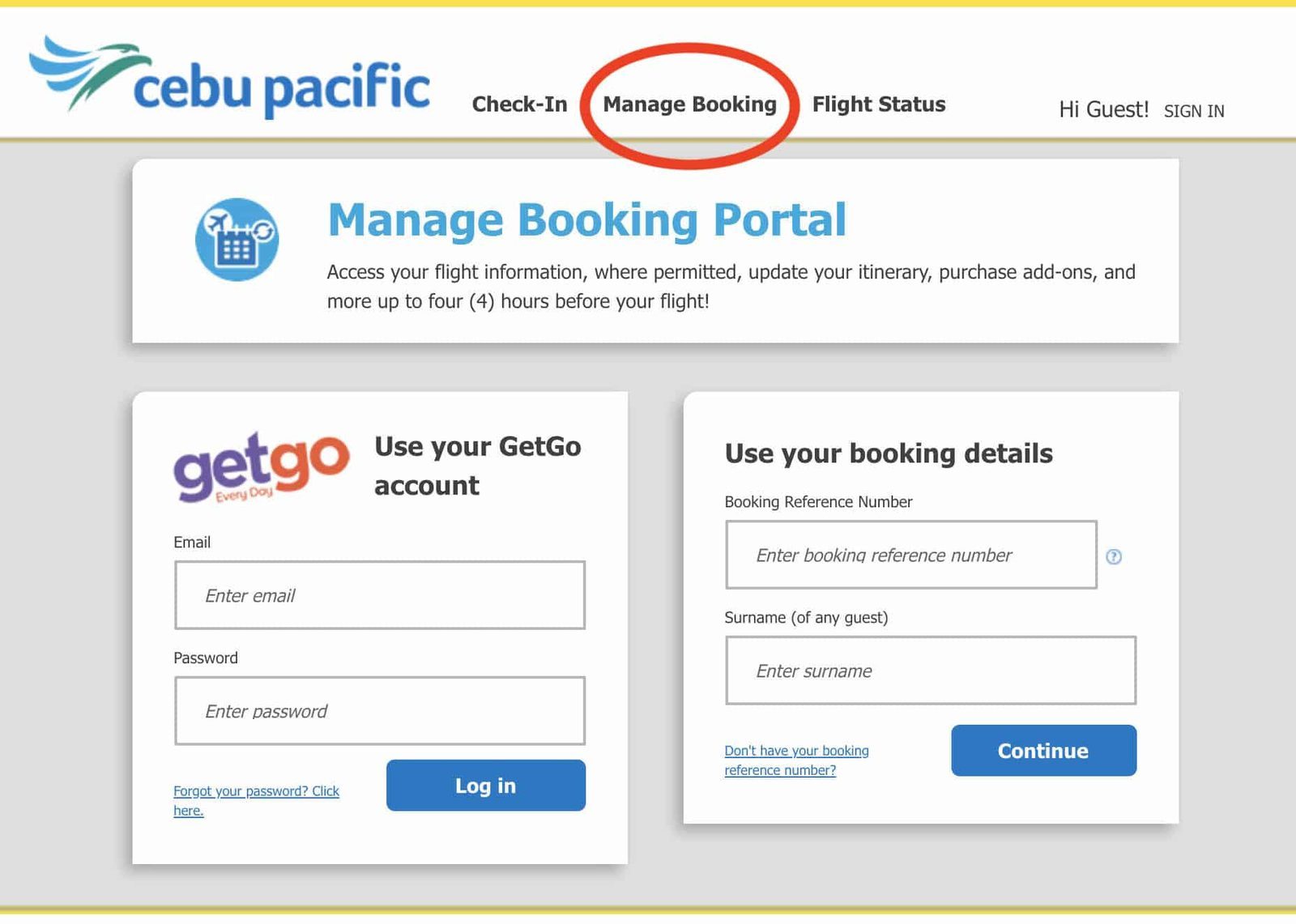
When your plans change and Cebu Pacific has not disrupted your flight, you face a simple but costly choice: use the rebooking option or abandon the ticket and buy a new one. The right move depends on how change fees and fare differences combine for your exact trip.
How Cebu Pacific Calculates Voluntary Rebooking Costs
Under normal conditions (no airline‑initiated disruption):
- Change fee: charged per person per sector. A roundtrip for two people is four sectors, so one date change can mean four separate change fees.
- Fare difference: if the new flight is more expensive than your original fare, you pay the difference. If it is cheaper, you usually do not get any refund.
- Timing cutoff: voluntary changes are allowed only up to about two hours before departure. After that, the system usually blocks changes.
Cebu Pacific uses dynamic pricing. Flights closer to departure and popular times often cost much more. So the fare difference can be large even when the change fee looks moderate.
When Rebooking Is Rational vs When to Walk Away
Without exact fee tables, you have to think in ranges, not exact numbers. The key is to compare the total rebooking cost with the current price of a new ticket for the same route and date.
| Scenario | Rebooking Likely Better | New Ticket Likely Better |
| One‑way, single passenger, small date shift (same week) | Change fee + small fare difference may be lower than a new ticket, especially off‑peak. | Rare, unless promo fares are available only on new bookings. |
| Roundtrip, family of 3–4, peak season | Only if change fees are low and fare difference is minimal; otherwise costs multiply quickly. | Very common: four to eight change fees plus high fare differences can exceed new tickets. |
| Last‑minute change (1–3 days before departure) | Only if original fare was already high and new fare is similar. | Often better: dynamic pricing can make the fare difference very large. |
| Promo fare originally booked, now regular fares only | Rebooking can be expensive because you lose promo pricing. | Sometimes cheaper to buy a new promo on a different date or time. |
Decision rule: before you rebook, always check the price of a new ticket for the same route and date. If the sum of change fees and fare differences is more than about 60–70% of a new ticket, it often makes more sense to no‑show and buy new, especially for multi‑passenger or multi‑sector trips.
Edge Cases and Constraints
- Post‑check‑in changes: policies are unclear and not always applied the same way. In practice, once you check in, your flexibility usually shrinks. Avoid checking in until you are sure you will fly.
- Multiple rebookings: each rebooking can trigger new fare differences and sometimes extra fees. Treat each change as if it might be final.
- Channel differences: some travelers report different results from call centers vs online. If the website does not show a clear breakdown, you may not know the exact cost until payment.
The main risk is to assume that “rebooking” is automatically cheaper or fairer than buying a new ticket. With Cebu Pacific’s rules, that assumption is often wrong.
Decision 2: Structuring Trips with Self‑Connections and Separate Tickets
Many travelers use Cebu Pacific as part of a bigger trip: a long‑haul ticket on one airline plus a separate Cebu Pacific leg, or several Cebu Pacific tickets stitched together. This creates a key decision: how much buffer time to build between flights and who carries the risk if you miss a connection.
Why Separate Tickets Are High‑Risk with Cebu Pacific
On a single through‑ticket, the operating airline usually takes responsibility for missed connections caused by its own delays. On separate tickets, Cebu Pacific usually treats each flight on its own. If your first flight (on any airline) is late and you miss your Cebu Pacific departure:
- The missed Cebu Pacific flight is usually treated as a no‑show.
- Standard voluntary rebooking rules apply, if any options are offered at all.
- There is no automatic protection or free rebooking just because another airline was late.
So when you plan self‑connections, you are basically self‑insuring against delays.
Choosing Connection Buffers: Time vs Cost
Longer buffers cut misconnection risk but increase layover time and sometimes hotel costs. Shorter buffers save time but push you into a zone where a modest delay can break your trip.
| Buffer Length | Risk Profile | Best For |
| Less than 2 hours | High risk: even minor delays, long queues, or immigration issues can cause a misconnection. Cebu Pacific will likely treat this as your fault. | Only for hand‑carry travelers in the same terminal on low‑stakes trips. |
| 3–4 hours | Moderate risk: protects against small delays but not major disruptions or long immigration lines. | Experienced travelers, domestic–domestic or domestic–regional connections. |
| 6+ hours or overnight | Lower risk: absorbs significant delays and operational issues. | Trips with expensive onward segments, families, or visa‑sensitive itineraries. |
Decision rule: if missing your Cebu Pacific flight would make you lose an expensive long‑haul ticket, hotel package, or tour, treat the Cebu Pacific leg as the weakest link. Build a buffer of at least 4–6 hours, or even stay overnight.
Who Should Avoid Tight Self‑Connections
- Travelers with non‑refundable long‑haul tickets: a missed Cebu Pacific feeder flight can lead to big losses.
- Travelers with visa or entry limits: if you must exit and re‑enter a country, immigration delays can be hard to predict.
- Families and groups: rebooking costs multiply per person and per sector, so a misconnection becomes very expensive.
In these cases, the savings from a cheap Cebu Pacific segment can vanish with one misconnection, especially when rebooking fees and fare differences apply to several passengers.
Decision 3: Relying on Airline‑Caused Disruptions vs Paying for Flexibility
Cebu Pacific’s rules are much more generous when the airline changes your flight. This includes cancellations, long delays, route suspensions, or schedule changes of about one hour or more. In these cases, change fees are often waived, and sometimes fare differences are waived if you rebook within a set window (commonly around 30 days).
This creates a tempting idea: instead of paying for flexibility up front, you might hope that Cebu Pacific will change the schedule and give you free rebooking. That can work sometimes, but it is risky and unreliable.
What Airline‑Initiated Disruptions Usually Unlock
Based on policy summaries and user reports, when Cebu Pacific disrupts your flight you may be offered:
- Free rebooking to another flight on the same route, with change fees waived.
- Fare difference waivers if the new flight is within a limited time window (often 30 days from the original date), especially during special events like COVID‑era waivers.
- Conversion to travel fund for future use, sometimes with extended validity.
These options can cut your cost a lot compared with voluntary rebooking. But they only apply when Cebu Pacific causes the change.
Why You Should Not Depend on Disruptions
Using possible disruptions as a “strategy” has several weak points:
- Unpredictability: you cannot reliably guess which flights will change or be canceled.
- Limited choice: even with waivers, you are limited to available seats and specific time windows.
- Policy variability: special waivers (like during COVID‑19) are temporary and may not apply later.
- Information gaps: exact rules and options can differ by route, date, and event, and are not always clear.
So airline‑caused disruptions are a bonus safety net, not a solid planning tool.
When Paying for Flexibility Makes Sense
Cebu Pacific uses product types (for example, Go Basic vs more flexible options, travel funds, add‑ons like CEB Flexi) to sell flexibility. But these products do not always remove rebooking fees; sometimes they only change how cancellations work.
Paying more up front makes sense when:
- Your travel dates are uncertain (for example, visa processing, work approvals, family events).
- You are booking far in advance, which raises the chance that your plans will change.
- You are traveling in a group, where rebooking costs multiply per person.
- You are connecting to expensive or non‑refundable segments on other airlines.
If your plans are firm and the trip is simple (one‑way, single passenger, no critical connections), paying extra for flexibility may not be worth it. In that case, you can choose to accept the risk of losing the ticket if plans change.
Decision 4: Managing Add‑Ons, Hidden Losses, and Total Trip Cost
Rebooking choices are not just about the base fare. Cebu Pacific’s add‑ons—baggage, seats, meals, and onboard shop items—follow different rules when you change flights. If you misunderstand these rules, you can lose value in ways that make rebooking worse than it first appears.
How Add‑Ons Behave Under Rebooking
From policy summaries and traveler reports:
- Seats and baggage: usually move to the new flight when you rebook, as long as the route and passenger details stay the same.
- Meals and onboard shop items: can be forfeited if you rebook too close to departure—often within 24 hours for meals and 12 hours for shop items.
- Other extras: may have their own timing rules or may not be refundable at all.
This means a late rebooking can quietly wipe out the value of pre‑purchased extras, even if the base fare change looks acceptable.
Estimating Total Cost of a Change
When you decide whether to rebook or buy a new ticket, you should look at:
- Change fees (per person per sector).
- Fare differences (dynamic pricing impact).
- Lost add‑ons (meals, shop items, possibly other extras).
- Time cost (extra layovers, airport waiting, re‑planning).
For example, if you rebook within 12–24 hours of departure, you might:
- Pay change fees for each passenger and sector.
- Pay a higher fare difference for a closer‑in flight.
- Lose the value of pre‑paid meals and shop items.
All together, this can easily cost more than a new basic ticket, especially if you travel as a family or group.
Practical Add‑On Strategies
- Delay buying time‑sensitive extras (meals, shop items) until you are fairly sure you will fly as planned, especially if your plans may change.
- Prioritize transferable add‑ons like baggage and seats when booking early; they are more likely to move with you if you rebook.
- Keep add‑ons minimal on flights that are part of risky self‑connections or uncertain plans, so you lose less if you must abandon the ticket.
The key is to treat add‑ons as part of your total risk, not just small extras.
Risk, Uncertainty, and Edge Cases: What You Cannot Fully Control
Even with careful planning, Cebu Pacific’s rebooking system has uncertainties and information gaps that you cannot fully remove. Knowing these helps you decide how much risk you want to carry.
Known Gaps and Uncertainties
- No comprehensive public fee table: there is no clear, current table of change fees by route, fare type, and booking channel. You often cannot see the exact fee until you try to change.
- Post‑check‑in rules: rules for changes after online check‑in or at the airport are not clearly explained and may vary by agent.
- Multiple rebookings and promo fares: how repeated changes, travel funds, and promo fares interact is not fully documented, so worst‑case cost is hard to estimate.
- Inconsistent information: traveler reports show that call center agents and online systems sometimes give different answers about eligibility and costs.
How to Manage These Risks
- Assume the stricter interpretation of rules when you plan. If you are unsure, plan as if change fees will apply and fare differences will be high.
- Keep screenshots and records of any promises or special waivers sent by email or shown on the website, especially during disruption events.
- Avoid last‑minute decisions when you can. The closer you are to departure, the more likely you face both high fare differences and lost add‑ons.
- Use Cebu Pacific only for low‑impact segments when your tolerance for uncertainty is low—for example, short leisure hops where missing a flight is annoying but not disastrous.
Cebu Pacific’s rebooking system is built to protect the airline’s revenue, not to maximize your flexibility. Your best move is to treat every booking as a calculated bet: know what you can lose, and design your trip so that one missed or changed flight does not ruin the whole journey.
Summary: Building a Robust Cebu Pacific Trip Plan
To use Cebu Pacific well, you need to design your trip around its rebooking rules:
- Before booking: decide if you are buying a disposable ticket (cheapest fare, minimal add‑ons, accept possible loss) or a semi‑flexible one (pay more, build buffers, limit self‑connections).
- When plans change voluntarily: always compare the total rebooking cost (change fees + fare differences + lost add‑ons) with the price of a new ticket. For groups and roundtrips, new tickets often win.
- When Cebu Pacific disrupts your flight: use the more generous options (fee waivers, travel funds) quickly, within any time limits, and keep proof of the terms.
- For connecting itineraries: avoid tight self‑connections, especially when you connect to expensive or non‑refundable long‑haul flights. Treat Cebu Pacific as a separate, risk‑bearing segment.
- For add‑ons: prioritize those that survive rebooking (baggage, seats) and be careful with time‑sensitive extras that you can lose in late changes.
If you make these trade‑offs clear to yourself and plan around Cebu Pacific’s limits, you lower the chance that a cheap ticket turns into a very expensive choice.