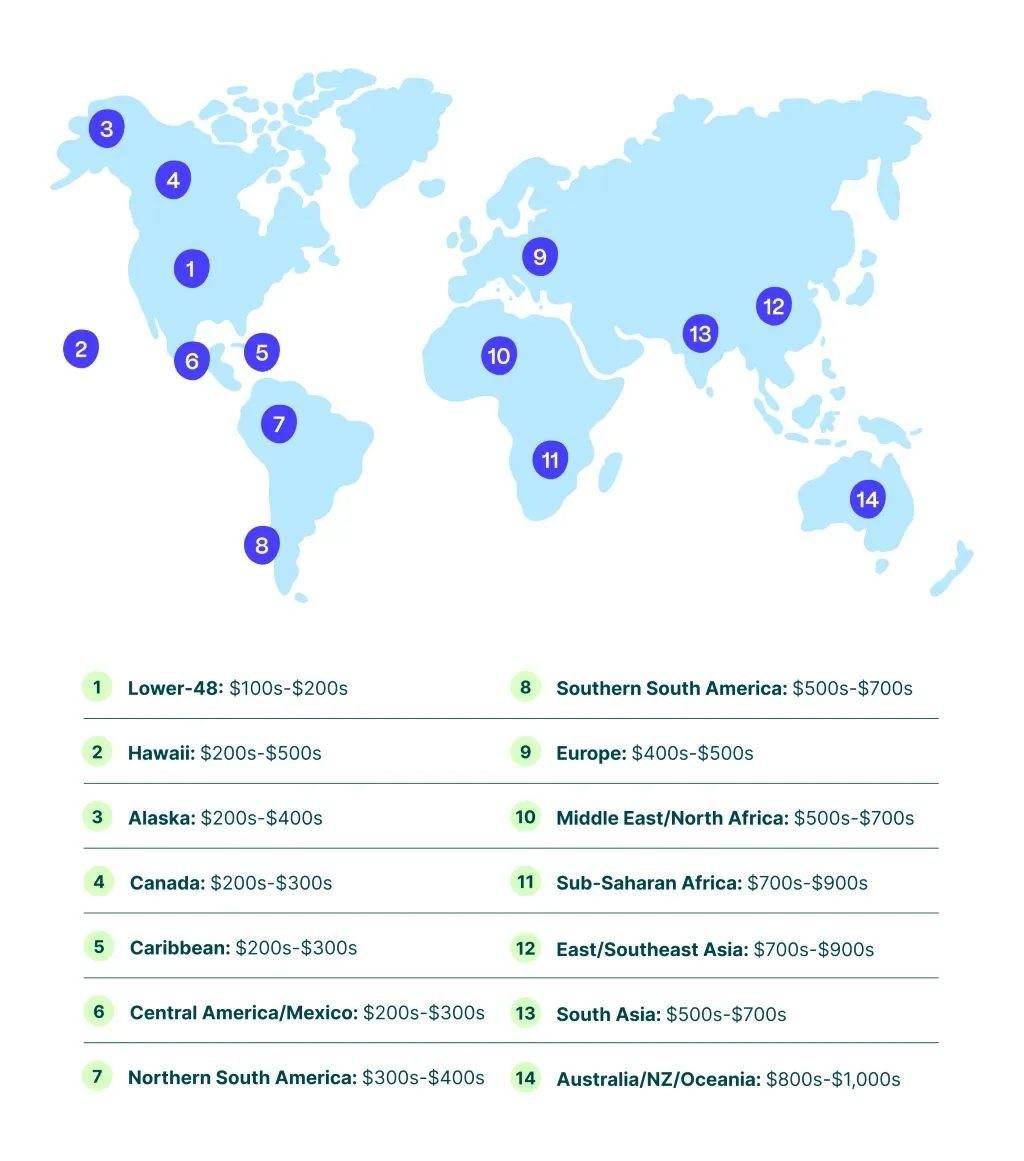
I’ve lost count of how many times I’ve heard this: I found a $300 flight to X, it’s so cheap there, this trip will be a bargain.
A few weeks later, the same person messages me from a beach bar, stunned at their credit card bill.
If that sounds familiar, this article is for you.
We’re in a strange moment. Flights feel pricey, yet there are still pockets of cheap fares if you know where to look. At the same time, many so-called budget
destinations have quietly turned into places where you burn through cash once you land. The flight looks cheap, but your total trip cost tells a different story.
Let’s walk through why that happens, how to spot the hidden costs of cheap destinations before you book, and how to build a realistic budget so your trip doesn’t blow up on day three.
1. The Flight Price Illusion: Are You Really Getting a Deal?
First question: is your flight actually cheap, or does it just feel cheap?
During peak Covid, airlines were practically begging people to fly. Fares were historically low. Now that demand is back, prices have mostly normalized rather than exploded. When you adjust for inflation, average airfare is often lower than a decade ago, according to analyses from sites like Going.
Here’s the catch: those cheap fares are not evenly spread out. They hide in off-peak seasons, midweek departures, and routes with heavy competition. Meanwhile, school holidays, long weekends, and last-minute bookings are brutal. If you grab a deal
to a popular cheap
country in the middle of peak season, you might just be paying a normal price dressed up as a bargain.
Before you congratulate yourself on that fare, ask:
- What’s the context? Is this price genuinely low for this route and season, or just lower than the last time you checked?
- What’s included? Checked bags, seat selection, meals? Budget airlines love to strip everything out and sell it back to you later.
- What’s the timing? Are you flying at 6 a.m. on a Tuesday in November, or on December 23rd? The same route can behave like two different products.
If you don’t compare against typical prices for that route and season, you risk building your whole trip around a cheap
flight that isn’t actually cheap. A smart budget travel cost breakdown starts with context, not just a single low number on a booking screen.
2. Visa Fees, Tourist Taxes, and Entry Costs You Forgot to Count
This is where a lot of $30-a-day
fantasies die.
Plenty of destinations marketed as budget-friendly quietly charge you before you’ve even left the airport. Think:
- Visa-on-arrival fees that can run $30–$60 per person.
- Electronic travel authorizations like the EU’s upcoming ETIAS, adding a mandatory fee just to enter.
- Tourist taxes and visitor levies in places like Bali or Venice, often collected at your hotel or on arrival.
These rarely show up in those viral How I lived in X for $20/day
posts. But they’re real cash, and they hit you before you’ve eaten a single meal. When you look at the total trip cost vs flight price, these entry fees can turn a cheap airfare into a much more expensive vacation.
Here’s how I handle it now:
- I always search
[country] visa fee for [my nationality]
before booking flights. - I check if there’s a
tourist tax
orcity tax
and whether it’s included in hotel prices or added on arrival. - I add these as a separate line in my budget, not buried under
miscellaneous
.
It’s not just about the amount. It’s about expectations. A $50 visa on a $300 flight is a 17% price jump you might not have planned for. Multiply that by two people and you’ve just blown a couple of days of your supposed cheap
daily budget.
3. Infrastructure Reality: When “Cheap Country” Means Paying More for Comfort
Here’s a hard truth: low prices on paper often assume you’re willing to tolerate discomfort, risk, or hassle.
Many budget destinations in Asia, Africa, and parts of Latin America have weaker infrastructure. That doesn’t make them bad places to visit. It just means that if you want certain standards—reliable Wi-Fi, 24/7 power, hot water, safe tap water, decent hospitals—you may have to pay a premium.
This is where the gap between daily travel expenses in cheap countries and your actual experience shows up.
- Accommodation: The $8 guesthouse exists, but it might come with cold showers, noise, and questionable cleanliness. If you upgrade to a mid-range hotel for comfort, your daily cost can double or triple.
- Transport: Weak public transit means you rely on taxis, private drivers, or domestic flights. Suddenly your
cheap
country has $40 airport transfers and $100 internal flights. - Work & connectivity: Digital nomads quickly discover that
cheap
destinations with bad Wi-Fi force them into coworking spaces and pricier cafes just to get things done.
In other words, the headline $20/day
budget often assumes you’re okay with the bare minimum. If you’re not, your real daily cost might look more like $40–$60.
Before you book, ask yourself honestly:
- What’s my actual comfort threshold?
- Am I okay with cold showers, power cuts, and long bus rides?
- Or am I going to upgrade everything once I’m on the ground?
If you know you’ll upgrade, build that into your travel budgeting beyond flights. Don’t pretend you’re the backpacker you were at 19 if you’re not.
4. Tourist Hotspots Inside Cheap Countries: The Price Trap
One of the biggest myths in travel: Country X is cheap.
That statement is almost meaningless without asking where in the country you’re going.
Places like Thailand, Mexico, Bali, Morocco, Vietnam, Portugal, and Turkey absolutely can be affordable. But the tourist hotspots inside them—Phuket, Cancun, Canggu, the Marrakech medina, Lisbon, Cappadocia—often have prices that rival or exceed Western cities.
Why? Because you’re not paying local
prices. You’re paying tourist-zone prices plus:
- Dual pricing for foreigners at attractions.
- Taxi drivers who refuse meters and quote
special
rates. - Restaurants that quietly add service fees and taxes to the bill.
- Bars and clubs priced for short-term visitors, not locals.
It’s not that you’re being scammed every second (though that happens too). It’s that the entire micro-economy of these areas is built around people who are there for a week and won’t notice an extra $10 here and $15 there.
If you want the cheap country
experience and avoid classic budget destination cost traps, you often need to:
- Stay a few neighborhoods away from the main tourist strip.
- Eat where locals actually eat, not where the menus are in six languages.
- Use ride-hailing apps or public transit instead of street taxis when possible.
The question to ask yourself is simple: Am I going to the country, or just to its most expensive postcard?
5. Banking, Currency, and the Silent Fees That Add Up
Another quiet budget killer: how you move your money.
Even if a destination is genuinely affordable, you can bleed money through:
- Foreign transaction fees on your card (often 2–3% per purchase).
- ATM withdrawal fees from both your bank and the local bank.
- Terrible exchange rates when you accept
pay in your home currency
on card machines.
On a two-week trip, that can easily add up to $50–$150 in pure friction. That’s a whole extra day or two of travel in many places, quietly inflating your full vacation cost.
My rule now:
- I always travel with at least one no-foreign-transaction-fee card.
- I withdraw larger amounts less frequently to reduce ATM fees.
- I always choose to pay in the local currency on card machines.
It’s not glamorous, but it’s the difference between a trip that stays on budget and one that quietly leaks money every time you tap your card.
6. Health, Safety, and Insurance: The Costs You Don’t See on Instagram
Almost no one factors this into their cheap destination
math: health and safety costs.
Some regions require or strongly recommend vaccinations (yellow fever, typhoid, hepatitis A/B, rabies). Others come with higher risks of mosquito-borne diseases, food poisoning, or road accidents. That doesn’t mean you shouldn’t go. It just means your cheap
trip might come with:
- $100–$300 in vaccines before you leave.
- Higher travel insurance premiums for countries with weaker healthcare systems.
- Occasional private clinic visits because you don’t want to gamble with your health.
These costs are invisible in most budget travel cost breakdowns, but they’re very real. And if something goes wrong without insurance, your cheap
destination can become the most expensive place you’ve ever visited.
So ask yourself:
- What vaccines or medications do I actually need for this region?
- Does my insurance cover evacuation or private hospitals?
- Am I budgeting for even a small health buffer, or just hoping for the best?
Travel is about calculated risk, not blind optimism. Build the health costs into your plan instead of pretending they don’t exist.
7. Dynamic Pricing and the Myth of the Forever-Cheap Flight
Let’s circle back to flights for a moment, because there’s another trap: assuming today’s cheap fare will still be there tomorrow.
Airlines use dynamic pricing systems that constantly adjust fares based on demand, remaining seats, and competition. Seats are divided into fare buckets. Once the cheapest bucket sells out, the system moves to the next one—even if the plane is half empty. Cancellations can briefly reopen cheaper buckets, but you can’t count on it.
That’s why you see prices jump $80 overnight and then drop $40 a few days later. It’s not random. It’s the algorithm doing its job.
What this means for you:
- If you see a fare that’s clearly below the usual range for that route and season, don’t sit on it for a week while you debate.
- Use tools with price alerts and low-fare calendars (Skyscanner, Going, AirTrack, etc.) to understand what
cheap
actually looks like for your route. - Be flexible with dates and even months. Shifting your trip by a few days can save hundreds.
But here’s the key mindset shift: a cheap flight does not automatically make a trip cheap. It’s just one variable. Don’t let the excitement of a low fare blind you to everything else—especially the low flight cost high on ground spending that catches so many travelers off guard.
8. How to Actually Tell If a “Cheap Destination” Is Cheap for You
So how do you put all of this together in a way that’s actually useful?
When I’m evaluating a cheap
destination now, I run it through a simple framework. It’s my quick way to see the full vacation cost, not just the headline fare.
- Access cost:
- What’s the realistic flight price for my dates and departure city?
- Are there extra visa or entry fees?
- Daily reality, not fantasy:
- What does mid-range accommodation actually cost in the areas I want to stay?
- How much is transport if I avoid the absolute cheapest options?
- What are restaurant prices in the neighborhoods I’ll realistically hang out in?
- Hidden friction:
- Bank fees, ATM charges, currency spreads.
- Tourist taxes, service charges, tipping norms.
- Health costs: vaccines, insurance, basic medical buffer.
- My own habits:
- Do I always end up in the
nice
part of town? - Do I prefer taxis over buses?
- Do I work while traveling and need strong Wi-Fi?
- Do I always end up in the
Only after I’ve answered those do I decide if a destination is truly cheap
for me, not just cheap in someone else’s YouTube video or Instagram caption.
The point isn’t to scare you away from affordable destinations. It’s to help you see the full price tag before you commit. Cheap flights are great. Low daily costs are great. But the real win is when the numbers still make sense after you’ve added everything in—when your travel cost guide for cheap destinations matches reality on the ground.
Next time you see a deal
, don’t just ask, How cheap is this flight?
Ask, What will this cost me once I’m actually living it?