I’ve lost count of how many “$59” flights I’ve booked that somehow turned into $250 by the time I hit pay. One minute you’re bragging about a bargain, the next you’re staring at a total that makes no sense. If you’ve ever thought, Wait, how did we get here?
this guide is for you.
Let’s unpack the real cost of cheap flights—bags, seats, and airport transfers. We’ll walk through the most common pricing traps, what they really cost in 2025–2026, and how to tell when a “deal” on a low-cost airline is actually more expensive than a full-service carrier.
1. The First Trap: Underestimating Baggage Fees
When you see a rock-bottom fare, the airline is usually betting on one thing: you’ll bring bags. That’s where the profit hides.
On most U.S. and Canadian airlines, a typical domestic round-trip first checked bag runs around $90. For a family of four, that can easily become $360+ just in luggage. And that’s before you add second bags, strollers, or the “we bought too much on vacation” suitcase.
Here’s what’s really going on behind the scenes with these hidden fees on budget airlines:
- Checked bags are a revenue machine. Since 2008, airlines have quietly turned baggage into a major profit center. Fees creep up every few years. American’s first bag on many routes is now about $50 (or $45 online) each way.
- Basic economy is the fee playground. Those headline fares often don’t include a free checked bag. Some ultra low-cost carriers (ULCCs) like Frontier or Allegiant even charge for carry-ons, turning simple cheap flight baggage rules into a maze of add-ons.
- Airport payments cost more. Many airlines add $10–$20 per bag if you pay at the airport instead of online. Same bag, same plane, higher price.
So when you see a cheap fare, pause and ask:
- How many bags will I realistically bring?
- What will those bags cost round-trip?
- Is there a fare that includes a bag that’s actually cheaper overall?
Sometimes the “more expensive” fare with a bag included is the smarter buy. For example, Air Canada’s Economy Flex or bundled fares on other carriers can beat a bare-bones ticket once you add separate bag fees. That’s the kind of cheap flights cost breakdown most people skip—and pay for later.
Takeaway: Never compare ticket prices without adding baggage. If you don’t know the bag fees yet, you don’t know the real price of your flight.
2. The Weight Game: Overweight and Oversize Bags
Most travelers obsess over How many bags?
and completely miss the more expensive question: How heavy are they?
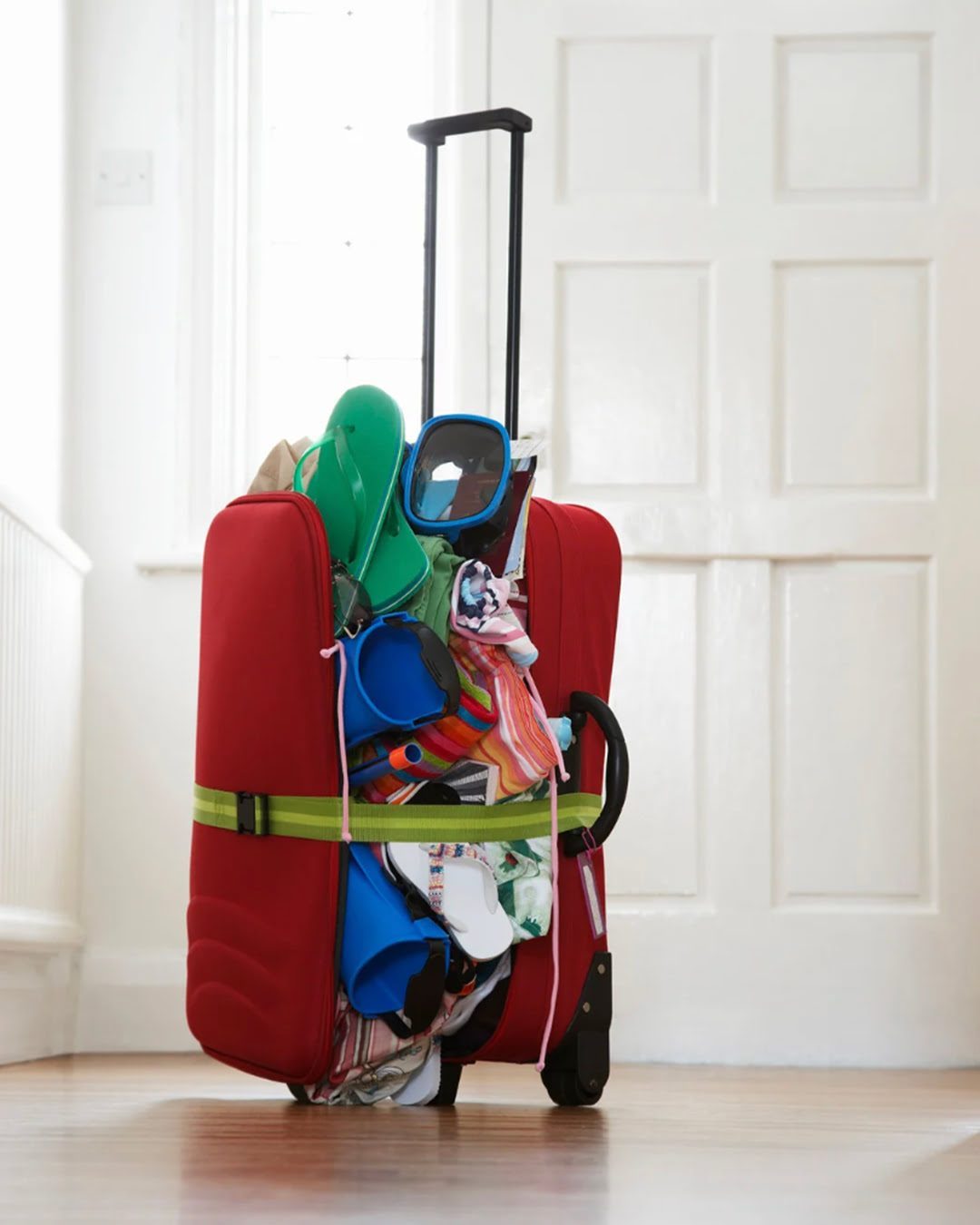
Standard checked bags are usually capped at 50 lbs (23 kg) and about 62 linear inches (length + width + height). Go over either limit and you’re in fee territory that can easily dwarf the cost of the bag itself.
- Overweight fees hurt. It’s common to see $75–$150 per bag each way for overweight luggage. That’s per direction, per bag.
- Oversize is bad, overweight is worse. Many airlines charge more for weight than for size. A slightly bulky but light bag might be okay; a dense 65 lb suitcase is not.
- Families are especially vulnerable. Traveling with kids? It’s easy to stuff everything into one giant suitcase “to save on bags” and then get slammed with overweight fees at the counter.
Here’s how to keep those extra fees for luggage on budget airlines under control:
- Use a cheap luggage scale at home. Aim for 47–48 lbs, not 49.9. Scales differ.
- Split heavy items (shoes, toiletries, books) across bags instead of maxing out one.
- Know your airline’s exact limits. Some are stricter than the standard 50 lbs.
Takeaway: One overweight bag can erase the savings of a cheap ticket. Keep weight under control and never assume the airline will “let it slide.”
3. Carry-Ons, Personal Items, and the ULCC Trap
On full-service airlines, a standard carry-on plus a personal item is still often included. On ultra low-cost carriers, that assumption can blow up your budget.
Here’s the pattern that shows up again and again with ULCCs like Frontier, Spirit, Allegiant and similar:
- Carry-ons cost as much as checked bags. Sometimes more. The “free” option is usually just a small personal item.
- Personal item size is strictly enforced. That backpack you’ve always used might suddenly be “too big” and trigger a steep gate fee.
- Prices change by route, date, and channel. Buying a bag at booking is cheaper than adding it later, which is cheaper than paying at the gate.
One move that often saves money on low cost airline hidden charges: instead of paying for multiple carry-ons, pay for one or two checked bags and share them across the group. On some budget airlines, checked bags bought early are cheaper than carry-ons.
Also, remember:
- Most fees are per direction. That $40 carry-on is really $80 round-trip.
- Bundles (bags + seats + priority boarding) can be a good deal if you need several extras, but a waste if you don’t.
- Many ULCCs charge extra to check in at the airport or print a boarding pass. Use the app.
Takeaway: On budget airlines, the bag rules are the product. If you don’t read them, you’re gambling with your wallet.
4. Seat Selection: Comfort or Clever Upsell?
Seat fees are where a lot of travelers quietly bleed money. The airline shows you a sea of red “paid” seats and a few sad free ones at the back, and suddenly you’re paying $25 per segment just to avoid the middle.
Here’s what’s really happening with budget airline seat selection fees:
- Seat fees are dynamic. They change by route, date, demand, and even how full the flight is. There’s no fixed price.
- Standard seats vs. preferred seats. Some full-service airlines still include basic economy seats in the fare but charge for front-of-cabin, exit rows, bulkhead, or extra-legroom seats.
- Low-cost carriers unbundle everything. Any specific seat choice costs extra; a random seat is free at check-in.
So when should you pay?
- Families with kids: If sitting together matters, budget for seats. Some airlines try to seat at least one adult with a child under 13, but it’s not guaranteed and relying on seat swaps is stressful.
- Tight connections: If you have a short layover, paying to sit near the front can be worth it.
- Long-haul flights: Extra legroom or a specific seat can dramatically change your experience.
For many short flights, though, it’s worth asking: Do I really care where I sit for an hour? Often I skip seat selection entirely and let the system assign me something at check-in. I’d rather save that money for a better meal at my destination.

Takeaway: Treat seat selection like any other purchase. If the comfort or convenience isn’t worth the price for that specific flight, don’t buy it just because the booking flow nudges you.
5. The Hidden Line Item: Airport Transfers and “Cheap” Airports
Here’s a cost that never appears on your airline receipt: getting to and from the airport. This is where a lot of “cheap flight mistakes that cost more” quietly happen.
It’s especially painful when you choose a low fare from a secondary airport far from the city. The ticket looks great; the airport transfer costs for cheap flights do not.
I’ve seen this play out over and over:
- You pick a low fare from a distant airport (or a different city entirely).
- You add train tickets, rideshares, or parking to get there.
- Suddenly the “cheap” flight is more expensive than the main airport option you skipped.
Before booking, I always ask:
- How much will it cost to get to this airport and back? (Gas, tolls, parking, rideshare, train.)
- How much time will I lose in transit?
- Is there a risk of missing early/late flights because public transport doesn’t run?
Sometimes the answer is still, Yes, this is worth it.
But often, once I add a $60 round-trip rideshare or $100 in long-term parking, the “cheap” flight loses its edge. When you look at the cheap vs full service airline total cost, the supposedly pricier option can suddenly look very reasonable.
Takeaway: A cheap ticket from an inconvenient airport is only a deal if you include the full cost of getting there and back.
6. Tools, Status, and Credit Cards: When the System Can Work for You
Not everything about cheap flights is doom and fees. If you travel even a few times a year, you can flip some of these budget airline pricing traps in your favor.
Here’s what I lean on:
- Baggage fee calculators. Tools like the luggage fee calculator on TravelClosely or airline-specific calculators (United, American, etc.) give you a realistic estimate before you book. They’re a simple way to get a clear baggage, seat and transfer fees breakdown.
- Airline status. Even low-tier elite status can include 1–2 free checked bags. If you fly the same airline or alliance often, this can save hundreds per year.
- Co-branded credit cards. Many airline cards include a free checked bag for you and sometimes companions on the same reservation. One family round-trip with multiple bags can offset the annual fee.
- Bag-inclusive fares. Sometimes a slightly higher fare class (like a “Flex” or “Standard” economy) includes bags and seat selection. Compare the total, not just the base fare.

One more angle: some airlines let you pay for bags with miles or points. It’s not always the best value, but if you’re cash-poor and points-rich, it can be a useful lever.
Takeaway: If you fly regularly, status and the right credit card can turn baggage fees from a constant leak into a manageable, predictable cost.
7. A Simple Framework: Is This Flight Actually Cheap?
When I’m evaluating a “deal,” I run through a quick checklist. Think of it as a mini cheap flight hidden costs guide you can run in your head.
- Start with the base fare. Note the airline, fare type (basic, standard, flex), and whether it’s a ULCC. This sets the stage for how many add on fees for seats and bags you’re likely to see.
- Add bags. How many checked bags? Any carry-on fees? Are you likely to hit overweight or oversize limits?
- Add seats (if needed). Do you actually need to sit together, sit near the front, or get extra legroom? Price it out per segment.
- Add transfers. Include rideshares, trains, parking, or gas to and from the airport. If you’re wondering how much do airport transfers cost, this is where you find out for your specific trip.
- Compare alternatives. Look at a bag-inclusive fare, a different airline, or a different airport. Sometimes a “more expensive” ticket is cheaper overall.
Then I ask one last question: If I knew the full cost from the start, would I still book this?
If the answer is no, I keep looking.
Final takeaway: Cheap flights aren’t really cheap; they’re just unbundled. The more you understand the pieces—bags, seats, transfers—the less likely you are to be surprised at the airport or on your credit card statement. Next time you see that irresistible fare, pause. Run the numbers. Decide if it’s truly a bargain, or just another cleverly packaged full-price ticket.