I love a good flight deal. I also know that some of the “cheapest” tickets are quietly the most expensive trips you can book. The main culprit? Secondary and “cheap” airports that look like a bargain on Google Flights, but drain your wallet once you add everything else.
If you’ve ever flown into “the other airport” an hour away because it was $60 cheaper, this article is for you. Let’s walk through the real math, the hidden traps, and when those smaller airports actually do make sense.
1. The Big Mistake: Comparing Airfare Instead of the Trip
Most of us do the same thing: sort by price, see a low fare into a secondary airport, and think, Nice, I just saved $80.
But airfare is only one line in the budget. The real cost is door-to-door, not airport-to-airport.
Once you start looking at the total trip cost to a secondary airport, a pattern shows up again and again:
- The “cheap” airport is often farther away from where you actually need to be.
- Ground transport (rideshare, rental car, train, bus) quietly eats your savings.
- Budget carriers at these airports unbundle everything: bags, seats, even printing a boarding pass.
- Extra connections and fewer flights increase your risk of disruption.
So instead of asking, Which flight is cheapest?
I ask: Which option is cheapest once I’m standing at my hotel door?
Here’s the simple formula I use for any secondary airport vs main airport decision:
- Total trip cost = Airfare + Ground transport + Parking + Baggage/fees + Value of time + Risk premium
Once you start thinking this way, a lot of “deals” stop looking like deals. That’s when you realize how often cheaper flights cost more overall.
2. Ground Transport: The Silent Budget Killer
This is where secondary airports most often lose. The ticket is $60 cheaper, but the airport is 40–80 miles away, with weak public transit and pricey rideshares.
From multiple sources, a few truths stand out:
- Remote or secondary airports often have limited buses and trains, if any at all.
- Rideshare or taxi from a far airport can easily hit $50–$100 each way.
- Rental cars from secondary airports can be more expensive, especially if you drop off in a different city.
Meanwhile, major hubs usually have better, cheaper connections into the city: airport trains, express buses, shared shuttles. That slightly higher airfare can become the cheaper option once you add the ride from the airport.
My personal rule of thumb: if a secondary airport adds more than about $30–$40 each way in extra ground costs (per person for solo travel, per car for families), I get suspicious of the “savings.” For a family of four, that extra $40 each way can instantly turn into $160–$200.
Next time you’re tempted by cheap flights to remote airports, do this first:
- Price out the actual ride from each airport to your hotel (Uber estimate, train fare, bus ticket).
- Multiply by the number of travelers.
- Add it to the airfare before you decide which airport is cheaper.
That quick secondary airport cost comparison is often enough to reveal the real price of the trip.
3. Your Time Has a Price (Even If You Never Wrote It Down)
We’re weirdly good at noticing $20 in baggage fees and terrible at valuing two extra hours of our own time.
Secondary airports can cut stress in some ways (shorter security lines, smaller terminals), but they often add:
- Longer drives or transfers to and from the airport
- Extra connections because there are fewer direct flights
- More waiting if there are only one or two flights a day
Here’s the mental trick I use: I assign myself an hourly rate. It doesn’t have to be your actual salary. Just pick a number that feels honest. For many people, $20–$40/hour is reasonable.
Then I ask:
- If this secondary airport adds 3 extra hours to my trip, is it really worth saving $50?
- Would I work 3 hours for $50? Or would I rather arrive earlier, less tired, and closer to where I’m going?
In one example from Santa Barbara and Palm Springs vs. LAX, the author was willing to pay $150–$200 more each way to fly into the closer airport because the time and stress saved were worth it. You might choose a different number, but the logic holds: time is a real cost, even if it doesn’t show up on your credit card statement.
Ask yourself bluntly: If a stranger offered me $60 to add three hours of hassle to my day, would I take it?
If the answer is no, that “cheap” airport isn’t actually cheap for you. The time cost of flying into distant airports is part of the bill.
4. Parking, Fees, and the Budget Airline Trap
Secondary airports often attract ultra-low-cost carriers. That’s where you see those eye-catching fares: $39, $59, $79. They’re real, but they’re also incomplete.
Here’s what the research and real-world experience say:
- Smaller airports can have cheaper landing fees, which helps airlines drop base fares.
- Budget carriers then unbundle everything: carry-on, checked bag, seat selection, early boarding, even printing a boarding pass at the airport.
- Parking at some secondary airports is not as cheap as you’d expect, especially if they’re far from town and you have to drive.
Over a 4–7 day trip, parking alone can add $60–$150. Add one checked bag each way, a carry-on fee, and a seat assignment, and that $59 fare can quietly become $180–$220.
Meanwhile, a full-service airline at a main airport might show $210 up front, but include a carry-on, better schedule, and easier transit into the city. Once you add everything, the “expensive” option can be the better deal.
When I compare airports, I literally list:
- Base fare
- Carry-on + checked bag fees
- Seat selection (if I care)
- Parking or rideshare to each airport
- Any extras I know I’ll pay (priority boarding, etc.)
It takes five minutes in a simple spreadsheet, and it’s often the moment where the fake bargains reveal themselves. This is where the hidden costs of cheap flights and classic budget airlines hidden fees show up in black and white.
5. Connections, Disruptions, and the Hidden “Risk Premium”
There’s one cost most people never factor in: what happens when things go wrong.
Secondary and remote airports usually have:
- Fewer flights per day
- Fewer airlines operating
- Less flexibility when there’s a delay or cancellation
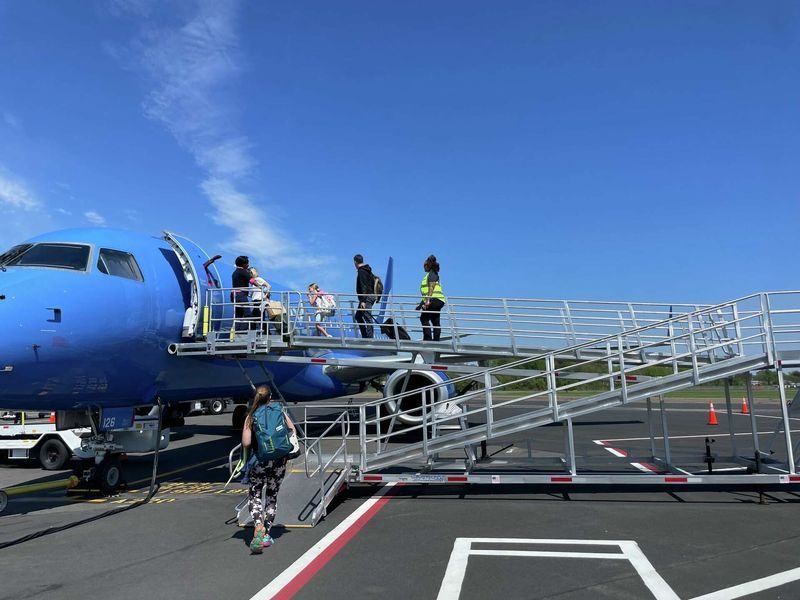
At a big hub, a missed connection might mean you get rebooked on the next flight in a couple of hours. At a small airport with one flight a day, it might mean an overnight stay, a lost day of your trip, or a missed event.
I treat this as a risk premium. If a routing through a secondary airport adds:
- An extra connection
- A tight layover
- Or relies on a tiny airport with limited backup options
…I mentally add a “what if” cost. That might be the price of a last-minute hotel, a missed prepaid tour, or even just the stress of not knowing if I’ll make it.
Ask yourself:
- How much would it cost me if this flight gets canceled?
- How flexible is my schedule really?
- Is saving $70 worth the chance of losing a full day of vacation or a key meeting?
For some trips (casual weekend, flexible dates), the risk is fine. For others (weddings, cruises, business meetings), I’ll happily pay more for a main airport with more flights and better recovery options. That’s the quiet risk cost baked into low cost carrier airport traps.

6. When Secondary Airports Actually Win
So far this might sound like I’m anti-secondary-airport. I’m not. I use them a lot. I just want them to win on real price, not fake price.
Secondary or smaller airports can be fantastic when:
- They’re actually closer to where you live or stay, cutting your ground transport time and cost.
- They have good public transit or cheap shuttles into the city.
- The fare difference is big enough that even after adding bags, parking, and time, you’re still clearly ahead.
- You value a calmer, smaller airport experience: shorter lines, easier navigation, less chaos.
- You’re on a flexible trip where a delay or cancellation won’t wreck anything important.
In some metro areas, the secondary airport is actually the smart default. Think of places where the “big” airport is a fortress hub with high fares, and the smaller one is where the low-cost carriers compete aggressively. In those cases, the secondary airport can be both cheaper and more convenient.
The key is to stop assuming the biggest airport is always best, or that the cheapest fare is always best. Both assumptions are wrong often enough to cost you real money and time. Understanding the real price of budget airline tickets means looking beyond the search results page.
7. A Simple Decision Framework You Can Reuse
Here’s the practical, no-nonsense way I decide between airports now. You can copy this straight into a note or spreadsheet.
- List your options
Write down every realistic airport you could use for this trip (both primary and secondary). - For each airport, write:
- Airfare (round-trip, per person)
- Ground transport cost (to/from airport, for your whole group)
- Parking cost (if you’ll drive and leave a car)
- Baggage and seat fees (realistic, not optimistic)
- Extra time vs. the best option (in hours)
- Number of connections and how tight they are
- Assign a value to your time
Pick an hourly rate (say $20–$40/hour). Multiply extra hours by that number and add it to the cost. - Add a small risk premium
If an option has more connections or a tiny airport with few flights, mentally add a buffer (even $30–$50) to reflect the risk of disruption. - Compare the totals
Now look at the real total for each airport. Often, the “expensive” airport suddenly looks like the sane, cheaper choice.
Once you do this a few times, you’ll start to see patterns in your own travel style. Maybe you’re happy to trade time for money. Maybe you’re not. The point is: you’ll be deciding with your eyes open, and avoiding the classic mistakes booking cheap airport deals.

8. The Bottom Line: Don’t Let a Cheap Fare Make an Expensive Trip
Secondary airports aren’t the enemy. Blindly chasing the lowest fare is.
If you remember nothing else, remember this:
- Always compare door-to-door, not airport-to-airport.
- Ground transport, parking, baggage, and time can easily flip which option is truly cheaper.
- Extra connections and tiny airports carry a real risk cost, especially for important trips.
- Sometimes paying $100–$200 more for the closer, simpler airport is the smartest money you’ll spend on the whole trip.
The next time a secondary airport flashes a tempting price at you, pause and ask: What will this really cost me by the time I walk into my hotel?
That one question can save you money, time, and a lot of unnecessary stress—and help you avoid those cheaper flights that cost more overall.