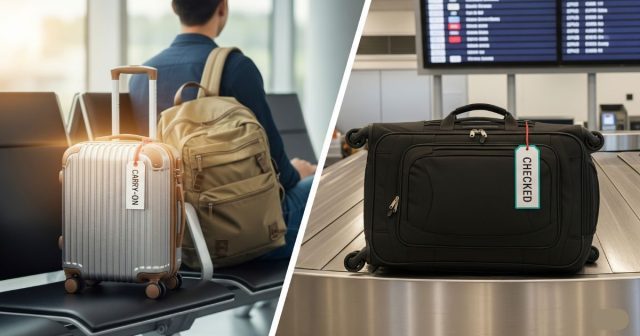
I’ve lost a bag in Bangkok, gate-checked a “guaranteed” carry-on in Denver, and sprinted past a baggage carousel in Chicago because I refused to wait. So when people ask, Should I check a bag or go carry-on only?
I don’t answer with a rule. I answer with a question:
What kind of trip are you actually taking?
This guide breaks it down by trip type, cost, and stress level so you can choose the right setup before you’re repacking on the airport floor.
1. The 3–5 Day City Break: Is Carry-On Only Really Cheaper?
Short trips are where carry-on-only travel usually shines. But it’s not always the slam-dunk you think.
On most full-service U.S. airlines, a standard economy ticket still includes a free carry-on and personal item. Checked bags, on the other hand, usually run about $35–$50 each way on major carriers and often more on international routes (see fee comparisons). For a solo traveler on a long weekend, that’s a lot of money to pay just to bring full-size shampoo.
But here’s the catch: low-cost carriers flip the script. Airlines like Frontier, Spirit, Ryanair, and EasyJet often charge for overhead bin access. That “cheap” fare can suddenly include:
- A fee for a full-size carry-on
- Another fee if you pay at the gate instead of online
- Penalties if your bag is even slightly oversized
On these airlines, the checked bag vs carry on math changes fast. One checked bag booked in advance can actually be cheaper than paying overhead-bin fees for each traveler, especially if you’re a couple or a small group sharing one suitcase.
My rule of thumb for 3–5 day trips:
- Solo on a full-service airline: Go carry-on only. You save time, avoid checked baggage fees, and skip the carousel.
- On a budget airline: Compare the cost of one checked bag vs. multiple paid carry-ons. The airline baggage fee breakdown often surprises people.
- Basic Economy fares: Watch for “personal item only” rules. A non-compliant carry-on can be hit with a gate-check fee plus the standard checked fee.
And remember: carry-on-only isn’t just about money. You skip check-in lines, avoid baggage claim, and reduce the risk of lost luggage. That’s a lot of stress removed for a weekend trip.
2. The 7–14 Day Vacation: Laundry vs. Baggage Fees
This is where the decision gets uncomfortable. You can either:
- Pack light and do laundry mid-trip, or
- Pay for a checked bag and bring more stuff.
Most people underestimate the hidden costs of carry-on-only on longer trips. If you’re gone for 10 days with one small bag, you’re probably:
- Doing laundry at least once (hotel service, laundromat, or sink-washing)
- Spending time planning outfits and re-wearing clothes
- Buying toiletries at your destination because of liquid limits
Those costs add up. A single hotel laundry load can rival a checked bag fee. A laundromat visit eats an evening. And buying travel-size toiletries at tourist prices can be surprisingly expensive.
On the flip side, a checked bag gives you:
- Room for multiple shoes and outfits
- Full-size toiletries (no 3.4 oz limit)
- Space for souvenirs on the way back
The trade-off? You’re paying that $70–$90 round-trip fee per person and adding 15–30 minutes at baggage claim each way. Plus a small but real risk of delayed or lost luggage.
Here’s how I decide for 7–14 day trips:
- One climate, casual trip (e.g., beach, single city): Carry-on only + one planned laundry day. Use packing cubes, wear your bulkiest items on the plane, and accept that you’ll repeat outfits.
- Multi-climate or special events (weddings, business, content creation): Check at least one bag. The stress of not having the right clothes is worse than the fee.
- Hybrid strategy: Pack essentials for 2–3 days in your carry-on and check a larger bag. If the checked bag is delayed, you’re still functional.
Ask yourself: Would I rather pay in money or in time and mental energy?
There’s no universal right answer. But pretending the trade-off doesn’t exist is how people end up rage-folding clothes in hotel bathrooms.
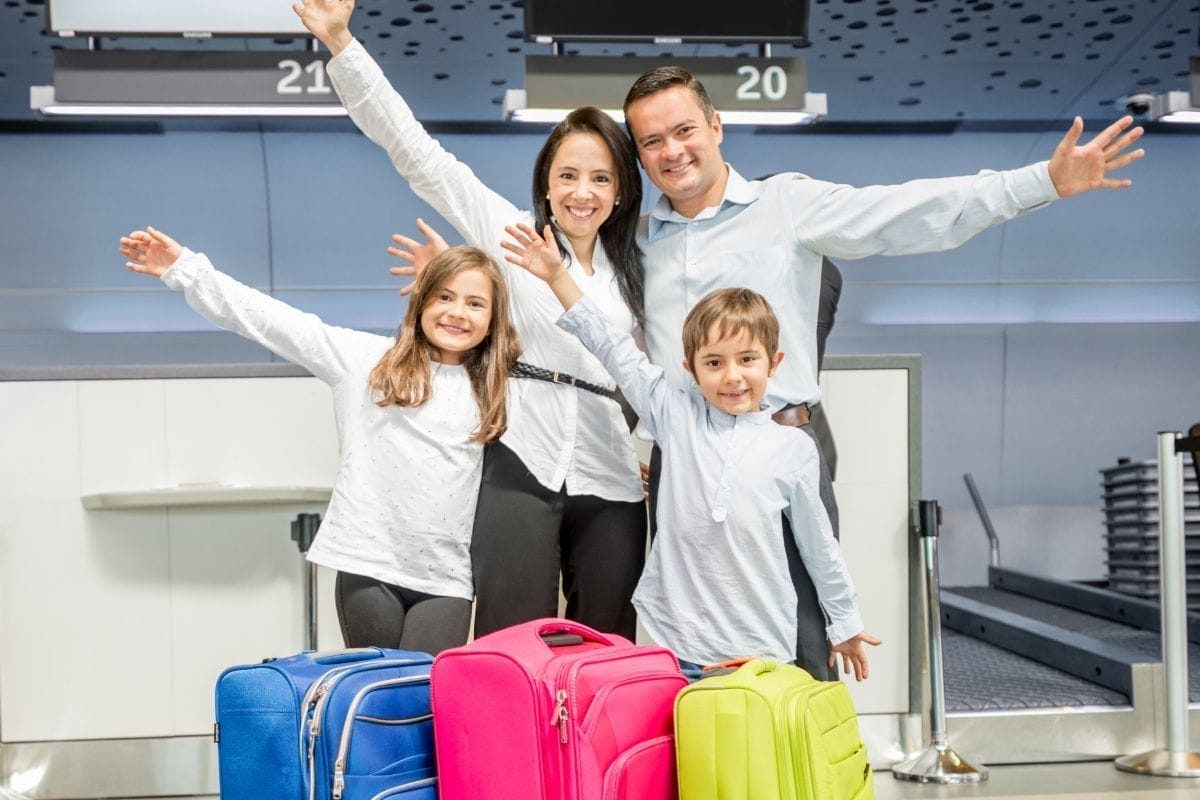
3. Family Trips: One Big Checked Bag or Multiple Carry-Ons?
Traveling with kids changes everything. Suddenly you’re not just packing clothes. You’re packing snacks, medicine, backup outfits, comfort items, maybe even a stroller or car seat.
For families, the cost equation shifts:
- Four people each checking a bag at $35–$45 each way can add $280–$360 to a round-trip.
- Four paid carry-ons on a budget airline can be just as expensive.
That’s why many families do better with a shared checked bag strategy:
- One or two large checked bags for bulk items, shoes, and toiletries
- Personal items or small backpacks for each person with clothes for 1–2 days, snacks, and essentials
This setup:
- Reduces the number of bags you’re dragging through the airport
- Spreads risk: if a checked bag is delayed, you still have basics
- Can be cheaper than paying overhead-bin fees for everyone
There’s also the credit card angle. Many airline co-branded cards include a free checked bag for the cardholder and several companions on the same reservation. For a family flying even once or twice a year, that perk can easily outweigh the annual fee and change your whole budget travel baggage strategy.
Before you book, run a quick mental test:
- Estimate your total bag fees for the year.
- Compare that to the annual fee of a relevant airline card.
- If the fees are higher, the card might be the smarter move.
One more thing: kids and tight connections don’t mix well with baggage claim. If you know you’ll be exhausted on arrival, paying to avoid hauling multiple carry-ons through a crowded airport might be worth every dollar.
4. Business Trips & Tight Connections: Time vs. Risk
Business travel has one brutal rule: you can’t miss the meeting because your bag went to another city.
That’s why many frequent business travelers are almost religious about carry-on-only. Keeping your bag with you means:
- No waiting at check-in counters or baggage claim
- No risk of your suit or presentation materials going missing
- Less stress on tight connections
But there are two realities people forget:
- Regional jets often force even compliant carry-ons to be gate-checked.
- Overhead bin space is limited, especially if you board late.
So the real business-travel strategy looks more like this:
- Pack a true carry-on-sized bag that fits even in smaller bins.
- Keep mission-critical items (laptop, documents, one outfit) in your personal item.
- Avoid Basic Economy if it restricts carry-ons or boards you last.
If you absolutely must check a bag (trade shows, product samples, camera gear), treat it as optional gear, not survival gear. Assume it might be delayed and pack your first 24–48 hours of essentials in your carry-on.
Ask yourself: If my checked bag vanished, could I still do my job?
If the answer is no, you’re relying too heavily on the cargo hold.
5. Adventure, Multi-Season & Gear-Heavy Trips: When Checked Bags Win
There’s a point where carry-on-only becomes a performance art project. If you’re packing for:
- Ski trips or snowboarding
- Hiking or camping with gear
- Multi-season travel (e.g., Europe in spring + mountains)
- Sports tournaments or musical instruments
…then a checked bag (or several) is often the rational choice.
Most airlines cap checked bags at 50 lbs (23 kg) and 62 linear inches. Go over that and you’re in overweight/oversize fee territory, which can be brutal. Some sports gear has special rules or flat fees, so it’s worth checking your airline’s policy before you show up with skis or a golf bag.
Here’s the trade-off for gear-heavy trips:
- Pros of checking: You can bring what you actually need, including bulky clothing and specialized equipment.
- Cons: Higher fees, more time at the airport, and more to track and protect.
My approach:
- Check the gear and bulky items.
- Keep a compact carry-on with clothes for 2–3 days, plus essentials.
- Photograph your packed bags and weigh them at home to avoid surprises.
For long-term or round-the-world trips, I often see people start with a giant checked bag and regret it. They end up mailing things home or ditching items along the way. If you’re gone for months, consider a medium checked bag plus a serious commitment to editing your gear as you go.
6. The Stress Equation: Airport Experience, Liquids & Overhead Bins
Money is easy to measure. Stress isn’t. But it matters just as much.
Carry-on-only stress looks like:
- Worrying about overhead bin space
- Watching boarding groups like a hawk
- Arguing with yourself about what to leave behind
- Dealing with TSA liquid rules (3.4 oz, quart-sized bag, etc.)
Checked-bag stress looks like:
- Standing in line to drop bags
- Waiting at baggage claim after a long flight
- Wondering if your bag made the connection
- Paying surprise overweight or extra-bag fees
Neither is “better.” They’re just different. The key is to be honest about your tolerance.
If you hate:
- Rushing to board early
- Arguing with gate agents about bag size
- Decanting toiletries into tiny bottles
…then checking a bag might actually lower your stress, even if it costs more.
If you hate:
- Waiting around after landing
- Not knowing where your stuff is
- Paying any fee you can avoid
…then carry-on-only is probably your default, and you’ll accept the packing constraints and the occasional overhead-bin battle.
One practical tip: whatever you choose, keep a small, self-contained “survival kit” in your personal item. Medications, a change of underwear, a t-shirt, chargers, and basic toiletries. That way, even if your checked bag disappears or your carry-on gets gate-checked and delayed, you’re not stuck.
7. A Simple Framework: How to Decide for Your Next Trip
Instead of memorizing rules, run your next trip through this quick framework. It works whether you’re planning a weekend trip carry on only or a long international flight with checked luggage.
- Trip length & type
- Under 5–7 days, single climate? Default to carry-on only.
- Over 7–10 days, multi-climate, or special events? Strong case for at least one checked bag.
- Airline & fare
- Full-service airline with free carry-on? Carry-on is usually cheaper.
- Budget airline charging for overhead bins? Compare one shared checked bag vs. multiple carry-ons.
- Basic Economy? Read the baggage fine print before you click “buy.”
- Who’s traveling
- Solo or couple? Easier to go light.
- Family or group? Consider shared checked bags and credit card perks.
- Gear & obligations
- Need suits, uniforms, or specialized gear? Plan for at least one checked bag.
- Critical items? Keep them in your carry-on or personal item, always.
- Stress tolerance
- Hate waiting? Carry-on.
- Hate packing constraints and liquid rules? Check a bag.
In the end, the smartest travelers I know don’t swear loyalty to carry-on-only or checked-bag life. They switch tactics based on the trip.
Next time you book, don’t just ask, Can I get away with a carry-on?
Ask, What combination of cost, time, and stress actually makes this trip better?
That’s the real decision.