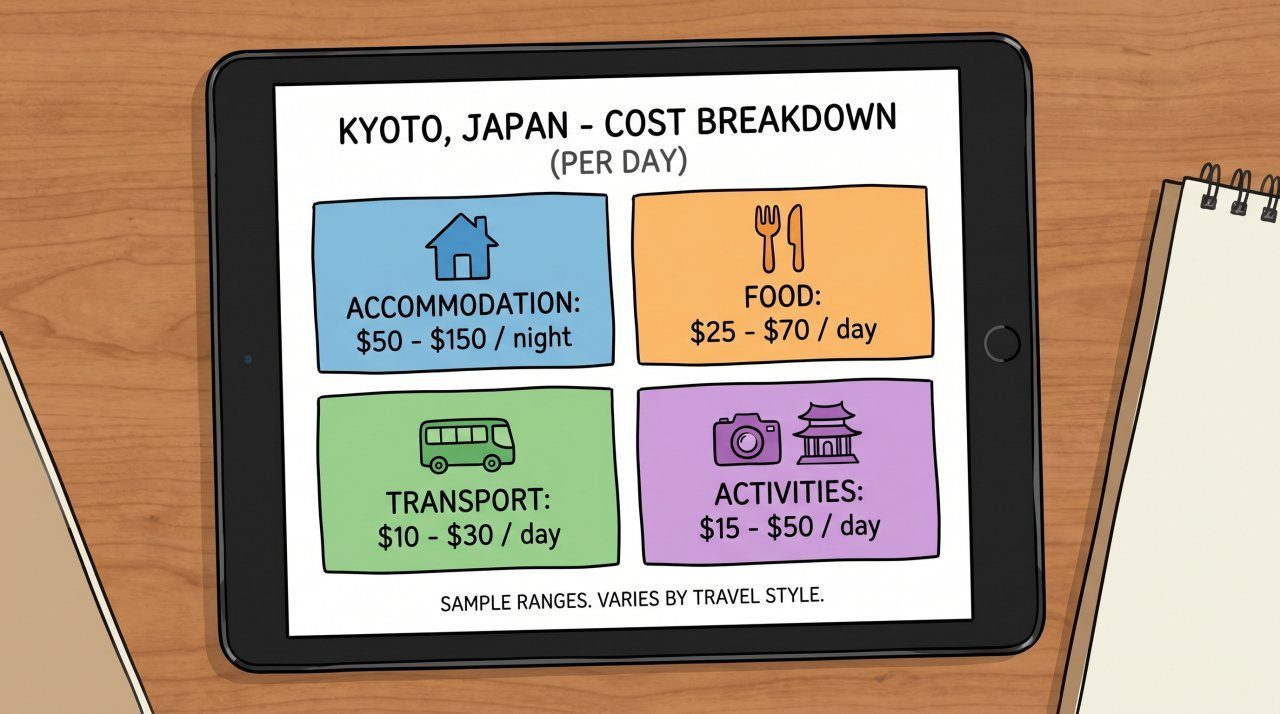
I’ve lost count of how many times I’ve clicked on a “$49 flight” only to watch the total quietly climb past $200 by checkout. Sound familiar? That’s not bad math. That’s airline pricing.
If you only compare the headline fare, you’re playing the game the airlines want you to play. In this guide, I’ll walk you through how I actually compare flights in 2026 – not just by ticket price, but by the real cost of airfare: total trip cost, stress level, and flexibility.
1. Start With the Real Question: What Will This Trip Actually Cost Me?
When I’m hunting for flights, I don’t ask, Which ticket is cheapest?
I ask, What will this trip really cost me from the moment I book until I walk out of the arrival airport?
Airlines know we’re drawn to low numbers. So they strip out everything they can from the base fare and sell it back to us as options
: bags, seats, food, even check-in. The trick is to rebuild that full price before you click buy and see the true price of those cheap airline tickets.
Here’s the mental checklist I use every time I compare two fares and try to see beyond the base fare:
- Bags: How many do I realistically need? What will they cost on each airline?
- Seats: Do I care where I sit? Do I need to sit with someone?
- Flexibility: What happens if I need to change or cancel?
- Onboard: Will I end up buying food, drinks, or Wi‑Fi?
- Payment & booking: Any extra fees for how or where I book?
Once you answer those, the cheap
flight often stops looking so cheap. That’s when the hidden costs of cheap flights start to show.
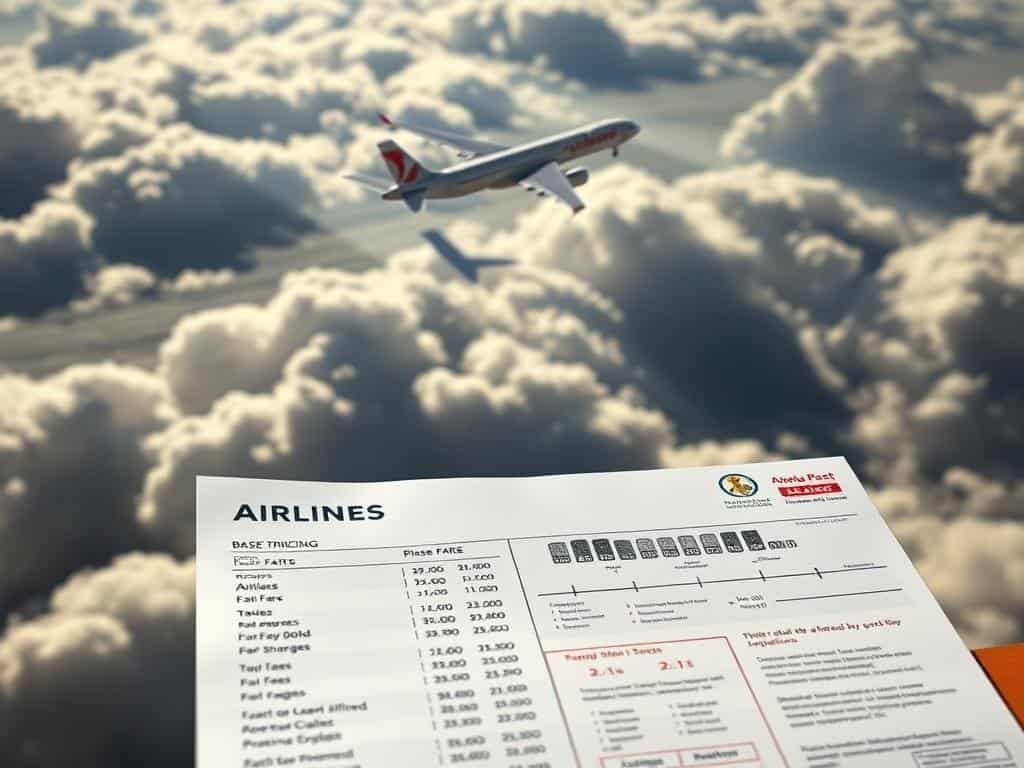
2. Baggage: The Fee That Quietly Destroys Cheap Fares
If there’s one fee that blows up budgets more than any other, it’s baggage. This is where budget airline hidden fees really pile up, usually buried in the fine print.
Here’s how I break it down when I compare flight prices beyond the ticket price:
Checked bags: the new normal
On most major U.S. airlines, checked bags are no longer a free perk. Typical first-bag fees hover around $35–$50 on legacy carriers and can jump to $55–$99+ on low-cost carriers, especially if you add the bag late or at the airport. Even airlines that used to be generous have tightened up – there’s no longer a major U.S. carrier with universally free checked bags on all fares.
So when I see a $79 fare on a budget airline and a $119 fare on a full-service carrier, I immediately add:
- Budget airline: +$60–$80 for a checked bag (round trip)
- Full-service airline: maybe +$70–$100, or sometimes included depending on fare or status
Suddenly that $79 vs $119 comparison doesn’t look so obvious. The cheap flights cost breakdown changes fast once bags enter the picture.
Overweight & oversized: the silent killers
Overweight fees are where people really get burned. It’s common to see $75–$100+ per bag if you’re just a few pounds over. I’ve watched people at the counter frantically moving shoes between bags to avoid a triple-digit fee.
My rule now:
- Weigh bags at home with a cheap luggage scale.
- Know the airline’s exact weight and size limits before you pack.
- Assume budget airlines will be stricter than legacy carriers.
Those few extra pounds can turn a “deal” into the most expensive bag you’ve ever checked.
Carry-ons: no longer automatically free
Some budget airlines charge for carry-ons and even larger personal items. That free
backpack might suddenly cost you $35–$65 each way if it doesn’t fit under the seat.
When I compare fares, I literally write down:
- How many bags I’ll bring.
- What each bag will cost on Airline A vs Airline B.
- What happens if I misjudge the size or weight.
Only then do I decide which fare is actually cheaper and what the total cost of flying budget airlines will be.
3. Seat Selection: Are You Paying for Comfort or Just for Control?
Seat fees are sneaky because they feel small in the moment. $18 here, $27 there. But multiply that by two legs and four family members and you’re suddenly paying more for seats than for the base fare.
This is one of those unexpected airline fees and charges that doesn’t look scary until you add it all up.
What airlines are really selling you
Most airlines now monetize almost every seat:
- Standard seats: Sometimes free, sometimes $10–$30 depending on route and demand.
- Preferred seats: Closer to the front, window/aisle – often around $20–$40.
- Exit rows & extra legroom: Frequently $40–$80 on domestic routes and up to $160+ on long-haul international flights.
For airlines, this is a gold mine. For you, it’s a decision: Do I really need to choose my seat, or do I just want to?
When I pay for a seat (and when I don’t)
I’m willing to pay for seats when:
- I’m traveling with kids and need to sit together.
- It’s a long-haul flight and extra legroom will genuinely affect how I feel for days.
- I’m working on the plane and need an aisle for easy movement.
I skip seat fees when:
- I’m solo on a short flight and don’t care where I sit.
- The airline tends to seat families together automatically (I check reviews and forums).
- I can check in exactly 24 hours before departure and grab better free seats then.
One more thing: some airlines quietly charge for every seat, even middle seats in the back. If I see that, I immediately add those costs into my comparison. A $59 fare with $25 seat fees each way is really a $109 fare before I’ve even added bags.
On paper it’s a basic economy bargain. In reality, it’s another example of basic economy hidden costs.
4. Flexibility: Change & Cancellation Rules That Can Cost More Than the Ticket
This is the part most people skip – until something goes wrong. Then it becomes the most expensive line item of the trip.
Change and cancellation fees used to be a flat, painful number (often $200–$300). Many airlines relaxed those rules during the pandemic, but the fine print still matters a lot, especially for basic economy and ultra-cheap fares.
What I look for before I book
When I’m comparing two flights, I always check:
- Is this fare changeable? Basic economy often isn’t, or only for a hefty fee.
- What’s the change fee? Some airlines charge nothing but make you pay any fare difference. Others still have fixed penalties.
- Can I get a credit or refund? Credits usually come with expiry dates and restrictions.
Then I ask myself a blunt question: How likely is it that I’ll need to move this trip?
If the answer is anything above “almost zero,” I treat flexibility as part of the price.
When the more expensive ticket is actually cheaper
Here’s a scenario I see all the time:
- Basic economy: $150, no changes, no refund.
- Standard economy: $210, free changes (fare difference only), more flexible rules.
If there’s even a moderate chance I’ll need to adjust dates, that extra $60 is basically an insurance policy. One schedule change could easily cost more than that on the cheaper ticket.
So when I compare fares, I don’t just ask, Which is cheaper?
I ask, Which one will hurt less if life happens?
That’s the real cost of airfare most people forget to factor in.
5. Onboard Costs: Food, Drinks, and the Nickel-and-Dime Flight
On many budget airlines, the plane is basically a flying vending machine. Nothing is included. Not even water, in some cases.
That matters more than you think. Two people on a medium-length flight can easily spend $30–$50 on snacks, drinks, and maybe a sandwich or two. Multiply that by both directions and suddenly you’ve added $60–$100 to your cheap
fare.
How I factor onboard costs into the fare
When I compare airlines, I check:
- Does this airline include at least water and a basic snack?
- What do typical onboard items cost? (You can often find menus online.)
- How long is the flight, and what time of day is it?
If I know I’ll be flying during a meal window, I assume I’ll either:
- Buy food at the airport (not cheap), or
- Buy food onboard (also not cheap), or
- Plan ahead and bring my own snacks and an empty water bottle.
On full-service carriers that still include drinks and snacks, I mentally subtract a bit from the price difference. If Airline A is $30 more expensive but includes food and bags, and Airline B charges for everything, Airline A might actually be the better deal.
Again, this is why you have to compare flight prices beyond the ticket itself. The nickel-and-dime stuff adds up fast.
6. Booking, Payment & Check-In: The Tiny Fees You Don’t See Coming
Some fees don’t show up until the very end of the booking process – or worse, at the airport. These are the ones that make people feel tricked and turn simple flight booking mistakes into expensive lessons.
Payment method fees
Certain airlines add surcharges for specific payment methods – particular credit cards, PayPal, or even paying in a foreign currency. On top of that, your bank might charge a foreign transaction fee if the airline processes the payment abroad.
My approach:
- Use a credit card with no foreign transaction fees for international bookings.
- Watch for any
payment processing
orservice
fees at checkout. - If one airline adds a payment fee and another doesn’t, I add that into my comparison.
Booking channel & check-in traps
Some budget airlines charge extra if you:
- Book over the phone instead of online.
- Check in at the airport instead of via the app.
- Need a printed boarding pass from an agent.
I’ve seen airport check-in or boarding pass reprint fees that are higher than the original ticket. That’s not an accident; it’s a business model.
So when I compare fares, I ask:
- Am I comfortable doing everything online or in the app?
- What happens if the app glitches and I need help at the airport?
If an airline is notorious for punishing you for human interaction, I treat that as a cost – not just in money, but in stress.
7. Taxes, Airport Fees & Priority Perks: The Extras That Blur the Comparison
Not every extra charge is the airline’s fault. Government taxes, security fees, and airport surcharges all get passed on to you. But the way they’re presented can still be confusing and make airfare comparison beyond the base fare tricky.
When I’m comparing flights, I always look at the final total on the payment page, not just the base fare shown on the search results. That’s where you see:
- Government taxes and security fees.
- Airport facility charges.
- Fuel surcharges (on some international routes).
Then there are the optional extras:
- Priority boarding: Often $15–$25. Nice, but not essential if you pack light.
- Fast-track security: Can be worth it at busy airports, but only if you know you’ll use it.
- Travel insurance add-ons: Sometimes useful, sometimes redundant if you already have coverage via your credit card.
My rule: I never add these in a panic at checkout. If I’m going to pay for priority boarding or fast-track, I decide that before I start comparing fares, and I treat it as part of the ticket price.
8. How to Compare Two Fares in Under Five Minutes
Let’s put this all together. Here’s the quick method I use when I’m staring at two tempting options on a flight search site and trying to figure out how to compare flight deals properly.
Step 1: Write down the base fares
Example:
- Airline A (budget): $79
- Airline B (full-service): $129
Step 2: Add bags
Ask: How many bags will I bring, realistically?
- Airline A: 1 checked bag each way at $40 = $80
- Airline B: 1 checked bag included
New totals:
- Airline A: $79 + $80 = $159
- Airline B: $129
Step 3: Add seats (if you care)
Say you’re a couple who wants to sit together:
- Airline A: $20 per seat per leg x 2 people x 2 legs = $80
- Airline B: free standard seat selection
New totals:
- Airline A: $159 + $80 = $239
- Airline B: $129
Step 4: Add onboard & other likely extras
Maybe Airline A charges for water and snacks, and Airline B includes them. You estimate $30 round trip for two people on Airline A.
- Airline A: $239 + $30 = $269
- Airline B: $129
Now ask: Which one is really the cheap flight?
On paper, Airline A started at $79 and Airline B at $129. But once you add what you’ll actually spend, Airline A is more than double the price.
This is why I don’t trust headline fares. I trust the math. When you look at the total cost of flying budget airlines versus a full-service airline, the “deal” often flips.
Final Thought: Don’t Chase Cheap, Chase Value
Airlines aren’t going to stop unbundling. If anything, they’ll get more creative. That means the burden is on us to be smarter buyers and to spot the hidden costs of cheap flights before they hit our bank accounts.
When you see a suspiciously low fare, pause. Ask yourself:
What’s missing from this price?
What will I almost certainly end up paying for?
How much is my comfort and flexibility worth on this trip?
Once you start comparing flights this way – looking at baggage and seat fees, flexibility, and all those low-cost carrier extra charges – you’ll notice something interesting: you book fewer deals
, but you regret far fewer trips.
And that, in the long run, is worth more than any $49 ticket.