
I don’t really trust “cheap” hotel prices anymore. You probably shouldn’t either.
A $90 room in one city can easily cost more than a $130 room somewhere else once you add taxes, resort fees, parking, breakfast, and all the little extras that quietly sneak in. The headline rate is just the bait.
These days, I compare places by the total stay cost, not the nightly rate. That means looking past the teaser price, doing a bit of quick math, and sometimes realizing that the “expensive” hotel is actually the better deal.
1. The Big Lie of the Nightly Rate
When you search for hotels, you’re usually seeing the teaser price
—the base room rate before taxes and mandatory fees. It’s like comparing salaries before tax when you’re deciding where to live. Technically accurate, but not very useful.
Tools like the Hotel Cost Estimator make something very clear: once you add everything in, the real bill is often 30–50% higher than the advertised rate. That’s the real cost of cheap hotels.
Here’s a simple example I use when I compare total hotel stay cost:
- Hotel A: $90/night + 18% tax + $35 resort fee
- Hotel B: $130/night, tax included, no resort fee
For a 3-night stay:
- Hotel A: $90 × 3 = $270 base
Tax (18%): $48.60
Resort fee: $35 × 3 = $105
Total: $423.60 - Hotel B: $130 × 3 = $390 (all in)
Total: $390
The “cheap” $90 room ends up costing more than the $130 room. This isn’t a rare edge case—it happens all the time in international hotel cost comparison.
Takeaway: never compare hotels by nightly rate alone. Always think in terms of the total trip accommodation cost for your stay.

2. Taxes: The Invisible City-to-City Price Hike
Hotel taxes are one of the biggest reasons a similar room can cost wildly different amounts from city to city or country to country. They’re often buried near the end of the booking process, so it’s easy to ignore them—until you see your final bill.
From the hotel cost estimator and city data, here’s what I keep in mind when I compare total hotel stay cost between destinations:
- Big U.S. cities often charge 15–18% in hotel taxes.
- Smaller cities might be closer to 8–12%.
- Some destinations add extra
tourism
orcity
taxes per night, per person.
When I compare cities, I treat tax like a second room rate:
- $100/night in a city with 18% tax → effectively $118/night before any fees.
- $100/night in a city with 8% tax → effectively $108/night.
Over a week, that gap turns into real money.
If you’re doing a hotel cost breakdown by country or city (New York vs. a smaller U.S. city, or a European capital vs. a secondary city), ask yourself:
- What’s the typical hotel tax rate? You can usually find this in the hotel’s tax breakdown or on the city’s tourism site.
- Is there a per-night city tax? Some places charge a flat fee per person per night on top of everything else.
Once you know the tax rate, you can quickly estimate your true nightly cost: Base rate × (1 + tax rate). Then you layer on the fees we’re about to talk about.
3. Resort, Destination & Amenity Fees: The Worst Offenders
Resort and destination fees are where “cheap” hotels really go off the rails. These are the charges that make you say at checkout, Wait, what is this?
From multiple sources, including expert breakdowns of hidden hotel fees, here’s what I watch for when I’m trying to avoid surprise hotel charges:
- Resort/destination fees: Often $25–$50 per night, even at non-resort city hotels.
- Amenity fees: Marketed as covering things like pool towels, “free” local calls, or gym access.
- Wi‑Fi fees: Sometimes per device, or extra for “premium” speed.
The problem isn’t just the amount. It’s that these fees are often:
- Hidden until the last booking step.
- Mandatory, even if you don’t use the amenities.
- Used to keep the base rate low in search results.
When I’m comparing hotels in different cities or countries, I do a quick scan for hotel hidden fees and charges:
- Look for the word “fee” on the booking page: resort, destination, amenity, service, facility.
- Check if it’s per night or per stay. Per-night fees add up fast.
- Add it to the nightly cost in my head. A $90 room with a $35 resort fee is really a $125 room before tax.
One more thing: sometimes you can politely ask for a waiver, especially if:
- You’re not using the amenities.
- You have hotel loyalty status.
- The fee wasn’t clearly disclosed when you booked.
They won’t always say yes. But when they do, it can completely change which hotel is actually the better value.

4. Parking, Breakfast & Wi‑Fi: The “Cheap” Hotel’s Profit Center
Once you’ve accounted for hotel taxes and resort fees, the next layer of cost is the stuff that feels like it should be included—but often isn’t.
From hotel fee breakdowns and travel-fee guides, here are the usual suspects that quietly change the true hotel nightly rate:
- Parking: $15–$60 per night in many cities; sometimes more at resorts or downtown properties.
- Breakfast: $15–$30 per person per day at many mid-range hotels.
- Wi‑Fi: Still charged at some properties, sometimes per device.
Now zoom out and think about this across cities and countries:
- In some European cities, you might not need a car at all → no parking cost.
- In U.S. cities with poor transit, parking can quietly add hundreds to your stay.
- In some regions, breakfast is routinely included; in others, it’s a pricey add-on.
When I compare hotels, I ask myself:
- Will I actually use a car here? If yes, I add parking × nights to my mental total.
- Is breakfast included? If not, I estimate what I’d spend outside vs. at the hotel.
- Is Wi‑Fi free and unlimited? If not, I treat it as a daily fee.
Sometimes a hotel with a higher base rate but free parking and breakfast is cheaper than a “budget” place that charges for everything. This is where a real cost of cheap hotels comparison often flips your decision.

5. City & Country Cost of Living: The Hidden Multiplier
Even if two hotels cost the same on paper, the city around them can make one stay feel much more expensive than the other. That’s where cost-of-living tools come in.
Resources like the MoneyGeek cost of living calculator and similar tools show how much more (or less) you’ll pay for things like:
- Food and groceries
- Transportation
- Entertainment
- Health care and services
Why does this matter for hotels?
Because your total trip cost isn’t just the room. It’s the room plus everything you do once you walk out the door.
Here’s how I think about it when I’m doing an international hotel cost comparison:
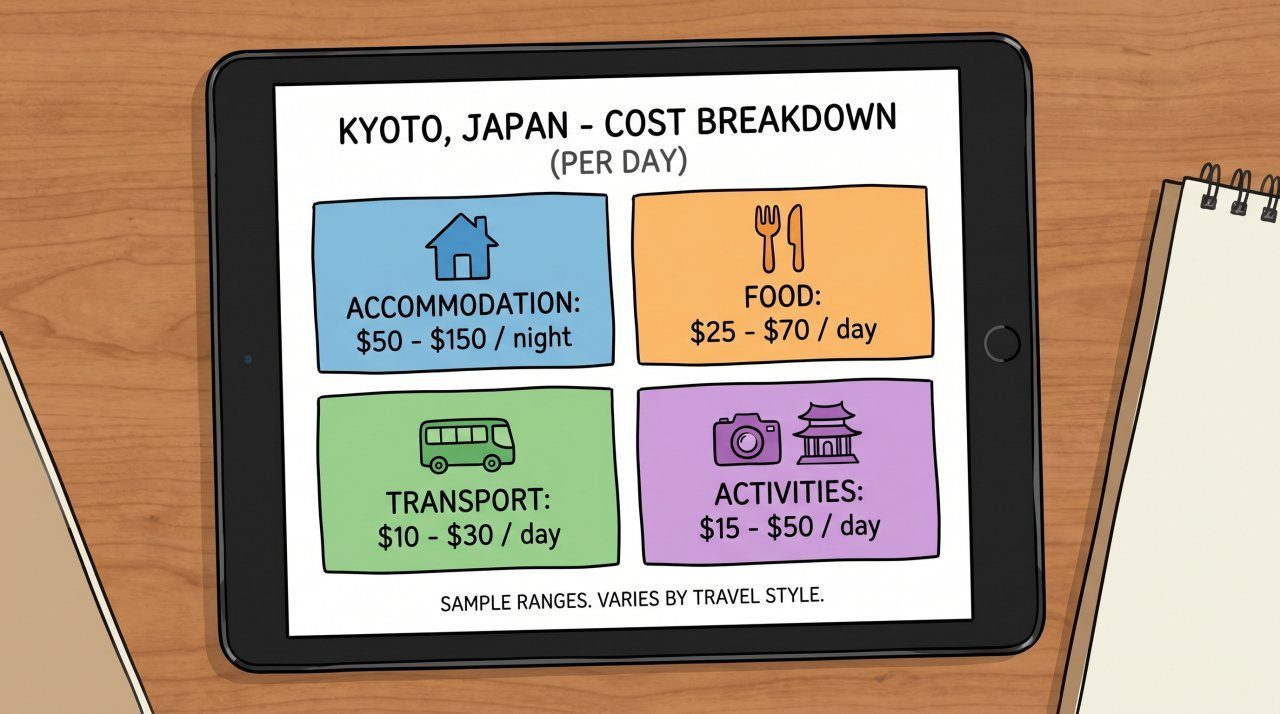
- If City A has slightly cheaper hotels but much higher food and transport costs, a week there might cost more overall than City B with slightly pricier hotels but cheaper daily life.
- A lower hotel rate in a very expensive city can be a trap if you’re going to bleed money on every meal and activity.
So I don’t just ask, What’s the nightly rate?
I ask:
- What will I spend per day outside the hotel?
- Does a cheaper hotel in a more expensive city actually save me anything?
Sometimes the smartest budget travel hotel cost move is simply choosing a different city.
6. New Rules on “Junk Fees” (and What They Don’t Fix)
In the U.S., the Federal Trade Commission’s new Junk Fees Rule
(effective May 12, 2025) is supposed to make hotel pricing more honest. But it’s easy to misunderstand what it actually changes.
Here’s the key point from the rule, as explained in coverage like this breakdown of the new hotel fee rule:
- Hotels and vacation rentals must show the full price including mandatory fees upfront in the initial price display.
- The rule does not ban resort, cleaning, or amenity fees. It just bans hiding them until the last step.
So what changes for you?
- It becomes easier to compare total prices between properties in the U.S.
- You’re less likely to be surprised at checkout by mandatory fees you never saw.
What doesn’t change:
- Hotels can still charge those fees.
- International stays may still use drip pricing, depending on local rules.
So even with better disclosure, I still treat every price as a starting point and ask: Is this truly all-in? When I compare hotel taxes and resort fees in the U.S. vs. abroad, I’m extra careful, because transparency rules differ by country.

7. A Simple Framework to Compare Total Stay Costs Anywhere
Let’s pull this together into something you can actually use when you’re staring at 15 tabs of hotels in different cities, or trying to decide between a cheap hotel vs Airbnb total price.
For each place I’m seriously considering, I quickly estimate:
- Room cost
Base nightly rate × number of nights. - Taxes
Room cost × local tax rate (or use the site’s tax estimate). - Mandatory fees
(Resort/destination/amenity fees × nights) + any required cleaning or service fees. - Parking (if needed)
Parking per night × nights. - Breakfast & Wi‑Fi
If not included, estimate what you’ll realistically spend per day.
Then I add it all up for a total stay cost. Only after that do I compare hotels, cities, or even hotel vs. short-term rental.
If I want to go deeper, I layer in:
- Daily city costs (food, transport, activities) using cost-of-living tools.
- Loyalty perks (waived resort fees, free breakfast, upgrades) that might tilt the math.
The question I keep in my head is simple: If I book this place, what will my credit card statement actually look like?
Once you start calculating the true hotel nightly rate this way, the “cheap” options stop looking so cheap—and the genuinely good deals become much easier to spot.

8. Before You Book: Three Quick Questions
Right before I hit Confirm
on any hotel, anywhere in the world, I pause and ask:
- What’s the total stay cost, including taxes and all mandatory fees?
- What extras (parking, breakfast, Wi‑Fi) will I realistically pay for?
- In this city or country, is this actually a good deal compared to my other options?
If I can’t answer those clearly, I’m not really comparing prices—I’m just reacting to marketing.
Once you start comparing by total stay cost instead of nightly rate, you’ll notice something: the cheap
hotels often aren’t. And that’s when you can finally start choosing based on value, not just price.