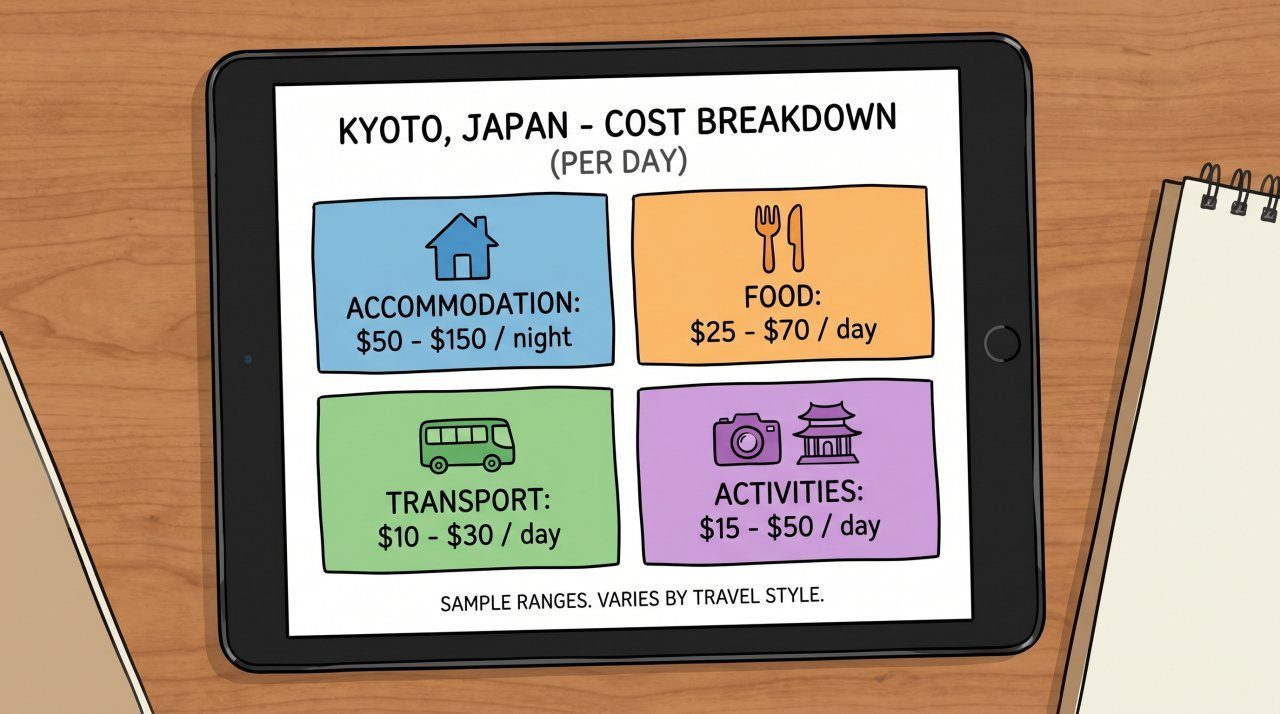
I don’t care what the big travel sites say in their ads. When I’m booking a hotel, I only care about one thing: what will this stay actually cost me by the time I check out?
That “$89 per night” headline rate? It’s almost never what you end up paying. Taxes, resort fees, parking, breakfast, cleaning fees, cancellation rules, loyalty perks you may or may not get… it all piles on. And every booking site slices and hides those costs in slightly different ways.
So instead of chasing the lowest number on the screen, I try to compare hotel prices across booking sites based on the total cost of the hotel stay, not just the teaser rate. Sometimes the “cheap” offer is the most expensive once you add everything up. Other times, a higher nightly rate is secretly the better deal.
1. The First Trap: Nightly Rate vs. Total Stay Cost
When I search for hotels, every site shouts a low nightly price at me. I’ve learned to ignore it at first and ask a different question:
If I click all the way to the final confirmation page, what’s the real total?
Before I believe any “deal,” I look for a mini total hotel stay cost calculator in my head and focus on:
- Total price for the full stay (including taxes and mandatory fees)
- Per-night breakdown (are weekends or specific nights more expensive?)
- Currency (am I seeing my home currency or the local one?)
- Payment timing (pay now vs. pay at property, and in which currency)
Sites and apps that aggregate multiple booking platforms, like KAYAK or other hotel aggregators, make this easier. They pull prices from many OTAs at once instead of forcing you to check each one manually. Think of them as a search engine for hotel prices, not a single store.
But even the best comparison tool won’t automatically show you the true price. You still have to read what’s included, what’s not, and how the fees are structured.
My rule: I never compare deals based on the first screen. I click through to the last step on at least two or three sites and compare the final total for the same room type and cancellation policy. That’s how I avoid the classic hotel price comparison mistakes that come from judging too early.
2. Why the “Same Room” Costs Different Amounts on Different Sites
If you’ve ever wondered why the same hotel, same dates, same room shows different prices on different sites, you’re not imagining it. On paper, rate parity agreements mean base prices should be similar across Expedia, Booking.com, Hotels.com, and the hotel’s own site.
In reality, the cheap hotel deals real cost diverges because of all the layers stacked on top of that base rate:
- Member-only prices (10–20% off when you’re logged in)
- Loyalty programs (cashback, points, or future discounts)
- Promo codes (especially on promo-heavy sites like Expedia)
- Packages (flight + hotel bundles that can bypass parity rules)
Behind the scenes, tools like Travel Scrape and other data providers scrape and aggregate prices from multiple OTAs in real time. That’s why comparison apps can show you dozens of prices for the same property in seconds.
But those tools don’t decide what’s cheapest for you. They just show you the menu. You still have to interpret what you’re seeing and figure out the full price hotel booking breakdown for your specific stay.
When I see a “cheap” deal, I ask:
- Is this a public rate or a member-only price that requires sign-up?
- Is there a promo code I can stack on top?
- Would a flight + hotel package make the total trip cheaper than booking separately?
Often, the base rate is identical. The difference is in the extras and the structure of the deal—and that’s where the real savings or traps hide.
3. Direct vs. Third-Party: The Hidden Cost of “Cheaper” OTA Deals
One of the biggest choices you make isn’t the hotel itself, but where you book it: directly with the hotel or through a third-party site like Expedia, Booking.com, or Hotels.com.
On the surface, OTAs often look cheaper. But once you factor in perks, flexibility, and support when things go wrong, the picture changes.
What direct booking usually gives me
- Loyalty perks (points, elite benefits, upgrades, free breakfast)
- Better problem-solving when something goes wrong (the hotel owns the booking)
- Access to member-only rates and special discounts (AAA, senior, corporate, promo codes)
- Sometimes more flexible cancellation or easier changes
What third-party sites can offer instead
- Opaque deals (you see the area and rating, not the exact hotel until after booking)
- Flight + hotel packages that undercut direct prices
- Promo codes and cashback-style rewards
- Occasional stackable discounts that beat the hotel’s own site
Here’s the catch: hotel “best rate guarantees” often exclude the very deals that make OTAs cheaper—opaque rates, packages, and some member-only prices. The guarantee sounds comforting, but in practice it doesn’t cover many of the real-world bargains.
So when I’m weighing booking direct vs online travel agency, I don’t just ask “Which number is lower?” I ask, “What am I giving up or gaining in return?”
My personal approach:
- Use an aggregator or OTA to scan the market and find the rough price range.
- Check the hotel’s own site for member rates, loyalty benefits, and any direct-booking perks.
- Compare total stay cost + perks, not just the number on the screen.
If I have or care about elite status (Marriott, Hilton, etc.), I almost always book direct. If I don’t, and a package or promo code makes an OTA meaningfully cheaper, I’m willing to trade perks for real savings.
4. The Fine Print That Turns “Cheap” Into Expensive
Two deals can show the same total price and still have very different real costs once you factor in the fine print. This is where most people overpay without realizing it—and where a lot of online hotel booking traps live.
When I compare offers, I always line up these details side by side.
1. Cancellation and change rules
- Non-refundable vs. free cancellation (and until what date?)
- Change fees or penalties if my plans shift
- Whether the OTA or the hotel controls the booking if I need help
A non-refundable rate that’s $20 cheaper per night might cost me hundreds if my plans change. I treat flexibility as part of the price, not a bonus.
2. Mandatory fees and extras
- Resort fees or “destination fees”
- Parking (especially in cities)
- Breakfast (included vs. $20–$40 per person per day)
- Wi‑Fi, cleaning fees (for apartments), or service charges
This is where hidden hotel fees and charges quietly turn a bargain into a budget-buster. A slightly higher nightly rate that includes breakfast and free parking can be cheaper overall than a bare-bones rate that looks low but bleeds you with extras.
If you want to know how to find the true hotel price, you have to drag these costs into the light and mentally add them to the bill.
3. Room type and occupancy
- Is the cheaper rate for a smaller room, worse view, or different bed type?
- Does the price change if I add a third person or a child?
- Are there extra bed or crib fees?
My habit: I open two or three tabs for the same hotel on different sites and compare:
- Same room type
- Same cancellation policy
- Same occupancy
Only then do I trust that I’m comparing real prices, not apples to oranges. That’s the only way to get a realistic hotel cost per night including fees instead of a fantasy number.
5. Loyalty Programs, Points & “Fake” Savings
Loyalty programs are where a lot of the real price differences hide. They can be a goldmine—or a distraction that makes you ignore better cash deals.
Here’s how I think about them when I’m trying to compare the total cost of a hotel stay instead of just chasing points.
Hotel chain programs (Marriott, Hilton, etc.)
- Best if you stay often with the same brand family
- Elite status can mean upgrades, late checkout, free breakfast
- These perks often don’t apply to OTA bookings
If I’m chasing or using elite status, I treat those perks as part of the price. Free breakfast for two over four nights can easily be worth $100–$200. That changes how I compare offers.
OTA loyalty (Expedia, Booking.com, Hotels.com)
- Member-only prices (often 10–20% off)
- Cashback-style rewards (like Expedia’s OneKeyCash)
- Tiered perks at certain properties (upgrades, free breakfast, late checkout)
But I’m careful. A “10% back in points” offer is not the same as 10% off today. Points can expire, devalue, or be awkward to use. I discount their value in my head—maybe I treat 10% back as 5–7% real savings unless I know I’ll use them soon.
My filter is simple:
- If the cash price today is similar, I’ll let loyalty perks decide.
- If one option is significantly cheaper in cash, I rarely let points override that.
I also watch out for “member prices” that are just inflated base rates with fake discounts. Using a good comparison tool makes that easier to spot and improves hotel fee transparency—you can see when a “deal” is just marketing.
6. Timing Your Booking: When Waiting Saves Money (and When It Burns You)
Another hidden cost of “cheap” deals is timing. Book too early and you might overpay. Wait too long and you might pay more—or have no options at all.
From industry data and tools like KAYAK’s price alerts, here’s the pattern I’ve seen:
- 1–3 months before is often a sweet spot for many destinations.
- For peak seasons or big events, 6+ months can be safer and sometimes cheaper.
- For some cities, last-minute (same week or even same day) can be 15–30% cheaper on average.
But averages can be dangerous. Last-minute deals are more common in:
- Big cities with lots of hotels
- Business districts on weekends
- Off-peak periods
They’re risky in:
- Small towns with limited inventory
- Holiday periods and long weekends
- Destinations with major events (conferences, festivals, sports)
My strategy:
- Book a cancelable rate when I first find something reasonable.
- Set price alerts and re-check every week or two.
- If prices drop, I rebook at the lower rate and cancel the old one.
This way, I don’t gamble everything on last-minute deals, but I still benefit if prices fall. It’s a simple way to avoid paying the “impatience tax” without risking a sold-out city.
7. A Simple Checklist to Compare Total Stay Prices (Without Going Crazy)
Let’s pull this together into something you can actually use the next time you book. Think of it as your quick guide to avoiding hotel booking hidden costs and getting a clean full price hotel booking breakdown.
When I’m serious about getting the best total price, here’s the process I follow:
- Start with an aggregator or OTA search.
Get a feel for the price range and which hotels fit your dates and budget. This is where you spot outliers and obvious bad deals. - Shortlist 3–5 properties.
Filter by location, rating, and must-have amenities (Wi‑Fi, breakfast, parking, pool, etc.). No point comparing hotels you wouldn’t actually stay in. - Open each hotel on at least two sites.
For example: the hotel’s own site + one OTA. This is the core of comparing hotel prices across booking sites properly. - Match the details.
Same room type, same bed type, same occupancy, same cancellation policy. If those don’t match, you’re not really comparing the same thing. - Click through to the final price page.
Note the total stay cost including taxes and mandatory fees on each site. Ignore the big bold nightly rate for a moment. - Add the “hidden” costs.
Estimate parking, breakfast, resort fees, and any extras not included. This is where hotel taxes and resort fees explained in the fine print suddenly matter. - Factor in perks.
Loyalty benefits, points, breakfast, upgrades—but only if they realistically apply to you and you’ll actually use them. - Decide based on total value, not just price.
Sometimes the “cheapest” option is the one that gives you flexibility, perks, and fewer headaches if something goes wrong. Other times, it’s the one that simply costs less and you’re fine with that.
Walk through that checklist once or twice and you’ll start to see how often the loudest “cheap hotel offers” aren’t actually the best deals once you look at the total cost of the hotel stay.
8. The Mindset Shift: From Chasing Deals to Buying Value
When I stopped chasing the lowest nightly rate and started comparing total stay value, a few things changed:
- I overpay less often.
- I get burned by bad cancellation policies far less.
- I use loyalty programs strategically instead of emotionally.
- I feel more in control, even when prices are volatile.
The next time you see a “too good to be true” hotel price, pause for a second and ask yourself:
What will this stay really cost me—money, flexibility, and comfort included?
Once you start thinking that way, the real bargains become a lot easier to spot—and the fake ones become very hard to fall for.