
I’ve lost count of how many people tell me, My trip is in three weeks, that’s an emergency, right?
When it comes to U.S. visas, the answer is almost always no.
U.S. embassies and consulates do offer expedited (emergency) visa interviews. But the bar is high, the rules are stricter than most travelers expect, and a lot of requests are denied because people confuse urgent for me
with emergency in the eyes of a consular officer
.
In this guide, I’ll walk you through what actually qualifies, what doesn’t, and how to decide—honestly—whether you should hit that Request Emergency Appointment
button or not. If you’re wondering what qualifies as an emergency for a U.S. visa or how an expedited U.S. visa interview really works, keep reading.
1. First Reality Check: An Expedited Interview Is Not an Expedited Visa
Let’s start with the most painful misconception.
An expedited appointment only moves up your interview date. It does not guarantee:
- Faster visa processing after the interview
- That your visa will be approved
- That your passport will be returned in time for your flight
Even if your emergency request is approved, many posts still need days or weeks to process the visa and return your passport. The U.S. Department of State itself warns that published wait times don’t include processing or mailing time.
So before you do anything else, ask yourself:
- If my interview happened tomorrow, would there still be enough time for processing and passport return?
- Can I realistically travel if the visa takes another 2–5 weeks after the interview?
If the honest answer is no
, an emergency appointment may not save this trip. It might just raise your stress level.
2. What Actually Counts as a Real Emergency (for Visitor & Other Nonimmigrant Visas)
Different embassies phrase it differently, but the core list is surprisingly consistent. For most B1/B2 visitor visas and many other nonimmigrant categories, these are the classic emergency U.S. visa appointment criteria for an expedited interview:
Life-or-death medical situations
This is the strongest category. It usually means:
- You need urgent medical treatment in the U.S. that cannot be delayed or done in your home country, or
- You are traveling to see an immediate family member who is critically ill or near end of life.
For emergency U.S. visa interview medical reasons, consulates expect documentation such as:
- A letter from a U.S. hospital or physician describing the condition, urgency, and treatment plan
- Proof of ability to pay for treatment (insurance, deposits, financial support)
- For visiting a sick relative: a clinician’s letter confirming the patient’s condition and prognosis, ideally on official letterhead
Clinicians are even given guidance on how to write these letters—clear diagnosis, prognosis, and the fact that the visit is for end-of-life
or critical
care, not just a check-up. Their letter supports the emergency request, but the applicant still has to prove they’ll return home and can afford the trip.
Funerals and immediate family deaths
Another classic emergency: traveling to the U.S. for a funeral or to handle arrangements after the death of an immediate family member. This is one of the most common reasons for an expedited U.S. visa for funeral or illness.
Expect to provide:
- Death certificate or official notice (or at least a funeral home letter if the certificate isn’t ready yet)
- Proof of relationship (birth certificates, marriage certificates, family registry, etc.)
Here’s the catch: immediate family is usually defined narrowly—often parents, siblings, children, grandparents, and grandchildren. Cousins, uncles, aunts, and friends usually don’t qualify, even if you’re very close.
Urgent, time-sensitive business
This is where many people overestimate their situation. Not every business trip is an emergency.
Consulates may consider expediting if:
- Your presence is critical to prevent severe financial loss to a company (e.g., signing a contract that can’t be postponed, a key technical intervention, a high-stakes negotiation)
- You’re a key participant in a time-sensitive project, training, or implementation that cannot be rescheduled or handled by someone else
They will want:
- A detailed letter from the U.S. company explaining why you must be there, why it can’t be delayed, and what loss would occur if you miss it
- Evidence that this is not just a routine meeting or conference
Compare that with what doesn’t usually qualify: trade shows, general networking, annual meetings, or important for my career
trips. Those are valuable, but not emergencies in consular terms.
Imminent academic or exchange program start dates
For students and exchange visitors, some posts will consider an expedited interview if:
- Your program start date is very close, and
- You applied in a reasonable timeframe, but local wait times made it impossible to get a normal appointment
They’ll look for:
- Your I-20 or DS-2019 with start date
- Proof of SEVIS fee payment
- Evidence that you didn’t simply wait until the last minute
If you sat on your admission letter for months and only applied weeks before departure, your emergency
is less convincing.
ESTA / Visa Waiver Program problems
If you’re from a Visa Waiver Program country and your ESTA is denied or revoked right before travel, some consulates treat that as a potential emergency—especially if you have a time-sensitive reason to travel (business, study, medical, funeral).
But again, you’ll need to show:
- Proof of the urgent event (conference dates, program start, funeral notice, etc.)
- Proof of the ESTA denial
Just wanting to salvage a vacation after an ESTA denial is usually not enough.
3. What Definitely Does Not Count (Even If It Feels Urgent to You)
This is where people get frustrated. But it’s better to be brutally honest now than to waste time on a doomed emergency request.
In most cases, the following do not qualify for expedited interviews:
- Tourism and vacations, even if flights and hotels are already booked
- Weddings (including close family weddings), anniversaries, birthdays, graduations
- Routine family visits (meeting a new grandchild, visiting parents, etc.)
- Non-urgent business trips (conferences, trade shows, annual meetings, training that can be rescheduled or attended by someone else)
- General desire to travel after long separation or pandemic delays
U.S. government guidance is blunt: Non-urgent reasons like weddings or routine family visits are generally not considered valid grounds for expedited appointments.
That’s straight from the State Department’s own wait-time information.
So if your main argument is But I already bought my ticket
, you’re on very weak ground. Consulates expect you to secure a visa before committing to non-refundable travel.
4. The Hard Evidence Test: Can You Prove Your Emergency on Paper?
Even if your situation fits one of the valid categories, there’s another filter: documentation. Consular officers don’t just take your word for it.
Before you request an emergency appointment, ask yourself:
- Can I show clear, verifiable proof of the emergency?
- Would a skeptical stranger be convinced by my documents?
Here’s what strong supporting documents for an emergency U.S. visa usually look like:
- Medical emergencies: hospital or clinic letter on official letterhead, signed by a clinician, with diagnosis, prognosis, and why travel is time-sensitive; test results or discharge summaries can help.
- End-of-life visits: a clinician’s letter explicitly stating that the patient is at end of life or critically ill, plus proof of your relationship.
- Funerals: death certificate, funeral home letter, obituary, and proof of relationship.
- Urgent business: detailed employer letter explaining the event, dates, your role, and the consequences if you don’t attend; contracts, project documents, or financial evidence of potential loss.
- Academic start dates: I-20/DS-2019, admission letter, program schedule, and proof you applied as soon as reasonably possible.
Weak evidence looks like:
- Self-written letters with no third-party verification
- Vague statements like
my father is sick
without medical details - WhatsApp screenshots instead of official documents
- Letters that don’t mention dates, urgency, or your specific need to be there
One more thing: exaggerating or inventing emergencies is a terrible idea. If a consular officer suspects fraud, you’re not just losing this trip—you may be facing long-term visa problems.
5. The Step-by-Step Process: How an Emergency Request Actually Works
Let’s say you’ve passed the first tests: your situation fits a valid category, and you have strong evidence. What now?
Most U.S. embassies and consulates follow a similar sequence for nonimmigrant visas (tourist, business, student, etc.). This is where the difference between an expedited vs regular U.S. visa appointment becomes clear:
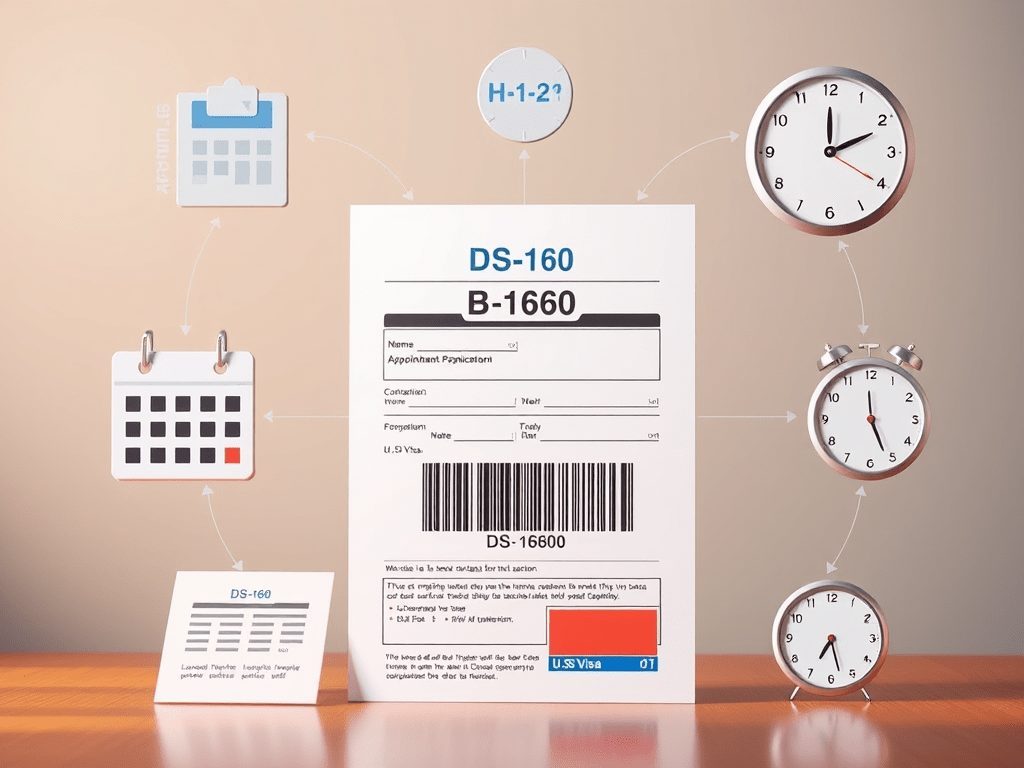
- Complete the DS-160
Fill out the online DS-160 form carefully. Errors here are a common cause of delays. Make sure your name, passport number, and dates match your documents exactly. - Pay the visa fee
The fee (often around $160 for B1/B2) is non-refundable, even if your emergency request is denied. - Book the earliest regular appointment
Log into the official visa appointment system for your country, create a profile, and schedule the first available interview, even if it’s months away. Many posts won’t even show you the emergency request option until you have a regular appointment booked. - Submit an emergency appointment request
Inside the same portal, look for an option likeRequest Expedite
orEmergency Appointment
. You’ll usually need to:- Select a reason category (medical, funeral, business, student, etc.)
- Write a short explanation of your situation
- Upload or be ready to present supporting documents
- Wait for a decision
The embassy/consulate reviews your request. If approved, you’ll be allowed to reschedule to an earlier date. If denied, you keep your original appointment.
Each post has its own nuances, so always read the local instructions on the embassy or consulate website. Some will ask you to bring documents to the interview rather than upload them. Others may email you for more information.
And remember: approval is discretionary. Even a textbook emergency with good documents can be refused if the post is overwhelmed or if they doubt your ties to your home country. Many people are surprised by U.S. visa emergency appointment denial reasons that have nothing to do with the emergency itself, but with overall eligibility.
6. Special Case: Immigrant Visas & NVC Backlogs
So far, I’ve been talking mostly about nonimmigrant visas (short-term visits). If you’re dealing with an immigrant visa—family-based, employment-based, etc.—the emergency lane looks different.
After USCIS approves your petition and the National Visa Center (NVC) marks your case as Documentarily Qualified, you may still wait months (sometimes a year or more) for an interview slot. In some situations, you can ask the embassy or consulate to expedite the interview.
Typical grounds include:
- Life-or-death medical issues affecting the petitioner or beneficiary
- Humanitarian crises (war, persecution, extreme danger)
- Severe financial loss to the petitioner or a company
- Children about to age out (turning 21 and losing eligibility)
The process usually looks like this:
- Wait until your case is Documentarily Qualified at NVC.
- Send a written expedite request directly to the embassy or consulate where your interview will be held (not to USCIS).
- Include your NVC case number, a clear explanation, and strong supporting evidence.
Again, approval is discretionary. Even strong cases are sometimes refused because of local capacity. If your situation is complex, this is where talking to an experienced immigration lawyer can be worth it.
7. Before You Hit “Emergency”: Smarter Ways to Avoid a Crisis
Here’s the uncomfortable truth: a lot of emergencies
are really planning failures plus long wait times.
Before you rely on an emergency request, consider these strategies instead of hoping an expedited U.S. visa interview will fix everything at the last minute:
- Check wait times early
Use the official Global Visa Wait Times tool as soon as you start planning. Don’t assume your local consulate has short waits—some are booked out for months. - Compare consulates (carefully)
In some regions, wait times vary dramatically between posts. But be careful: many consulates prioritize residents of their own country. Applying in a third country without proper eligibility can backfire and cause even longer delays. - Get the DS-160 right the first time
Incomplete or inconsistent forms are a major source of delay. Prepare your answers in advance, double-check names and dates, and make sure your DS-160 confirmation number matches your appointment. - Don’t gamble with last-minute applications
If your trip is important, treat the visa as the first step, not the last. Book non-refundable flights only after you have the visa in hand—or at least accept that you might lose money if you don’t. - Check if you even need a visa
If you’re from a Visa Waiver Program country and your trip is under 90 days, you may be able to travel with ESTA instead of a visa—no interview, no emergency request. Just make sure you meet all the requirements and apply for ESTA early.
In other words: use the emergency lane only when you truly have no other option—and when your situation would look urgent even to a stranger with no emotional connection to you.
8. Quick Self-Check: Should You Request an Expedited Interview?
Let’s boil this down into a simple mental checklist. Answer honestly:
- Is my reason on the short list?
Life-or-death medical situation, funeral of an immediate family member, urgent business preventing severe financial loss, imminent academic start date, or ESTA denial tied to a time-sensitive event. - Can I prove it with solid documents?
Official letters, certificates, contracts—not just personal statements. - Did I do my part on time?
I didn’t wait until the last minute to apply, and I’ve already completed the DS-160, paid the fee, and booked the earliest regular appointment. - Would a skeptical consular officer agree this is urgent?
Not just important to me, but objectively time-sensitive and serious. - Am I prepared for a “no”?
I understand that even with a valid emergency, approval is not guaranteed, and I’m not risking money I can’t afford to lose.
If you can’t confidently say yes
to most of these, an emergency request is unlikely to succeed. You might be better off focusing on a clean, well-prepared regular application and planning your travel around realistic timelines.
In the end, the emergency lane is there for exactly what it says on the tin: emergencies. Use it when you truly need it—and when you can prove it. And if you do decide to apply, take the time to avoid common expedited U.S. visa interview mistakes: weak documents, vague explanations, and last-minute panic. A clear story, strong evidence, and realistic expectations will always give you the best shot.
Need to explain your situation in writing? When you draft your emergency U.S. visa request letter, keep it short, factual, and focused on dates, urgency, and proof—not emotion. That’s what consular officers read first.
As for expedited U.S. visa interview processing time? Think in weeks, not days. If your travel is tomorrow, an emergency request is no longer a strategy—it’s a gamble.