I’ll be blunt: most expedited U.S. visa interview requests are denied. Not because people don’t have real problems, but because they ask at the wrong time, for the wrong reasons, or with thin evidence.
If your regular interview is months away and your life is happening now, this guide is for you. We’ll walk through when an expedited U.S. visa interview request actually makes sense, how to structure it, and the quiet mistakes that sink otherwise good cases.
1. First Decision: Do You Actually Qualify for an Expedited Interview?
Before you even think about a sample expedited visa request letter, ask yourself a hard question: Is this truly urgent, or just deeply inconvenient?
Consulates and agencies use a similar filter. They approve an expedited U.S. visa interview only when a delay would cause serious, time-sensitive harm, not just frustration or extra cost.
For both immigrant and nonimmigrant visas, the strongest expedited visa appointment requests usually fall into these categories:
- Medical emergencies – life-threatening or serious conditions requiring treatment or your presence in the U.S. (urgent surgery, critical care, organ transplant evaluation, high-risk pregnancy, etc.).
- Death or grave illness of an immediate family member in the U.S. – funerals, end-of-life situations, or the need to provide essential care.
- Urgent humanitarian crises – war, natural disasters, extreme danger, or severe hardship if separated from family.
- Time-sensitive academic start dates – an imminent program start where missing it means losing admission, a scholarship, or a funded research position.
- Critical job or business needs – a job start or contract where delay causes severe financial loss or harms a company’s operations, not just a missed meeting or routine business trip.
- Children aging out – a child nearing 21 who risks losing eligibility if the interview is delayed.
On the other hand, consulates and USCIS are very clear about what almost never qualifies for an expedited U.S. visa interview:
- Tourism or vacations.
- Weddings, graduations, or family events (unless tied to a genuine emergency).
- Routine business trips, conferences, or trade shows.
- General complaints about long wait times or frustration with the system.
There is also no official paid “premium” line for visa interviews. The appointment system itself warns that no company or individual can obtain priority or faster visa appointments by paying more
(source). If someone promises a faster expedited U.S. visa interview for a fee, that’s a red flag.
If your situation doesn’t clearly fit one of the urgent categories, you can still try for an expedited U.S. visa interview, but be realistic: the default answer will likely be no.

2. Timing: When Are You Even Allowed to Request an Expedite?
This is where many people lose months. They submit an expedited visa appointment request at a stage where the government literally can’t help them yet.
Immigrant visas (green card through consular processing)
For immigrant visas, your case usually passes through the National Visa Center (NVC) before it reaches the embassy or consulate.
Key timing rules for expedited U.S. immigrant visa interviews:
- You generally cannot request an expedited interview until your case is Documentarily Qualified (DQ) at NVC – all fees paid and all required documents accepted.
- Only after DQ can NVC or the consulate even consider moving your case ahead of others.
- Typical NVC timeline in 2025: about 30–45 days to create the case, 2–3 months for document review, then often 9–15+ months waiting for an interview depending on the embassy.
There are two main paths for an expedited U.S. visa interview at this stage:
- Expedite via NVC
You ask NVC to send your case to the embassy faster or to prioritize your interview because of urgent circumstances (medical emergency, humanitarian crisis, death in family, critical job start, child aging out, etc.). This is usually done via the CEAC portal or NVC’s designated email, with your case number and supporting documents. - Expedite directly with the embassy/consulate
Once your case is DQ and assigned, you can email the specific embassy/consulate with your NVC case number and request an earlier interview date. Some posts prefer this route and publish instructions on their websites.
Important nuance: NVC can help move your case along, but only the embassy/consulate controls interview slots. Even a strong expedite request can be limited by local capacity and security constraints.
Nonimmigrant visas (tourist, student, work, etc.)
For nonimmigrant visas, the timing rules for an expedited U.S. visa interview are stricter and simpler:
- You must first book the earliest available regular appointment in the online system.
- Only after you have a standard appointment will the
request expedited appointment
oremergency appointment
option appear in your account. - This is confirmed by both the official scheduling portals and multiple law firm guides on expedited U.S. visa interview timing.
If you’re emailing the consulate or calling the call center without a booked appointment, you’re usually wasting time. The system is designed so that you see the regular queue first, then ask to jump it.
3. Strategy: How to Build a Persuasive Expedite Request (Not a Desperate One)
Once you’re sure you qualify and the timing is right, the next question is: How do I make this expedited visa appointment request hard to ignore?
Imagine a consular or NVC officer with 200 emails in their inbox. They’re scanning for three things:
- Is this truly urgent?
- Is the story clear in 30 seconds?
- Is the evidence credible and easy to verify?
Core structure of a strong request
Whether you’re writing through CEAC, email, or the online appointment portal, your message should be short but dense. Think of it as a focused, human version of a sample expedited visa request letter:
- Header details
Include:- Full name (as in passport)
- Date of birth
- Case number (NVC or consular)
- Visa category (e.g., IR-1, F-1, B1/B2, H-1B)
- Current interview date (if any)
- One-sentence summary of the emergency
Make it specific and time-bound. For example:
I respectfully request an expedited immigrant visa interview due to my U.S. citizen spouse’s recent cancer diagnosis and surgery scheduled for [date].
- Short explanation of the harm caused by delay
Focus on concrete consequences, not emotions.- What exactly happens if you wait 6–12 months?
- Who is harmed, and how?
- Is there a specific date you must be in the U.S. by?
- Evidence list
Bullet out what you’re attaching so the officer can quickly match your story to your documents:- Hospital letter confirming diagnosis, treatment plan, and dates.
- Death certificate and funeral notice.
- University letter confirming program start date and consequences of late arrival.
- Employer letter explaining why your presence is critical and time-sensitive.
- Polite closing
Acknowledge that you understand expedited U.S. visa interviews are discretionary and that you’re prepared to attend any date offered on short notice.
Keep the body of the request to 1–3 short paragraphs. Attach the evidence; don’t paste your entire life story into the message box.
Evidence that actually moves the needle
Consulates and NVC are skeptical by default. They see a lot of exaggerated claims. Your supporting documents for an expedited U.S. visa need to be:
- Specific – dates, names, diagnoses, contract numbers, program start dates, dollar amounts.
- Official – on letterhead, signed, with contact details.
- Verifiable – from hospitals, universities, employers, or government agencies.
- Translated – if not in English, with a certified translation.
A one-line email from a manager saying we need her here soon
is weak. A detailed letter saying Without Ms. X on site by [date], we will lose Contract Y worth $Z, and we will have to lay off [number] employees
is much stronger and fits the consulate’s criteria for urgent business travel.

4. Immigrant Visa Cases: NVC vs. Embassy – Who Do You Ask, and How?
Immigrant visa expedites are confusing because two different players are involved: NVC and the embassy/consulate. They don’t do the same job, and they don’t have the same power over your expedited U.S. visa interview.
What NVC can (and cannot) do
NVC’s job is to:
- Create your case after USCIS approval.
- Collect fees and civil documents.
- Mark your case Documentarily Qualified.
- Forward your case to the embassy and coordinate interview scheduling.
NVC does not decide your visa. That’s the consular officer’s job. But NVC can sometimes:
- Ask the embassy to prioritize your case for an earlier interview.
- Move your case faster through their own internal queue.
You usually request this via:
- The CEAC portal (secure message) with your case number; or
- The official NVC expedite email address listed on travel.state.gov.
Don’t send multiple duplicate requests through random emails or social media. That doesn’t make your case look urgent; it makes it look disorganized and can actually slow down review.
What the embassy/consulate controls
Once your case is DQ and at post, the embassy/consulate controls:
- Interview dates and times.
- Local prioritization (for example, immediate relatives vs. other categories).
- Whether to grant an earlier slot for emergencies.
Many posts ask you to email them directly with your NVC case number and evidence if you want an expedited U.S. visa interview. Others prefer that NVC initiate the expedite. You need to check the specific instructions on your embassy’s website; ignoring those local rules is one of the common reasons expedited U.S. visa requests are denied or never answered.
One more subtle trap: even if your expedite is approved, it doesn’t fix underlying problems. If your documents are incomplete, your medical exam is mistimed, or you’re otherwise ineligible, an earlier interview just means you hit those problems sooner.

5. Nonimmigrant Visas: Emergency Appointments Without Fooling Yourself
For nonimmigrant visas (B1/B2, F-1, J-1, H-1B, etc.), the process for an expedited U.S. visa interview is more standardized, but still widely misunderstood.
The basic steps look like this:
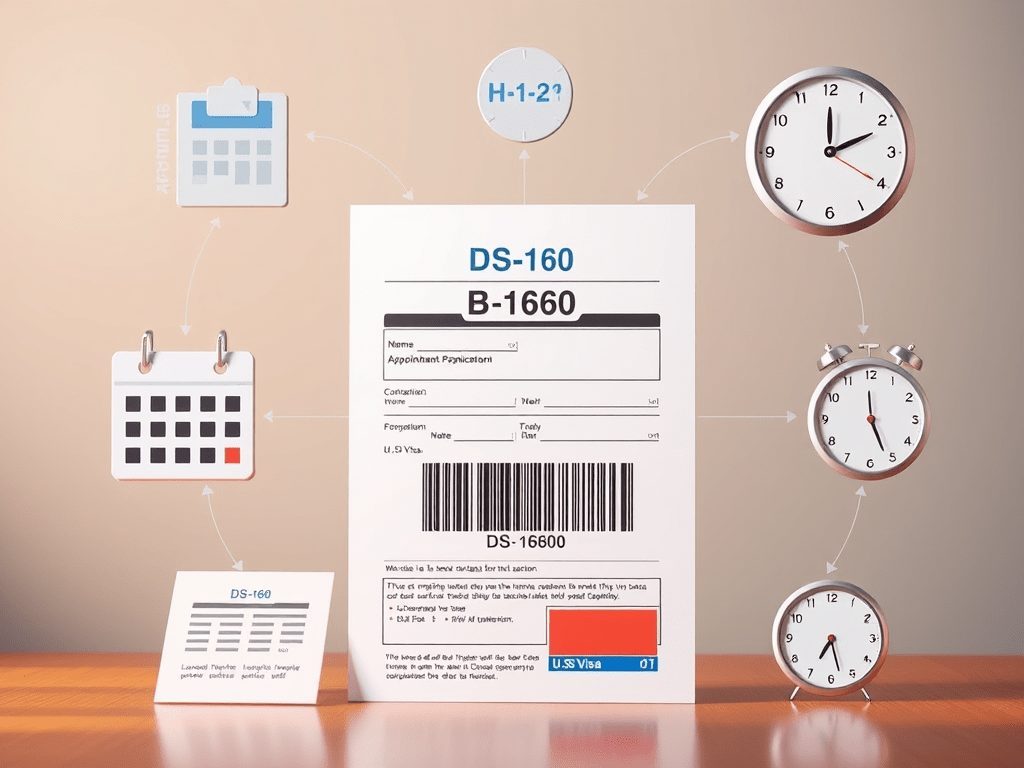
- Complete the DS-160 online.
- Create an account on the official appointment site (often run by GDIT, the authorized contractor).
- Pay the visa fee.
- Book the earliest available regular appointment.
- Only then, use the “Request Expedite” or “Emergency Appointment” option in your account.
In your expedited visa appointment request, you’ll be asked to choose a category (medical emergency, funeral, urgent business, student start date, etc.) and explain your situation in a short text box. This is where clarity and evidence matter more than emotion.
Some practical realities about U.S. visa emergency vs regular appointment options:
- Consulates are strict: tourism and routine business travel are almost always denied for emergency slots.
- Student and exchange visitors (F, M, J) with imminent start dates often have better odds, especially if they attach strong school letters explaining why late arrival is not allowed.
- Medical and death-related emergencies are taken seriously, but you must show why you personally must travel and why now.
- Most decisions come within a few days, but there’s no appeal if they say no. You can usually re-request only if circumstances change.
Also remember: an expedited U.S. visa interview only affects the interview date. It doesn’t waive the interview, doesn’t guarantee visa approval, and doesn’t speed up administrative processing if your case is flagged for extra security checks.
6. Medical Exams, Travel Dates, and Other Timing Traps
Even if you win the expedite, you can still lose time—or worse—by mismanaging the medical exam and travel timing.
Immigrant visa medical exam timing
The State Department is very clear: do not schedule your immigrant visa medical exam until after your interview is scheduled (official guidance).
Why does this matter so much for people planning an expedited U.S. visa request?
- Medical results are usually valid for 6 months, sometimes only 3 months depending on your health conditions.
- If your medical expires before you enter the U.S., you may be denied entry and forced to repeat the exam.
So if you’re pushing for an expedited interview, you also need to think about:
- How soon you can realistically travel after visa issuance.
- Scheduling the medical exam close enough to the interview and travel date to avoid expiration, but not so close that results aren’t ready in time.
Emergency travel while in the U.S.
If you’re already inside the U.S. and need to travel abroad urgently, your problem may not be an interview at all. It may be a travel document.
USCIS allows expedited processing of certain travel documents (Form I-131) for emergencies, including:
- Unexpected urgent travel (for example, a funeral or sudden illness of a close relative).
- Pressing need for a planned trip where normal processing times would cause you to miss departure.
For truly last-minute situations (travel needed in less than 15 days), you may be able to get an emergency travel document through a local USCIS field office, but you must:
- Call the USCIS Contact Center or use the online tools to request an appointment.
- Bring strong evidence of the emergency and your identity/immigration status.
This is a different track from consular interview expedites, but the logic is the same: urgent, documented, and time-bound.
7. Common Mistakes That Quietly Kill Expedite Requests
By now you can probably see the pattern. The system is rigid, but predictable. Many people don’t lose because the rules are unfair; they lose because they misplay the details of their expedited U.S. visa interview strategy.
Here are the mistakes that show up again and again:
- Requesting too early
Asking NVC for an expedited interview before your case is Documentarily Qualified, or asking a consulate before you’ve booked a regular nonimmigrant appointment. The answer is almost always a silent no. - Using emotional language instead of concrete harm
Long stories about how much you miss your spouse or how unfair the wait is, with no clear explanation of what happens if you wait 6–12 more months. - Weak or no evidence
Claims of medical emergencies without hospital letters. Claims of job loss without employer documentation. Claims of financial loss without numbers. For consular officers, this is one of the main reasons expedited U.S. visa requests are denied. - Wrong reasons
I already bought my ticket.
My vacation is booked.
My cousin’s wedding is next month.
These are almost always denied, and sometimes noted in your file. - Spamming multiple channels
Sending the same request to NVC, the embassy, social media accounts, and random email addresses. This doesn’t make your case look urgent; it makes it look chaotic. - Ignoring local instructions
Each embassy has its own rules for how to request an emergency appointment. If you don’t follow them, your request may never be seen. - Assuming lawyers or politicians can “force” an expedite
Attorneys can help you present a stronger case, and congressional offices can inquire, but they cannot order a consulate to give you an earlier slot. - Not preparing for a denial
Even strong cases are sometimes refused due to capacity. If you don’t have a Plan B (deferring school, adjusting travel, renegotiating job start), you’re setting yourself up for panic.

8. How to Decide Your Next Move (and Stay Sane)
So, should you even bother with an expedited U.S. visa interview request? In many cases, yes. The worst that usually happens is a denial, and you keep your original appointment.
Here’s a simple way to decide your next move:
- Define your urgency honestly
Write down, in one sentence, what happens if you don’t get an earlier interview. If you can’t describe serious, time-bound harm, your odds are low. - Check the right stage
- Immigrant visa: Is your case DQ at NVC? Has it been sent to the embassy?
- Nonimmigrant visa: Have you booked the earliest available appointment?
- Gather real evidence
Don’t send the request until you have letters, certificates, or documents that a skeptical stranger would find convincing. - Follow official instructions exactly
Use the CEAC portal, NVC email, or consular emergency request form as directed on the official site. Avoid shortcuts and third-party “fixers.” - Keep it short, clear, and respectful
You’re asking for a favor, not asserting a right. A concise, well-documented request beats a long emotional essay every time. - Plan for both outcomes
Assume the expedite might be denied. What’s your backup plan? Can you defer school, adjust your job start, or change travel plans?
If you treat the expedite process like a structured, evidence-based request instead of a last-minute plea, you give yourself the best possible chance. You can’t control consular capacity or policy, but you can control your timing, your strategy, and your documentation.
And sometimes, that’s exactly what turns a quiet, quick approval into your new interview date—rather than another request that disappears into the void.