Category focus: Avoid Mistakes in an era of extreme weather
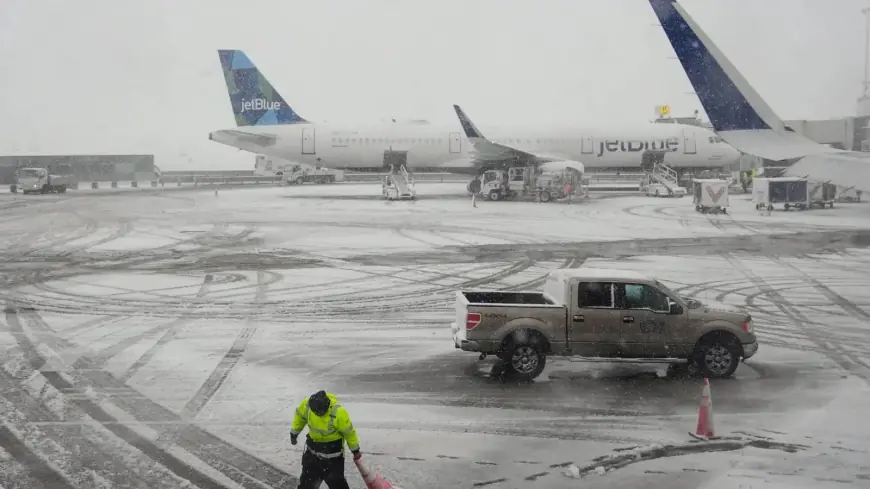
Extreme weather is no longer an occasional disruption; it is a persistent feature of modern air travel. The new U.S. refund rules, embedded in the FAA Reauthorization Act of 2024 and recent Department of Transportation (DOT) regulations, treat weather very differently from other causes of cancellations and delays. To avoid costly mistakes, travelers need to understand not only their rights, but also how risk is allocated among airlines, regulators, and passengers.
This article examines how the new rules interact with extreme weather, why many weather-related cancellations still do not trigger cash refunds, and how airlines use fare types and ancillary fees to shift disruption risk back onto travelers. The aim is to unpack the mechanisms that create refund traps when storms, heat waves, or wildfires disrupt operations, not to offer generic travel tips.
How the new refund rules work—and why weather is carved out
The 2024 reforms do two things at once: they standardize when airlines must give cash refunds, and they sharply limit those obligations when disruptions are caused by events outside the airline’s control. Extreme weather sits squarely in that “uncontrollable” category.
In practice, the rules create a decision tree for refunds:
- Step 1: What happened? Cancellation, significant delay, baggage problem, or undelivered paid service.
- Step 2: Why did it happen? Controllable (e.g., crew scheduling, maintenance) versus uncontrollable (e.g., weather, air traffic control, security events, natural disasters).
- Step 3: Does it cross a threshold? For delays, that means 3+ hours for domestic flights and 6+ hours for international flights.
- Step 4: How was it paid? Credit card purchases must be refunded within seven business days; other payment methods within 20 calendar days.
For controllable disruptions that meet the thresholds, refunds are now a regulated obligation, not a goodwill gesture. If you decline rebooking, the airline must return your money automatically. For uncontrollable disruptions—especially extreme weather—the rules are far more limited. The law explicitly narrows airline liability in these cases, so even when weather makes cancellation highly probable, your refund rights may not expand.
This carve-out is intentional. If airlines had to refund or compensate every time a storm or heat wave disrupted operations, their financial exposure would rise sharply. Regulators chose to protect airline balance sheets from climate and weather volatility, while giving passengers more predictable rights primarily when airlines themselves are at fault.
Extreme weather as a probability problem, not a guarantee
From a traveler’s perspective, extreme weather risk is about probability: how likely is it that a storm, heat dome, or wildfire smoke will cause a cancellation or long delay on your route and date? The new rules do not change that probability; they only change what happens financially when disruption occurs—and even then, only in defined circumstances.
There are three key mechanisms to understand:
- Weather raises disruption risk, not refund probability. Because weather is classified as uncontrollable, a higher chance of storms increases the odds of cancellations and delays, but not the odds that you will qualify for a cash refund. The legal classification separates operational risk from refund entitlement.
- Thresholds still matter, even in storms. If a weather-related delay never crosses the “significant delay” threshold, the automatic refund rules for delays do not apply. You may be left with a late flight and no refund, even if the weather was severe.
- Airline discretion fills the gap. In major weather events, airlines often issue waivers, fee-free changes, or vouchers. These are voluntary tools, not mandated by the new rules. They are used to manage operations and customer relations, not because of a legal requirement.
The result is a structural asymmetry: as climate change increases the frequency and intensity of extreme weather, the operational risk to your trip rises, but the regulatory safety net for your wallet does not expand proportionally. The law is designed to make airlines pay for what they can control, not for what the weather does.
Nonrefundable vs flexible fares under extreme weather: the real trade-off
One of the most consequential choices travelers make is whether to buy a cheaper nonrefundable ticket or a more expensive flexible fare. The new rules preserve this price–flexibility ladder, and extreme weather makes the trade-offs more visible.
Mechanically, here is how the fare types interact with the rules:
- Nonrefundable fares are cheaper because you are effectively selling the airline an option on your money. If your flight operates with no significant delay—or if the disruption is weather-related and below thresholds—you generally cannot get your cash back under the new rules.
- Flexible or refundable fares cost more because they embed the right to change or cancel with fewer penalties, independent of the new statutory thresholds.
- Both fare types benefit from automatic refunds when a controllable disruption meets the legal definition of cancellation or significant delay and you decline rebooking.
Under extreme weather, the key difference is who absorbs the financial risk when the law does not require a refund:
- With a nonrefundable fare, you are more exposed. If a storm cancels your flight and the airline classifies it as uncontrollable, you may be offered rebooking or a voucher, but not necessarily cash.
- With a flexible fare, you have more control. You can often cancel or change before the storm hits, even if the airline has not yet adjusted its schedule or issued waivers.
The new rules do not eliminate the value of flexible fares. They standardize refunds in a narrow band of scenarios (controllable disruptions above thresholds) while leaving a large zone—especially weather-related risk—where the original fare conditions still govern your options.
Where the new rules help—and where refund traps remain
The reforms significantly reduce friction in some areas, but they also create traps when travelers misread what “automatic refund” means in a weather-driven environment.
Clearer rights for controllable disruptions
When the airline is at fault—crew mismanagement, preventable maintenance issues, scheduling errors—the rules are straightforward:
- Cancellation or significant delay (3+ hours domestic, 6+ hours international) gives you a right to a cash refund if you decline rebooking.
- Refund timing is regulated: seven business days for credit card purchases, 20 calendar days for other payment methods.
- Ancillary services you paid for but did not receive (e.g., Wi‑Fi that never worked, a seat upgrade you never got) must be refunded.
In these cases, the main risk is operational inconvenience, not financial loss on the ticket price itself.
Traps in weather-related disruptions
Weather is where the traps appear:
- Assuming all cancellations mean cash refunds. If the airline classifies the cause as weather, the automatic refund obligation may not apply in the same way as for controllable disruptions. You may be steered toward rebooking or vouchers.
- Confusing vouchers with refunds. A voucher keeps your money with the airline and may come with restrictions or expiration dates. The new rules focus on cash refunds, but they do not prevent airlines from pushing vouchers as the default in weather events.
- Overestimating coverage of incidental costs. The regulations do not require airlines to pay for hotels, meals, or lost connections in most weather scenarios. Those costs sit outside the refund framework.
These traps exist because the law draws a bright line between the ticket transaction (which is regulated) and the broader travel experience (which largely is not). Extreme weather mostly affects the latter, leaving travelers exposed to out-of-pocket costs even when their ticket is eventually refunded or rebooked.
How baggage and ancillary fees behave when storms hit
Extreme weather does not just disrupt flights; it also scrambles baggage handling and the delivery of paid extras. The new rules partially protect travelers here, but with important limits.
Baggage-fee refunds tied to delay and payment
The regulations link baggage-fee refunds to two conditions:
- You must have paid a fee for the bag. If your bag was free because of a credit card perk or elite status, there is no fee to refund, even if the bag is badly delayed.
- The bag must be delayed beyond specified thresholds. Only then does a refund of the baggage fee become mandatory.
In a major storm, baggage systems can be overwhelmed. Bags may arrive days late or be routed through multiple hubs. The rules ensure you are not charged for a service that was effectively not delivered, but they do not compensate for the inconvenience, replacement clothing, or lost time. Those remain your responsibility unless covered by insurance or card benefits.
Ancillary services: paid extras vs weather chaos
For paid extras like seat selection, priority boarding, or onboard Wi‑Fi, the mechanism is simple: if you paid for a specific service and the airline did not provide it, you are entitled to a refund of that fee. Weather does not change that entitlement.
However, weather can make it harder to prove non-delivery. For example:
- If you paid for a specific seat but were rebooked onto a different aircraft during a storm, the airline may argue that the rebooking was necessary and that the value was partially delivered.
- If Wi‑Fi fails on a weather-diverted flight, the airline may treat it as a technical issue rather than a service failure, depending on its internal policies.
The rules give you a claim, but the classification and documentation of what was “delivered” can still be contested, especially in chaotic weather operations.
Medical carve-outs and extreme weather: two separate risk channels
The new medical provisions introduce a separate pathway to refunds: serious communicable diseases. With proper documentation, travelers who cannot fly for health reasons can obtain refunds even on nonrefundable tickets.
This creates two distinct risk channels:
- Health risk is partially internalized by airlines through the medical carve-out. If you are too sick to travel and can document it, the airline may have to refund you.
- Weather risk remains largely externalized. If a storm makes travel impossible or unsafe, the airline’s legal obligations are narrower, especially when it classifies the event as uncontrollable.
From a decision-intelligence standpoint, travelers who are particularly concerned about health-related disruptions now have a clearer regulatory backstop, while those worried about weather must still rely heavily on fare choice, timing, and private insurance.
Layered protection: airlines, credit cards, and travel insurance
Because the regulations explicitly exclude many incidental costs, a layered protection system has emerged, with different actors covering different slices of risk.
What the regulations cover
- Ticket refunds for cancellations and significant delays when the disruption is controllable and you decline rebooking.
- Refunds for undelivered paid services such as seat upgrades, Wi‑Fi, and baggage fees (subject to delay thresholds and proof of payment).
- Medical carve-outs for serious communicable diseases with documentation.
What remains uncovered by regulation
- Hotels, meals, and ground transport during weather disruptions.
- Lost prepaid expenses at your destination (tours, events, nonrefundable hotels).
- Lost time and productivity.
These gaps create demand for:
- Travel insurance that covers trip interruption, trip delay, and sometimes weather-related cancellations.
- Premium credit cards that offer trip delay and cancellation benefits, often with specific weather triggers and per-trip coverage caps.
The coexistence of statutory protections and private products can be confusing. A single weather event might trigger a partial ticket refund under airline rules, a claim under your travel insurance, and a separate claim under your credit card benefits. Each layer has its own definitions, documentation requirements, and exclusions.
Comparing protection frameworks: U.S. vs EU-style rules
Although the new U.S. rules are more protective than the previous patchwork of airline policies, they still differ structurally from compensation regimes in other regions, such as the European Union’s EU261 framework. The contrast clarifies what the U.S. system is designed to do—and what it is not.
| Dimension | U.S. 2024 refund rules | EU-style (e.g., EU261) logic |
| Core focus | Refund of what you paid when service is not delivered or significantly delayed | Refund plus standardized compensation in many cases |
| Trigger type | Cancellation, significant delay, undelivered paid services | Cancellation, long delay, denied boarding |
| Weather treatment | Broadly classified as uncontrollable; limits airline liability | Often treated as extraordinary circumstances; compensation may be reduced or excluded |
| Incidental expenses | Generally not mandated, especially in weather events | Some duty-of-care obligations (meals, hotels) in certain cases |
| Economic intent | Standardize refunds and reduce friction; preserve airline flexibility on pricing | Provide both refunds and deterrent-style compensation for disruptions |
This comparison highlights that the U.S. framework is primarily a refund standardization system, not a broad compensation regime. In extreme weather, both systems tend to limit airline liability, but the U.S. rules are especially focused on clarifying when your original payment must be returned, not on covering the wider economic fallout of disruption.
Operational uncertainty: how airlines classify and automate weather disruptions
Even with clear legal categories, there is practical uncertainty in how airlines will classify specific disruptions and implement automatic refunds.
Classification disputes
In real operations, the line between controllable and uncontrollable is not always obvious. For example:
- A storm may trigger air traffic control restrictions, but an airline’s crew scheduling decisions can determine whether a particular flight is canceled.
- Maintenance issues discovered during bad weather may be labeled as weather-related, even if the underlying cause was controllable.
Because the new rules tie refund obligations to these classifications, airlines have an incentive to interpret ambiguous cases as uncontrollable. Regulators, in turn, must monitor and enforce against misclassification, but that process is slow and often invisible to individual travelers.
Automation and error risk
The promise of “automatic refunds” depends on complex IT systems that track disruptions, classify causes, and trigger payments. In large weather events, these systems are under stress:
- Data feeds from operations, scheduling, and customer records must align.
- Edge cases—multi-leg itineraries, codeshares, mixed payment methods—are more likely to be mishandled.
- System errors may delay or omit refunds that should have been triggered.
When automation fails, travelers fall back into the old world of manual claims, call centers, and disputes. The rules give you a legal basis to demand a refund, but they do not guarantee that the process will be smooth, especially during large-scale weather disruptions when systems and staff are overloaded.
Risk and uncertainty: what you still cannot predict or control
Even with clearer rules, several layers of uncertainty remain for travelers facing extreme weather:
- Weather timing and severity. Forecasts can indicate elevated risk, but not the exact timing or operational decisions airlines will make.
- Airline classification choices. You cannot fully predict whether a specific disruption will be labeled controllable or uncontrollable, which directly affects refund eligibility.
- Incidental cost magnitude. The out-of-pocket costs of hotels, meals, and missed connections vary widely by destination, season, and personal tolerance for discomfort.
- Insurance and card benefit responses. Even when you have coverage, claim approval and payout amounts depend on policy wording, documentation, and administrative discretion.
- Systemic shocks. Large-scale events—multi-day storms, regional wildfires—can overwhelm both airline operations and customer-service channels, increasing delays in refunds and claims.
These uncertainties mean that no combination of rules, fare choices, and insurance can fully eliminate risk. Instead, travelers are managing a portfolio of partial protections, each with its own failure modes.
Balanced conclusion: what the new rules change—and what they leave to you
The 2024 U.S. refund rules and the FAA Reauthorization Act materially change the baseline for how airlines must treat cancellations, significant delays, baggage issues, and undelivered paid services. They convert many refunds from discretionary gestures into regulated obligations, especially when disruptions are clearly within the airline’s control.
Extreme weather, however, sits largely outside this new zone of protection. The law explicitly limits airline liability for uncontrollable events, preserving a wide area where operational risk is rising but refund rights are not. Nonrefundable tickets remain cheaper because they still expose you to this weather-driven uncertainty, while flexible fares, travel insurance, and premium credit cards act as optional tools to reallocate some of that risk.
For travelers, the point is to see these rules as one layer in a multi-layered system, not as a blanket safety net. The regulations protect your ticket payment in defined scenarios; airlines use waivers and vouchers to manage goodwill; insurers and card issuers cover some incidental costs; and you still bear residual risk, especially when extreme weather is involved.
Understanding these mechanisms helps you avoid common mistakes: assuming all cancellations mean cash refunds, underestimating incidental costs in storms, and over-relying on airline discretion. The new rules make the system more predictable where airlines are at fault, but in a world of increasingly volatile weather, the decision about how much risk to carry—and how much to offload through fare choice and financial products—ultimately rests with you.