I plan my own U.S. visa trips the same way I plan long-haul flights: assume something will go wrong, then build a strategy around it. In 2025, the biggest mistake I see travelers make is simple: they pick the nearest
U.S. consulate instead of the fastest one.
Right now, U.S. visa appointment wait times by consulate can swing from a few days in some cities to well over a year in others. The gap is wild. The upside? If you’re flexible—and a bit obsessive with refreshing pages—you can often cut months off your wait and find the shortest U.S. visa interview wait time that actually works for you.
Here’s how I’d choose a consulate in 2025 if I absolutely needed the earliest possible appointment and wanted to avoid delays at the U.S. visa interview.
1. First Decision: Are You Even Looking at the Right Data?
Before you compare consulates, ask yourself a blunt question: do you actually know the current wait times, or are you relying on old screenshots and WhatsApp rumors?
For 2025, there are two official tools that should be your starting point for any U.S. consulate comparison for visa processing—not random blogs, not agents, not Telegram groups:
- Global Visa Wait Times Tool for nonimmigrant visas (tourist, student, work, etc.) – on the State Department site: official wait times.
- Immigrant Visa (IV) Scheduling Status Tool for green card interviews – shows which month/year each consulate is scheduling once your case is complete at NVC.
Here’s what most people miss when they check U.S. visa processing time by country or city:
- The nonimmigrant tool shows the next available interview date and, for some B1/B2 posts, a monthly average wait time. These are estimates, not guarantees. They can change weekly, sometimes daily.
- Those wait times do not include extra processing after the interview or passport delivery. If you hit administrative processing, add weeks or months.
- For immigrant visas, the IV tool only matters if your case is documentarily complete at NVC and your priority date is current under the Visa Bulletin.
My rule is simple: never plan flights or non-refundable hotels based on a screenshot someone sent you. I always re-check the official tools myself the same day I make any big decision about visa appointment availability in 2025.

Takeaway: If you haven’t checked the official tools in the last 48 hours, you’re not planning—you’re gambling.
2. Second Decision: Are You Using the Right Visa Category (Fast vs. Slow Lanes)?
In 2025, not all visa categories stand in the same line. Some are effectively in a priority
lane, others are stuck in the tourist traffic jam. Your category choice can matter more than your consulate choice.
Patterns from recent data and reports:
- Visitor visas (B1/B2) – often the slowest, especially in high-demand countries like India, Nigeria, and parts of Mexico and Canada. Some posts have waits of 250–500+ days for first-time visitors. If you’re checking U.S. tourist visa interview wait time, don’t be shocked by big numbers.
- Student visas (F/M/J) – usually faster, with many posts prioritizing them around school start dates.
- Work visas (H/L/O/P/Q) – often get better availability than tourists, especially where there’s a policy push to support workers and companies.
- Renewals with interview waiver – can be dramatically faster if you qualify.
So I always ask myself:
- Is my trip really tourism, or do I have a legitimate business, study, or exchange angle that fits another category?
- Am I renewing a visa that might qualify for an interview waiver (often within a certain number of years of expiry, same category, no major status issues)?
According to multiple 2025 updates, work and study visas are often moving faster than tourist visas, and interview-waiver eligibility was expanded in early 2025 for many renewals and some worker categories. But rules are tightening again in some places, so you need to read your local embassy’s page carefully.
Important: Don’t try to game
the system by choosing a category that doesn’t match your real purpose. That’s a fast track to refusal and long-term problems. But if your situation genuinely fits more than one category, it’s smart to understand which lane is moving faster.
Takeaway: Before you chase the fastest U.S. visa consulate in 2025, make sure you’re in the fastest legitimate category you qualify for.
3. Third Decision: Which Consulate Actually Gives You the Best Odds?
This is where most people leave months on the table. They assume they must apply in their home city or even their home country. In many cases, that’s not true—and that’s where a smart U.S. consulate wait time strategy can change everything.
Here’s how I approach consulate choice in 2025.
Step 1: Map the options
- List all U.S. embassies/consulates you can realistically travel to (within your country and, if possible, in nearby countries).
- Use the Global Visa Wait Times tool to compare by city, not just by country. Wait times can differ wildly between, say, Mumbai and Chennai, or Toronto and Calgary.
This is where you might discover that the cheapest place to apply for U.S. visa
isn’t actually the cheapest once you factor in time, flights, and hotels. Sometimes a slightly more expensive city saves you months.
Step 2: Check if they’ll even take you
Many posts accept third-country nationals (TCNs), but not all. Some restrict certain categories or nationalities. Before you try to change U.S. visa consulate to reduce wait time, you need to:
- Read the local embassy/consulate website for rules on who can apply there.
- Look for notes about TCNs, residency requirements, or specific bans (e.g., some posts won’t take first-time B1/B2 applicants from certain countries).
In 2025, consulates in Mexico and Turkey, for example, are popular regional hubs for TCNs, but that also means heavy volume and sometimes extra security checks.
Step 3: Compare more than just the headline number
When you’re comparing U.S. visa appointment wait times by consulate, the headline number is only part of the story.
- Some posts show “NA” for next available appointments. That doesn’t mean
no hope
; it often means they release slots in batches. People who watch closely still grab them. - Some North American posts (Toronto, Ottawa, Quebec, Ciudad Juarez) have some of the longest waits in the world for certain categories.
- Several posts in Europe, Southeast Asia, and the Middle East have seen major improvements and can be much faster if you can travel.
My personal checklist looks like this:
- Can I legally enter that country and stay long enough for the interview + passport return?
- Is the cost of travel + accommodation worth the time saved?
- Does that post have a reputation for heavy administrative processing for my nationality or category?
Takeaway: The fastest
consulate is the one where you’re actually allowed to apply, can afford to travel, and can realistically get your passport back in time.
4. Fourth Decision: Are You Playing the Appointment Game Correctly?
Once you’ve picked your target consulate, the real game begins. In 2025, the way you handle the appointment system can easily shave weeks or months off your wait and help you schedule a U.S. visa interview faster.

Step 1: Get into the system as early as possible
The sequence matters more than people think:
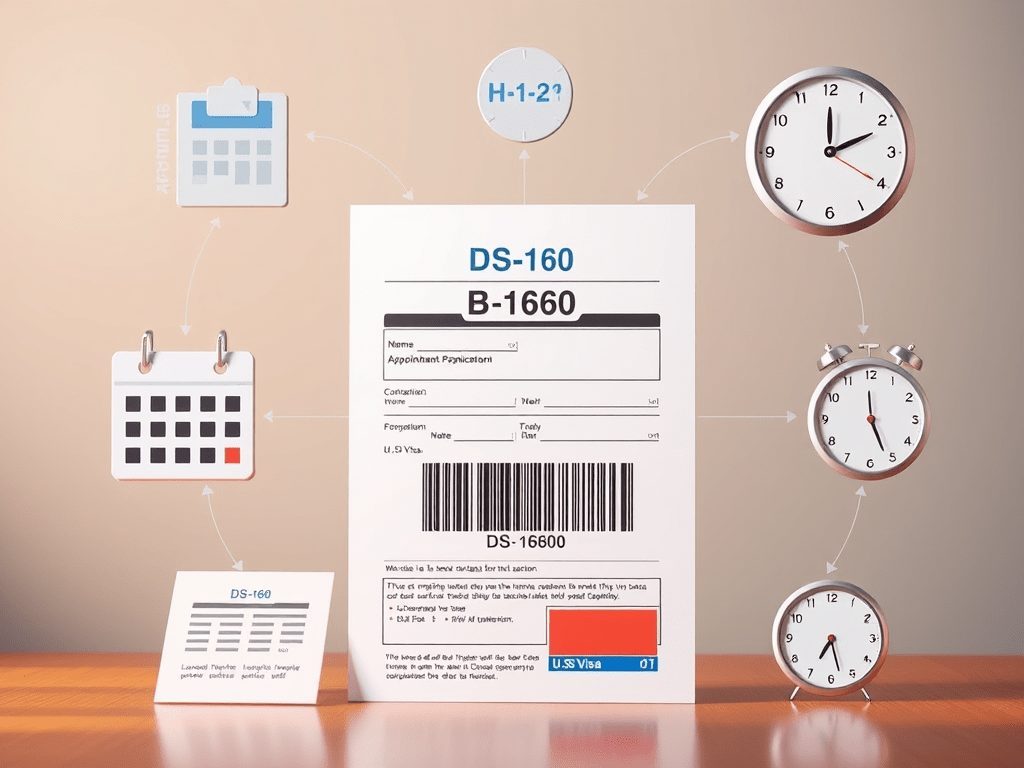
- Complete the DS-160 (or DS-260 for immigrant visas).
- Pay the MRV fee (non-refundable).
- Create your profile on the appointment portal and book the first available slot, even if it’s terrible.
Why bother booking a bad date? Because many consulates require you to have an existing appointment before you can:
- Request an expedited appointment.
- Reschedule to an earlier date when new slots open.
If you want to change U.S. visa consulate to reduce wait time later, you’ll still need to understand how this system works at each post.
Step 2: Refresh, but don’t get yourself locked out
Let’s be honest: people who get earlier dates are often the ones who check the portal obsessively. But there’s a fine line between persistent and reckless.
- Checking multiple times a day, including early morning and late night, can help you catch cancellations and new releases.
- Some systems will lock you out for 24 hours if you refresh too aggressively or use bots.
- Browser auto-refresh tools and Telegram alerts can help, but use them carefully and avoid anything that violates terms of use.
I prefer setting specific time windows to check (for example, 3–4 times a day) instead of hammering the system every few minutes.
Step 3: Watch for batch releases
Consulates often release large blocks of appointments at once. If you’re only checking randomly, you’ll miss them.
- Before peak travel seasons.
- Ahead of university intakes for student visas.
- After staffing or policy changes.
To catch these, I keep an eye on:
- Embassy/consulate news pages.
- Official social media accounts.
- Announcements about expanded hours, Saturday openings, or special student days.
Takeaway: The appointment system rewards people who are early, persistent, and disciplined—not those who panic-refresh until they get locked out.
5. Fifth Decision: Can You Skip the Interview or Get Expedited?
This is where you can sometimes turn a nightmare timeline into something manageable. If you’re trying to build a serious U.S. visa consulate wait time strategy, this step is crucial.
Option 1: Interview Waiver (a.k.a. Dropbox in some countries)
In many places, if you’re renewing a visa in the same category and meet certain conditions (validity window, age, no major violations), you may qualify to skip the in-person interview. Instead, you drop off your passport and documents at a collection center or by mail.
Key points from 2025 updates:
- Interview-waiver eligibility was expanded in early 2025 for many renewals and some worker/diplomat categories, but rules are tightening again in some regions.
- Even with a waiver, some locations still require an appointment to submit your passport.
- Eligibility often depends on being a national or resident of the country where you apply.
Always check your specific embassy’s Interview Waiver
or Renewals
page. Don’t assume you qualify just because a friend did.
Option 2: Expedited appointment
Expedited appointments are real, but they’re not for my vacation is soon
. They’re for urgent, unforeseen situations, such as:
- Serious medical emergencies.
- Funerals or critical family events.
- Imminent university start dates or program deadlines.
- Urgent business travel that can be clearly documented.
The process usually looks like this:
- Complete DS-160 and pay the fee.
- Book the earliest available regular appointment.
- Submit an expedited request through the portal, with strong evidence (letters, medical records, official deadlines).
Non-urgent reasons like weddings, tourism, or routine family visits are rarely approved. And each consulate has its own rules and examples on its website—read them carefully before you try.
Takeaway: If you’re eligible for an interview waiver, that’s often the single biggest time-saver. If you’re not, only pursue expedited if your situation truly fits the criteria and you can prove it.
6. Sixth Decision: Are You Underestimating Post-Interview Delays?
Most people obsess over the interview date and forget the second bottleneck: what happens after the interview. That’s where many run into U.S. visa 221(g) delay risks and unexpected waiting.

Two big risks:
1. Administrative processing
If your case is sent for additional security checks or document verification, you’re in administrative processing. That can add weeks or months. And the official advice is often: don’t contact us for at least 180 days.
Some factors that can increase the odds of this:
- Certain nationalities or regions with higher security scrutiny.
- Technical or sensitive fields of study/work.
- Inconsistent or incomplete documentation.
This is one of the big U.S. visa consulate mistakes to avoid: showing up with unclear answers or missing documents and accidentally triggering extra checks.
2. Passport return logistics
Even if you’re approved on the spot, you still need to factor in:
- Printing and stamping the visa.
- Courier or pickup delays.
- Local holidays and staffing issues.
That’s why I never schedule my flight for the same week as my interview if I can avoid it. I build in a buffer, especially in countries where courier services are slow or unpredictable.
Takeaway: The fastest
consulate isn’t just the one with the earliest interview—it’s the one where you can realistically get your passport back before your trip.
7. Final Decision: Is Your Overall Strategy Actually Coherent?
Let’s pull this together. If I had to design a 2025 strategy to beat the queue, pick the fastest U.S. visa consulate that works for me, and actually make my trip, it would look like this:
- Clarify your category – Make sure you’re in the correct, legitimate visa type. If you qualify for a faster lane (student, work, renewal with waiver), use it.
- Scan the world, not just your city – Use the Global Visa Wait Times tool to compare multiple consulates you can realistically reach. Don’t assume your nearest post is your best option.
- Check local rules – Confirm each consulate’s policy on third-country nationals, residency, and interview waivers on their official site.
- Lock in early – Complete DS-160, pay the MRV fee, and grab the first available appointment to get into the system.
- Hunt smarter, not harder – Monitor the appointment portal regularly, especially around local business hours and known batch-release periods, without triggering a lockout.
- Use waivers and expedites wisely – If you qualify for an interview waiver, prioritize that. If you have a genuine emergency, prepare a strong, well-documented expedited request.
- Plan for the aftershock – Build in time for administrative processing and passport return. Don’t treat the interview date as the finish line.
If you approach the process this way—data first, category second, consulate third—you stop reacting and start strategizing. And in 2025, that’s often the difference between Sorry, I had to cancel my trip
and Yes, I made it on time.
So before you book anything, ask yourself one last question: Am I choosing the consulate that’s closest to me, or the one that actually gets me to the U.S. fastest?