
I don’t plan trips around disaster. You probably don’t either. But if you fly often enough, disruption isn’t an if
– it’s a when
. And the real hit usually isn’t the ticket price. It’s the messy, hidden costs that show up only after your flight goes sideways.
Let’s walk through how delays, missed connections, and forced overnights really drain your wallet – and how to budget so a bad travel day doesn’t turn into a financial mess.
1. The Real Price of a Delay: Time, Stress, and Surprise Spending
When we think delay
, we think inconvenience. The numbers say otherwise. U.S. travelers collectively eat about $18.1 billion a year in delay-related costs, and the broader system impact is around $33 billion annually. That’s not just airline math – that’s your time, your money, your missed opportunities.
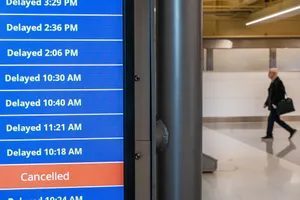
AirHelp data puts the average out-of-pocket cost of a disruption at roughly $484 per person. That’s not a freak event; that’s the norm for millions of people every year. If you’ve ever stared at a departure board full of red delayed signs, you’ve seen those dollars in action.
Where does that money actually go? Usually into a pile of small, annoying expenses:
- Extra accommodation: around $300+ if you get stuck overnight.
- Missed prepaid activities: tours, tickets, day passes – about $100+ gone in a blink.
- Local transport changes: new taxis, Ubers, trains – another $100+.
- Airport food: easily $50–$100 if you’re stuck for hours.
- Replacement essentials: toiletries, clothes, chargers – another $50–$100.
- Last-minute transport: sometimes a new flight, sometimes a rental car – this can explode into hundreds.
And that’s before we talk about the value of your time. In a typical year, roughly 1 in 5 U.S. flights arrives late. A 30–60 minute delay doesn’t feel like much until it makes you miss a connection, a meeting, or the first day of your vacation.
How to budget for this:
- Assume at least one major disruption every few trips and build that into your travel budget.
- For any trip that really matters (weddings, cruises, big meetings), mentally add a $300–$500 disruption buffer to cover extra travel costs from cancellations or delays.
- Decide in advance:
At what point would I pay for a hotel, a new flight, or a rental car?
If you know your threshold, you make better decisions under stress.
2. Missed Connections: When One Delay Wrecks Your Whole Itinerary
A short delay is annoying. A missed connection is expensive.
Here’s the uncomfortable truth: whether you pay or the airline pays often comes down to one boring detail – how your ticket was issued. This is where a lot of the hidden costs of flight disruptions sneak in.
If your flights are on a single ticket and meet the airport’s Minimum Connection Time (MCT):
- The airline has effectively accepted responsibility for getting you to your final destination.
- If their delay or cancellation makes you miss the connection, they generally must rebook you for free or refund the unused segment.
- In Europe/UK, under EC 261, you may also be entitled to cash compensation and care (meals, hotel, transport) if the cause is within the airline’s control.
If your flights are on separate tickets (self-transfer):
- The onward flight can treat you as a no-show.
- They don’t have to rebook you. You may need to buy a new ticket at walk-up prices.
- U.S. DOT rules don’t protect self-made connections. You’re basically your own travel agent – and your own insurer.
Codeshares add another twist: the airline that actually operates the delayed leg is usually the one responsible for help or refunds, not necessarily the brand on your ticket.
How to budget for missed connections:
- Avoid separate tickets for critical trips unless the savings are huge and you can afford to lose the second leg.
- If you must self-connect, build in 90+ minutes for domestic and 2–3 hours for international transfers.
- For self-transfers, assume you might have to repurchase the onward flight. If that risk makes you sweat, the deal isn’t worth it.
3. Forced Overnights: The Hotel You Didn’t Plan to Buy
Overnights are where disruption costs really spike. A long delay that pushes you into the next day can mean:
- Hotel near the airport (often at inflated rates).
- Meals you didn’t budget for.
- Airport–hotel–airport transport.
- Lost prepaid night at your original destination.
Here’s the catch: airlines are not always required to pay for any of this. The cost of a forced overnight due to delay often lands squarely on you.
In the U.S., federal guidance (including rules clarified in late 2025) makes it clear: if the delay or cancellation is due to certain safety or maintenance issues (like aircraft recalls), airlines often don’t have to cover your hotel or meals. Many do offer vouchers as a goodwill or policy choice, but it’s not guaranteed by law.
In Europe and the UK, protections are stronger. Under EC 261, if your disruption is within the airline’s control and you’re stuck overnight, they generally must provide accommodation, meals, and transport to and from the hotel, regardless of whether you get cash compensation.
How to budget for forced overnights:
- On any trip with tight timing, assume you might need to pay for one unplanned hotel night out of pocket.
- Know your airline’s policy via the DOT’s Airline Customer Service Dashboard before you fly.
- Carry a card or cash buffer that can comfortably handle $200–$400 for a last-minute hotel + meals. That’s your personal overnight layover hotel cost cushion.
4. Your Rights: U.S. vs. Europe, and Why Most People Leave Money on the Table
Most travelers don’t know their rights. That ignorance is expensive.
According to AirHelp, 51% of disrupted passengers never file for compensation because they don’t realize they’re eligible. And 68% say they were never informed of their rights during the disruption. That’s a lot of unclaimed money.
In the U.S.:
- There’s no EU-style universal compensation law.
- Your rights come from the DOT rules plus each airline’s Contract of Carriage and Customer Service Plan.
- Under the DOT’s automatic refund rule (effective October 2024), you’re entitled to a cash refund if:
– Your flight is canceled or significantly changed and you don’t accept rebooking.
– Your checked baggage is significantly delayed.
– Paid extras (like Wi‑Fi) aren’t provided. - Refunds must be automatic, prompt, and in the original form of payment.
In Europe/UK (EC 261):
- You may get cash compensation for long delays, cancellations, and missed connections caused by airline-controlled issues.
- You’re often entitled to care (meals, hotel, transport, communication) during long waits.
- You don’t need to be an EU citizen; you just need a qualifying route.
Understanding these flight delay reimbursement rules is part of protecting your travel budget. Airline compensation vs out of pocket costs can look very different depending on where you’re flying.
How to turn rights into money:
- Before you fly, skim your airline’s Customer Service Plan and save a link on your phone.
- During a disruption, keep every receipt – food, transport, hotel, essentials.
- After the trip, file a claim directly with the airline. If they stonewall and you’re in EC 261 territory, consider a specialist service like AirHelp or similar (they take a cut, but they also do the work).
5. Building a Personal “Disruption Budget” (So You’re Annoyed, Not Broke)
Instead of pretending everything will go smoothly, it’s smarter to assume that something
will go wrong and price that into the trip from day one. Think of it as your flight disruption emergency fund.
Here’s a simple framework you can adapt:
Step 1: Classify your trip.
- Low stakes: weekend visit, flexible dates, no prepaid events.
- Medium stakes: vacation with some prepaid tours or hotels.
- High stakes: cruise departure, wedding, major work event, nonrefundable package.
Step 2: Set a disruption buffer.
- Low stakes: budget an extra 10–15% of your trip cost as a mental buffer.
- Medium stakes: plan for $200–$400 in potential disruption costs.
- High stakes: plan for $500+ per person, or buy robust travel insurance that clearly covers delays, missed connections, and overnights.
Step 3: Decide your walk-away
rules.
- At what delay length will you ask to be rebooked on another route?
- At what point will you pay for your own hotel instead of sleeping on the floor?
- When will you abandon the trip and take a refund instead of continuing?
Write these down in your notes app. When you’re tired and stressed at the airport, having pre-decided rules keeps you from making emotional, expensive choices – and helps you avoid common money mistakes during flight delays.
6. On-the-Day Playbook: How to React Without Bleeding Cash
When disruption hits, speed and clarity matter more than drama. Here’s a practical sequence I use when flights go off the rails.
1. Move first, complain later.
- Head straight to the airline’s customer service desk.
- While you’re in line, call the airline and use the app at the same time.
- Sometimes the phone agent or app will rebook you before you reach the counter.
2. Be specific in what you ask for.
- Ask for the next available flight to your destination, even if it means a different routing.
- Ask if they can endorse your ticket to another carrier (they’re not required to, but sometimes they will).
- If you’re facing a long delay or overnight, ask directly: “What are you offering for meals and hotel under your policy?”
3. Protect your money.
- Don’t buy a new ticket on another airline until you’ve exhausted rebooking options with your original carrier.
- If you do rebook yourself, keep all documentation – you may be able to claim reimbursement later, especially if the original airline refused reasonable help.
- Track every expense in real time. A simple photo of each receipt is enough.
4. Use your allies.
- If you booked through a travel advisor, call them immediately – this is literally what they’re for.
- Check your credit card benefits; many cards quietly include trip delay coverage if you paid for the ticket with that card.
Staying calm isn’t just about being nice. Agents have limited flexibility. They’re far more likely to stretch it for someone who’s firm but reasonable.
7. When Insurance and Extra Protection Actually Make Sense
Travel insurance is one of those things people either buy blindly or never buy at all. Both approaches miss the point. The smarter move is to match coverage to risk and to your travel budget for airline disruptions.
Insurance is worth a hard look when:
- You’re taking a complex itinerary with multiple connections.
- You’re heading to a cruise, tour, or event that won’t wait for you.
- You’ve prepaid a lot of nonrefundable hotels, tours, or tickets.
- You’re traveling during storm season or through chronically congested hubs.
What to look for in the fine print:
- Clear coverage for trip delay (with a reasonable minimum delay, like 3–6 hours).
- Coverage for missed connections and forced overnights, not just cancellations.
- Reimbursement for meals, hotels, and transport during delays, not just the big-ticket items.
- Realistic per-day and per-trip limits (a $150 cap on hotels won’t help much at a major airport city).
Also check your existing ecosystem: some premium credit cards already include strong travel insurance for flight delays and missed connections. If you have that, you may not need a separate policy for every trip – but you do need to know the rules and pay with the right card.
8. The Mindset Shift: Expect Disruption, Don’t Fear It
Here’s the mental shift that makes all of this easier: stop treating disruption as a freak accident. Treat it as a normal cost of flying that you can plan for, just like baggage fees or airport parking.
When you do that, a delay stops being a financial ambush and becomes a scenario you’ve already rehearsed:
- You know roughly how much you’re willing to spend to fix it.
- You know what your rights are in the U.S. and abroad.
- You know who pays when a connection is missed – you or the airline.
- You’ve built a disruption buffer into your travel budget and thought about how to budget for missed connections and delays.
Flying isn’t getting simpler. Congestion, weather, labor issues, and safety-driven maintenance will keep delays in the headlines. But your reaction doesn’t have to be chaotic.
If you walk into your next trip with a clear disruption plan and a realistic budget for flight delays and cancellations, you may still lose time – but you don’t have to lose control of your wallet.