
I love a good travel deal, but I’ve learned the hard way that “no change fees” does not mean “no extra costs.” Airlines have become experts at shifting money out of the ticket price and into a maze of add-ons, restrictions, and fine print.
If you’ve ever changed a “flexible” ticket and still paid hundreds more, or booked a cheap fare that doubled once you added bags and seats, this is for you. Let’s walk through how rebooking, seat selection, and baggage quietly blow up your budget — and how to keep those surprise fees in check.
1. The Myth of the “Free” Flight Change
Airlines love to shout No change fees!
from every banner and ad. It sounds generous. It usually isn’t.
Here’s what’s really going on when you look at the hidden costs of free flight changes:
- Change fee: the old-school penalty (often $200+ per ticket) airlines used to charge just to modify your booking.
- Fare difference: the extra you pay if your new flight costs more than the one you originally booked.
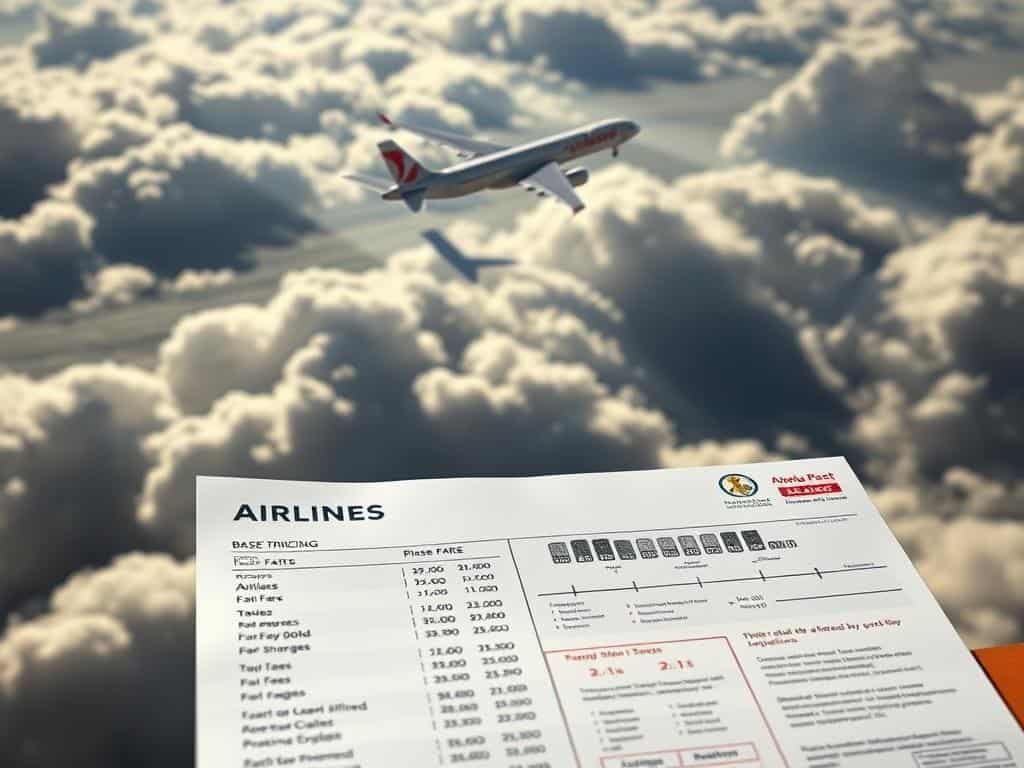
Many major U.S. airlines have removed the change fee on standard economy and premium fares. That sounds like a win, but the fare difference is still very real — and it’s usually the expensive part anyway. A change can run from $0 to $750+ per person once you’re forced to pay today’s higher price.
Then there’s Basic Economy, which is often a trap in the free flight change fine print. With airlines like United, Delta, and American, these tickets are often:
- Non-changeable at all, or
- Changeable only if you first pay to upgrade to a higher fare.
So when you see no change fees
in big letters, stop and ask:
- What fare type am I actually buying?
- Can I change this ticket in practice, or just in theory?
- If I change later, how much could the new fare cost me?
The real takeaway: “No change fee” is not the same as “free changes.” You’re still on the hook for whatever the new fare is on the day you rebook.
2. How Rebooking Really Works (and Why It’s So Expensive)
Let’s say your plans shift. You need to move your flight. What actually happens when you hit that Change flight
button?
In most cases, the airline will:
- Cancel your original flight and turn it into a credit (or quietly reprice it in the background).
- Price the new flight at today’s fare, not what you originally paid.
- Charge you the difference between the two — plus any extra fees or add-ons.
That’s why the cost of rebooking a flight can feel brutal. Changing a $300 ticket a week before departure can suddenly cost another $400. The base fare for that route has gone up, and you’re now paying the new market price.
Key things that drive how much flight changes really cost:
- Timing: The closer you get to departure, the more expensive the new fare usually is.
- Route: International and long-haul flights tend to have steeper fare jumps.
- Fare type: Basic economy and some discount fares can’t be changed at all, or only with heavy penalties.
- Channel: Tickets booked through online travel agencies or consolidators may have extra change rules and fees layered on top of the airline’s.
Sometimes, it’s actually cheaper to cancel and rebook than to change. With many nonrefundable tickets, you’ll get a credit (sometimes minus a fee) and can then buy a new, cheaper fare — especially if prices have dropped or you’re flexible on dates or airports.
Before you confirm any change, pause and ask:
- Is there a cheaper day, time, or nearby airport that would cut the fare difference?
- Would cancel + rebook cost less than a straight change?
- Do I have trip insurance or credit card coverage that might reimburse some of this?
Understanding the difference between an airline change fee vs fare difference is key. The fee might be gone, but the fare difference is where airlines still make their money.
3. The Schedule-Change Loophole: When the Airline Owes You
There’s one situation where the power flips: when the airline changes your flight first.
Under U.S. Department of Transportation rules (updated in 2024), a “significant schedule change” usually means:
- A delay of 3+ hours for domestic flights, or
- 6+ hours for international flights, or
- A change of airport, or
- A switch from nonstop to connecting, or a big change in connection time.
When that happens, you’re typically entitled to a full cash refund if you no longer want the trip — not just a voucher. Airlines don’t love handing out cash, so they’re often surprisingly flexible if you’re willing to keep your booking with them.
This is where you can win the airline schedule change passenger rights game:
- Ask to move to a different time or even a different day without paying a fare difference.
- See if you can switch to a better routing (for example, nonstop instead of connecting).
- In some cases, you can even change to a nearby airport if it fits the airline’s network.
The trick is to be proactive:
- Watch for schedule-change emails and app notifications instead of ignoring them.
- Call or chat with the airline soon after the change appears.
- Be polite but specific:
This change doesn’t work for me. Could you move me to [exact flight] instead?
Some travelers even have a personal rule: wait and see if the airline changes the schedule before paying to change it yourself. It doesn’t always work, but when it does, you can avoid a big flight change cost breakdown entirely.
4. Seat Selection: The Quiet Budget Killer
Seat fees look harmless. $12 here, $25 there. But they’re charged per person, per segment. On a family trip with connections, that adds up fast.
Typical patterns:
- Standard seats: $10–$40 per person, per leg.
- Extra-legroom or preferred seats: $30–$150+ per leg on long-haul routes.
- Basic economy: often no free seat selection until check-in, which pressures you to pay if you want to sit together.
Now layer in a flight change. When you rebook, your carefully chosen seats often don’t transfer to the new flight. You may have to:
- Pay again to select seats on the new flight, or
- Accept whatever’s left — usually middle seats scattered around the cabin.
So that “free” change can quietly trigger another $100+ in seat selection fees after a flight change for a couple, or several hundred for a family.
How I handle it:
- Short flights, solo travel: I often skip seat selection and take my chances.
- Family trips: I compare the total cost of a basic fare + seat fees vs. a standard fare that includes seat selection or has lower fees.
- When changing flights: Before agreeing to a new flight, I ask the agent:
Can you also move my paid seats or assign us together at no extra cost?
Always look at the all-in price, not just the base fare. A $50 ticket with $40 of seat fees is not really a $50 ticket.
5. Baggage: The Fee That Doubles When Plans Change
Bags are where airlines quietly print money. And when you change flights, baggage fees when changing flights can multiply fast.
Common baggage traps:
- Checked bags: $30–$40 for the first bag each way on many U.S. airlines; more on international or budget carriers.
- Overweight/oversize: Often $150–$400 per bag on top of the base checked-bag fee.
- Carry-on fees: Some low-cost carriers charge for carry-ons at rates similar to checked bags.
Now add a flight change:
- If you switch to a different airline or fare type, your baggage allowance can change completely.
- That “free checked bag” you had with one carrier or fare might disappear on the new itinerary.
- On some budget airlines, changing flights can mean re-paying bag fees or losing pre-paid baggage if the rules are strict.
For families, this is brutal. Four people with one checked bag each, round-trip, at $35 per bag each way is:
- $35 × 4 people × 2 directions = $280 just in checked-bag fees.
Change that trip, and you may be re-paying or increasing those fees, especially if you move to peak dates or a more restrictive fare. That’s the kind of travel budget impact of flight changes that sneaks up on you.
How to protect yourself:
- Check the baggage rules for your exact fare before you book, not just the airline’s general policy.
- Consider an airline credit card or elite status if you fly one carrier often — the free bags can easily outweigh the annual fee.
- Weigh and measure your bags at home. Overweight fees are some of the most painful because they’re so avoidable.
6. The Hidden Fees You Don’t See Until Checkout
Even if you never change your flight, airlines have a long list of quiet extras that can wreck your budget at the last second.
- Booking and “usage” fees on ultra-low-cost carriers — sometimes per segment, per person.
- Call-center fees if you book or change by phone instead of online.
- Airport check-in or printing fees if you don’t check in online or bring a digital boarding pass.
- Name correction fees if your ticket doesn’t match your ID exactly.
- Unaccompanied minor fees that can add hundreds of dollars each way.
- Third-party booking fees from online travel agencies layered on top of airline rules.
These charges often appear late in the booking process, after you’ve already invested time and emotion into a specific flight. That’s not an accident.
My rule: I treat the first price I see as a rough draft, not the final cost. I click through to the last page of checkout and ask:
- What does this trip cost with the bags I actually need?
- What if I add the seats I realistically want?
- Are there any weird fees (booking, printing, etc.) that make this airline less of a deal?
Only then do I compare airlines. A $55 fare that becomes $120 after add-ons is not cheaper than a $90 fare that already includes most of what you need.
7. Smart Ways to Protect Your Budget (Without Overpaying)
You don’t need to memorize every airline’s fee chart to avoid surprise fees after changing flights. A few habits go a long way.
1. Choose the right fare type for the trip.
- If your dates are rock solid, a restrictive fare might be fine.
- If there’s any chance of change, avoid the cheapest basic fares that can’t be changed or credited.
- Sometimes a slightly more expensive, flexible fare is cheaper than paying for one big change later.
2. Use the 24-hour rule.
- Many airlines (and U.S. regulations for certain bookings) allow you to cancel within 24 hours of purchase for a full refund.
- Use this window to double-check dates, names, and connections — and fix mistakes for free.
3. Leverage credit cards and insurance.
- Some travel cards include trip cancellation/interruption coverage that can reimburse change or cancellation costs for covered reasons (illness, family emergencies, etc.).
- Read the terms. Not every inconvenience is covered, but real emergencies often are.
4. Be flexible with airports and dates.
- Changing to a nearby airport or shifting by a day or two can dramatically cut fare differences.
- Off-peak days (often Tuesdays, Wednesdays, Saturdays) tend to be cheaper to rebook.
5. Ask for waivers when it’s reasonable.
- Serious illness, family emergencies, or major disruptions? It’s worth asking if the airline can waive or reduce fees.
- Be honest, polite, and prepared with documentation if needed.
6. Watch for schedule changes.
- Don’t ignore those
Your flight has changed
emails. - Sometimes a small schedule change can be your ticket to a better flight at no extra cost — if you call and ask.
8. Before You Click “Book”: A 60-Second Checklist
Here’s the quick mental checklist I run through before I commit to any flight. It’s my way of avoiding extra fees on flight changes before they ever show up.
- 1. Fare type: Is this basic economy, standard economy, or something else? What are the change rules and restrictions?
- 2. Total cost: What’s the price with the bags and seats I actually plan to use — not just the headline fare?
- 3. Flexibility: If I had to change this, what would it likely cost me in fare difference and fees?
- 4. Baggage rules: How many bags are included? What are the overweight/oversize penalties?
- 5. Booking channel: Am I booking directly with the airline, or through a third party that might complicate changes and add fees?
- 6. Protection: Do I have a card or insurance that would help if something goes wrong?
Once you start thinking this way, you’ll notice something: the cheapest
ticket is often not the cheapest trip. The real savings come from understanding how rebooking, seats, and baggage work together — and refusing to be surprised by them.
Next time you see Free flight changes!
ask yourself: Free for whom?