
I love a good flight deal. But I’ve learned the hard way that some of the “cheapest” airports end up being the most expensive choices once you add everything up. If you’ve ever flown into a distant secondary airport and then watched your savings vanish into taxis, parking, and lost time, you know exactly what I mean.
This guide breaks down the hidden costs of cheap airports, how secondary airports compare to main hubs, and how to figure out the real total trip cost before you book.
1. The Ticket Price Trap: Why the Cheapest Fare Isn’t the Cheapest Trip
Most of us start the same way: sort by price, click the lowest fare, feel smug. That’s exactly how secondary airports hook you.
Smaller or alternate airports often look cheaper because:
- They have lower landing and operating fees, so airlines can drop prices.
- They attract budget carriers that strip out extras to advertise rock-bottom fares.
- There’s less congestion, so airlines don’t need to fight for slots.
Big hubs, on the other hand, usually have fierce competition. Multiple airlines fly the same routes, run sales, and offer loyalty perks. On popular routes, that competition can make a main airport surprisingly affordable.
The catch? The number you see on the booking screen is only one line on your trip’s balance sheet.
If you stop there, you’re not comparing trips. You’re comparing flight prices in a vacuum.
My rule now: airfare is just Step 1. I assume the cheapest-looking airport is guilty until it proves it’s actually cheaper door-to-door.
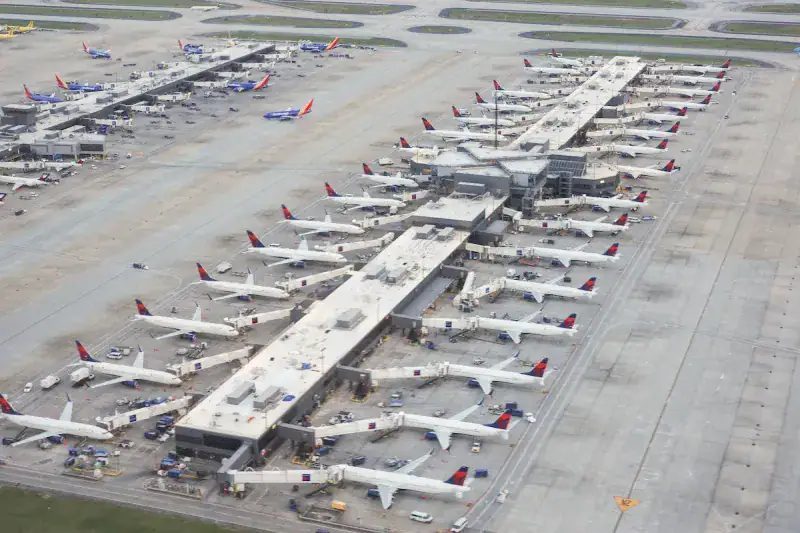
2. Ground Transportation: The Silent Budget Killer
This is where “cheap” airports quietly wreck your budget.
That $80 you saved on the ticket can disappear fast when you land 40–70 miles from where you actually need to be. Think about the secondary airport transportation costs you’re signing up for:
- Rideshares and taxis: A long Uber from a remote airport can easily cost more than the fare difference.
- Rental cars: Smaller airports sometimes have
airport-only
pricing and fewer discounts. - Limited public transit: Some secondary airports have no train or cheap bus into the city, or services run infrequently.
Main airports often win this round. They usually offer:
- Direct trains or metro lines into the city center.
- Multiple bus options and shared shuttles.
- More competition among taxis and rideshares, which can keep prices in check.
So that slightly higher fare into the main airport can end up being the cheaper airport choice overall once you factor in transfers.
Here’s how I sanity-check the cheap airport transfer costs before I book:
- Look up the actual distance from each airport to my final address (not just “city center”).
- Price out realistic transport at my arrival time: Uber estimate, train fare, bus, or rental car.
- Add a buffer for traffic if it’s a congested region (Los Angeles, New York, London, etc.).
If the cheaper airport adds more than about $30–$40 each way in ground costs, I get suspicious. For families or groups, that threshold is even lower because every extra train ticket or shuttle seat multiplies the pain.

3. Time vs Money: What Is Your Hour Actually Worth?
We talk a lot about money when we compare airports, but your time has a price too. No one sends you an invoice for it, but you feel it.
Flying into a distant “deal” airport often means:
- Longer drives on both ends.
- Extra connections instead of a direct flight.
- More chances for delays and missed connections.
Meanwhile, a smaller regional airport closer to your destination can be a dream: short security lines, quick baggage claim, and you’re out the door. Some travelers (me included) are happy to pay more to avoid the chaos.
One travel writer I follow pegs their personal threshold at about $150–$200 more per direction to fly into a closer airport instead of a big hub like LAX. Why? Because that extra money buys back hours of their life and a lot less stress.
You don’t need a spreadsheet, but you do need a number. Ask yourself:
- If this airport choice adds 2–3 hours to my day, what is that worth to me?
- Would I pay $50 to avoid that? $100? $200?
Once you know your own “time value,” the secondary airport time vs money tradeoff gets clearer. A $60 saving that costs you half a day suddenly doesn’t look like a win.
4. Parking, Airport Hassle, and the Hidden Fees You Don’t See on Google Flights
Even if you nail the flight and the transfers, the airport itself can quietly drain your budget.
Big hubs often mean:
- Expensive parking: $25–$40+ per day is common at major airports.
- Longer security lines, so you arrive earlier and spend more on food and coffee.
- More walking, more waiting, more chances to impulse-buy things you don’t need.
Regional airports can flip that script:
- Parking in the $7–$12 per day range is typical at many smaller airports.
- Shorter TSA lines (one study found small hubs averaging around 18 minutes vs 30+ at large hubs).
- Less chaos, which often means fewer “I’m stressed, I’ll just buy it” purchases.
Over a week-long trip, parking alone can swing the total cost by $100–$200. That’s enough to erase a lot of “savings” from a low-cost carrier using a distant airport.
When I compare airports now, I literally write down:
- Parking cost × number of days.
- Expected time at the airport (door to gate).
- How early I realistically need to arrive to feel comfortable.
Then I ask: Is this “cheap” airport actually cheaper once I pay to leave my car there and sit around for hours?

5. Connections, Delays, and the Risk Premium You Forget to Count
There’s another cost that doesn’t show up on the booking screen: complexity.
Smaller airports often don’t have many direct flights. That can mean:
- Extra connections through big hubs.
- More chances for missed connections and rebooking drama.
- Higher odds that a delay ruins your first day or forces an extra hotel night.
On paper, a two-stop itinerary that saves $80 might look fine. In real life, one weather delay or missed connection can turn that into a very expensive decision.
When I see a “cheap” airport that requires an extra connection, I mentally add a risk premium to my airport choice cost comparison:
- What happens if I miss the last connection of the day?
- How much would a last-minute hotel and meals cost?
- Is this trip time-sensitive (wedding, cruise, work meeting)?
If the stakes are high, I treat simplicity as part of the price. A direct flight into a main airport is often worth more than the spreadsheet suggests.
6. How I Actually Compare Airports (A Simple Door-to-Door Formula)
Let’s turn this into something you can use in five minutes.
When I’m torn between a main airport and a secondary one, I build a quick door-to-door cost guide for secondary airports vs main hubs:
- Start with the flight price.
Note the total cost including bags, seat fees, and any obvious extras from low-cost carriers. - Add ground transport.
Estimate Uber/taxi, train, bus, or rental car from airport to your actual destination (and back). This is where the real cost of flying into secondary airports often shows up. - Add parking (if you’re driving to the airport).
Daily rate × number of days. - Estimate time cost.
Add up:- Drive time to the airport.
- Airport time (arrival buffer + security + boarding).
- Flight time + connections.
- Arrival ground time to your final address.
hourly value
(even a rough number like $20–$30/hour helps). - Add a small risk buffer.
If one option has more connections or tight schedules, mentally add a bit for potential disruption.
Now compare the total trip cost, not just the airfare. That’s when a supposedly cheap secondary airport often stops looking like a bargain.

7. When Secondary Airports Really Do Make Sense
After all this skepticism, let me say this clearly: secondary and regional airports can be fantastic. The trick is knowing when they’re actually worth it.
They’re often the better choice when:
- The airport is closer to where you’re actually going than the main hub.
- Parking is dramatically cheaper and you’re gone for several days.
- There’s a direct flight from the smaller airport but not from the main one.
- You’re traveling with kids or older relatives and want to minimize stress and walking.
- You find a genuinely huge fare difference (think 50–75% off) and ground costs are modest.
In some regions, checking multiple airports isn’t optional; it’s smart. Southern California, New York, Chicago, the Bay Area, Miami – these places are full of alternate airports that can either save you a fortune or quietly cost you one.
My approach now is simple:
- Always search all nearby airports using tools that support flexible airport searches.
- Shortlist 2–3 realistic options.
- Run the door-to-door comparison and see which one actually wins on value, not just price.
8. The Mindset Shift: Stop Chasing Cheap, Start Buying Value
Here’s the mindset shift that changed how I book flights:
I don’t chase the cheapest airport anymore. I buy the best value door-to-door.
Sometimes that’s a big hub with great transit. Sometimes it’s a tiny regional airport with cheap parking and a direct flight. Sometimes it’s worth paying more just to land closer and arrive sane.
Next time you see a tempting fare into a secondary airport, pause and ask:
- What will I really spend from my front door to my hotel bed?
- How much time will this “deal” steal from me?
- What level of stress am I signing up for?
If you start thinking in total trip cost instead of ticket price, you’ll avoid the classic low cost carrier airport traps and make fewer regrettable bookings. And when a secondary airport truly is a bargain, it’ll be obvious.