I’ve lost count of how many times I’ve stared at a 6:00 a.m. departure and thought: Do I really need a hotel tonight, or can I just tough it out in the airport?
If you’re reading this, you’ve probably been there too.
Below, I’ll break down how an extra hotel night, an airport lounge, and a capsule / sleep pod compare on a cost-per-hour basis – and when each one actually makes sense in real life.
We’ll look at realistic price ranges, not unicorn deals. Then we’ll layer in what really decides it for most people: sleep quality, stress levels, and the risk of missing your flight. That’s where the real value is, especially when you’re weighing an extra hotel night vs airport lounge or wondering if a capsule hotel vs airport lounge cost is worth it.
1. The Real Question: What Problem Are You Paying to Solve?
Before I compare numbers, I always start with one question:
Am I paying for comfort, or am I paying to avoid a disaster?
Those are not the same thing.
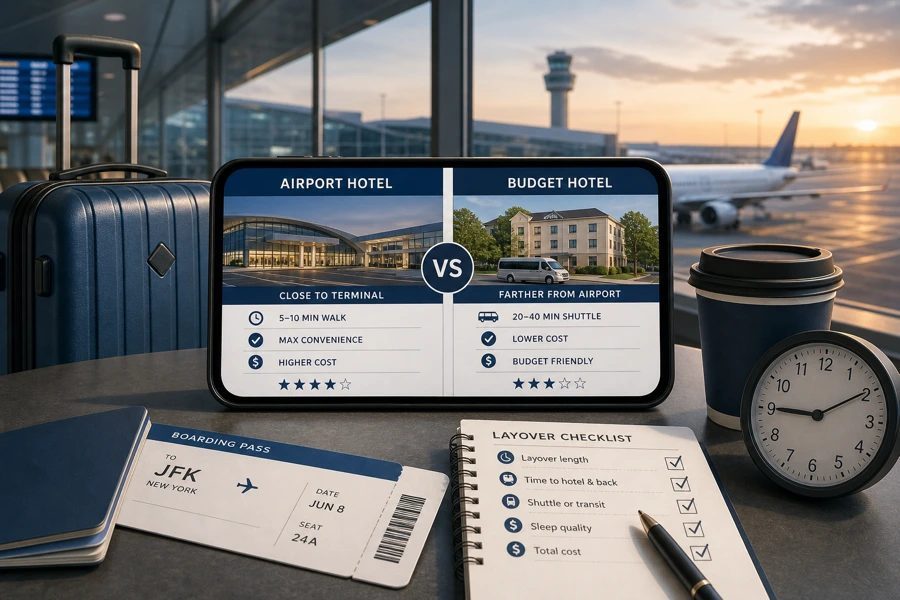
- Extra hotel night (airport hotel) – Mainly solves risk and stress. You’re buying a smooth morning, not just a bed. As one frequent traveler put it, once you’ve had a calm airport morning from a nearby hotel, it’s hard to go back to 3 a.m. chaos.
- Airport lounge – Solves comfort and productivity during a layover. Better chairs, food, Wi‑Fi, outlets. Great for killing time, not great for real sleep. It doesn’t fix a brutal 2 a.m. wake-up at home.
- Capsule / sleep pod / day room – Solves short, intense fatigue. You’re paying for a few hours of actual rest, often without leaving the terminal. Perfect when you’re wrecked and just need to lie flat.
If your main fear is missing a high-stakes flight (honeymoon, long-haul, expensive award ticket), I lean heavily toward the airport hotel. If you’re already mid-trip and just trying to survive a long layover, the airport layover sleep options cost question – lounge vs pod vs day room – gets more interesting.
Keep that core question in mind as we walk through the math.
2. Cost-Per-Hour: Quick & Dirty Benchmarks
Let’s put some typical numbers on the table. These are ballpark ranges in USD (adjust for your city):
- Airport hotel (overnight): $90–$200 for ~8 hours of usable time
- Airport hotel (day room): $60–$120 for 4–8 hours
- Airport lounge day pass: $35–$75 for 3–6 hours
- Capsule / sleep pod: $15–$30 per hour (often 2–4 hour minimum)
Now, rough cost-per-hour hotel vs lounge vs pod:
- Overnight airport hotel – $90 / 8h ≈ $11.25 per hour (and most of that is real sleep)
- Day-use hotel (6h) – $80 / 6h ≈ $13.30 per hour
- Lounge (4h) – $50 / 4h = $12.50 per hour (includes food & drinks)
- Sleep pod (3h) – $60 / 3h = $20 per hour
On pure math, airport hotels and lounges are surprisingly close in cost per hour. Sleep pods look expensive, but they’re often the only way to lie flat without leaving the terminal.
But cost-per-hour is only half the story. The other half is: What kind of hour are you buying? An hour of deep sleep? An hour of quiet work? Or an hour of half-sleep in a bright, noisy space?
3. Extra Hotel Night: When Paying for Sleep Beats Paying for Stress
Here’s the classic scenario: you live 60–90 minutes from the airport, your flight is at 7:00 a.m., and you’re debating whether to drive at 3:30 a.m. or book a hotel near the terminal.
From the research and my own trips, airport hotels are most worth it when:
- Your flight is before ~10 a.m.
- You live more than 30–60 minutes away (some say 30–60+ minutes is the tipping point).
- It’s a long-haul or high-value trip where missing the flight would really hurt.
Let’s compare.
Option A: Sleep at home, drive early
- Wake-up: 2:30–3:00 a.m.
- Risk: traffic, rideshare no-show, oversleeping, forgetting something.
- Cost: maybe $40–$80 in rideshare/parking, plus a lot of stress.
Option B: Airport hotel the night before
- Check-in: 7–9 p.m., sleep 6–7 hours.
- Walk or shuttle to the terminal in the morning (often 5–15 minutes).
- Cost: say $130 for the room, sometimes including shuttle and a basic breakfast.
On paper, Option B might cost you an extra $50–$100. But what are you really buying?
- Real sleep instead of a 3-hour nap.
- Lower risk of missing a flight that might be worth thousands.
- Less chaos: you can use twilight check-in where available, drop bags the night before, and stroll to security in the morning.
Cost-per-hour, that $130 hotel might give you 7 hours of solid rest and a calm morning. That’s under $20 per hour for something that protects your entire trip. For an overnight layover hotel or lounge decision before a big flight, that’s usually a good deal.
When is an extra hotel night not worth it?
- You live within 20 minutes of the airport.
- Your flight is midday or evening.
- You’re on a tight budget and that $100+ would matter more at your destination.
In those cases, I’d keep the cash and just tighten up my morning routine instead (pre-booked rideshare, bags packed by the door, clothes laid out, etc., as suggested in these early-flight tips).

4. Airport Lounge: Great Value… Until You Actually Need Sleep
Lounges are tempting. Softer chairs, free food, Wi‑Fi, outlets everywhere. If you get in via status, a card, or Priority Pass, the airport lounge value for long layovers can be excellent.
The catch? Lounges are not designed for real sleep.
From layover research on HotelsByDay and similar guides:
- Lounges shine for 3–6 hour layovers.
- You get food, drinks, Wi‑Fi, power, and relative quiet.
- You usually don’t get a bed, darkness, or real privacy.
Say you pay $50 for a 4-hour lounge stay:
- Cost-per-hour: $12.50.
- That includes a meal or two, coffee, snacks, and a decent workspace.
If you’d otherwise spend $20–$30 on airport food and coffee, the effective cost-per-hour of the lounge drops a lot. For a budget airport hotel vs lounge access comparison on a short layover, the lounge often wins.
Where lounges lose:
- They can be crowded at peak times.
- Reclining chairs are not the same as a bed.
- If you’re truly exhausted, you’ll just end up half-sleeping upright.
So I treat lounges as:
- Best for: working, eating, recharging devices, and light dozing on 3–6 hour layovers.
- Not great for: recovering from an overnight flight or prepping for a red-eye when you need deep sleep.
In other words, lounges are a high-value comfort upgrade, not a full sleep solution. If you’re asking, is airport lounge cheaper than hotel? the answer is often yes on paper – but not if you actually need a bed.
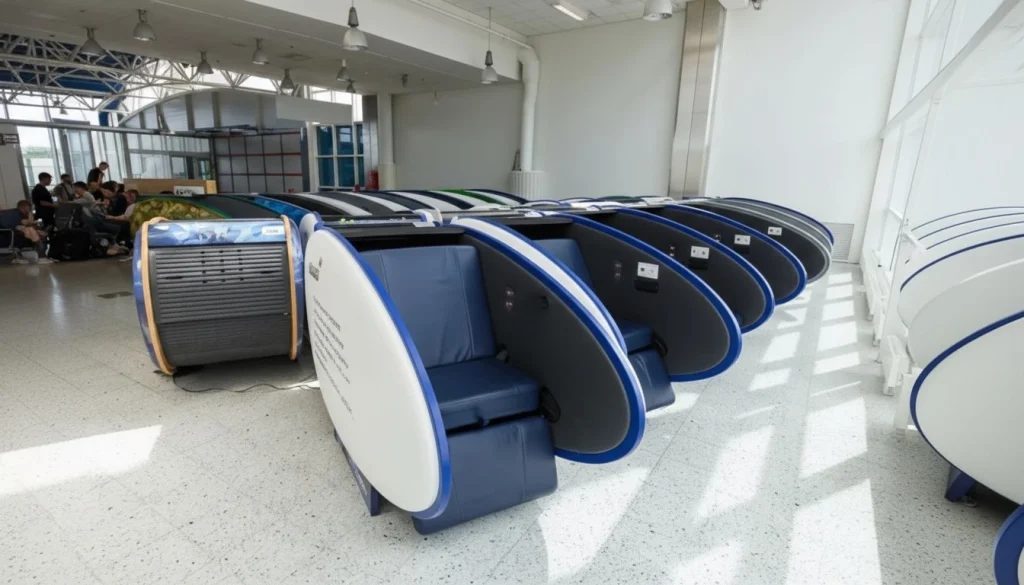
5. Capsule Hotels & Sleep Pods: Expensive Per Hour, Cheap Per Crisis
Sleep pods and capsule hotels are where the cost-per-hour math looks worst on paper and best in real life when you’re running on fumes.
Typical setup (based on airports that have them):
- Located airside or just outside security.
- Booked by the hour, often with a 2–3 hour minimum.
- Rates around $15–$30 per hour.
So a 3-hour pod at $20/hour is $60. That’s more than a lounge pass and close to a cheap day room. But what are you getting for that airport capsule hotel price?
- A reclining surface or small bed.
- Privacy and darkness (usually).
- No need to re-clear security.
From layover guides, pods are ideal when:
- You have a 3–5 hour layover and are truly exhausted.
- You don’t have time to leave the airport for a hotel.
- You value lying flat more than big rooms or fancy amenities.
They’re not perfect:
- Soundproofing can be hit-or-miss.
- Showers may be shared or not available.
- Availability can be tight at peak times.
But if you’re in that zombie state where you’re nodding off in a chair and dropping your phone every 10 minutes, $20/hour for a pod can be the cheapest way to avoid a meltdown. In a straight capsule hotel vs airport lounge cost comparison, the lounge usually wins on price, but the pod wins on actual sleep.
6. Day-Use Hotel vs Lounge vs Pod on Long Layovers (6+ Hours)
Once your layover hits 6 hours or more, the game changes. You’re no longer just killing time; you’re managing your energy for the next flight and your arrival.
Here’s how I think about the layover accommodation cost breakdown, drawing on strategies from HotelsByDay and other recovery-focused guides:
Under ~4 hours:
- Stay airside. A lounge is usually the best value.
- Pods only if you’re desperate for sleep.
4–7 hours:
- This is the gray zone.
- If you’re tired but functional, a lounge is enough.
- If you’re wrecked, consider a pod or a nearby day-use hotel if immigration/security times are reasonable.
7–14 hours:
- This is where a day-use hotel starts to win.
- You can get a real bed, shower, and quiet for 4–8 hours.
- Cost-per-hour might be similar to a lounge, but the quality of those hours is much higher.
One strategy I like (and that some travel writers recommend):
- Use a lounge first to eat, hydrate, and clean up.
- Then move to a day room for 3–5 hours of real sleep.
- Return to the lounge or gate for a final snack and boarding.
Yes, that’s more money upfront. But compare it to the alternative: wandering the terminal for 10 hours, buying overpriced food, drinking too much coffee, and arriving at your destination completely fried.
Cost-per-hour, a day room might be $10–$15. But cost-per-functioning-human, it’s often the cheapest option. If you’ve ever made the travel mistake choosing lounge over hotel on a 10-hour layover, you know exactly how that feels.

7. When Sleeping in the Airport Actually Makes Sense
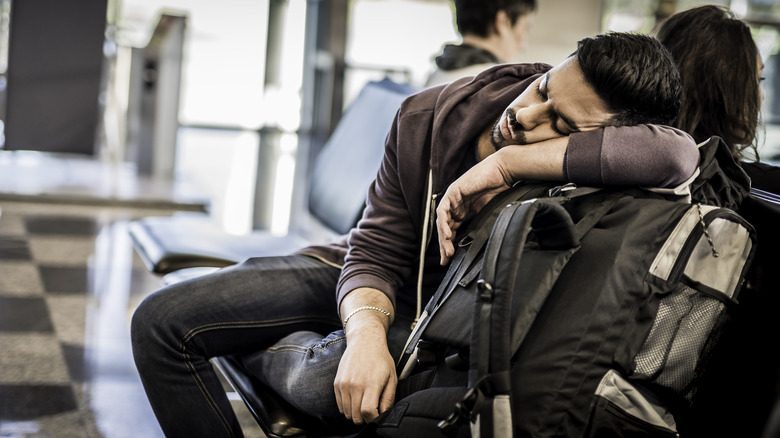
Sometimes the cheapest option really is… the floor. Or a bench.
Sleeping at the airport vs booking hotel can make sense when:
- Your flight is so early that a hotel would give you almost no real sleep.
- You’re on a very tight budget.
- The airport is safe, open 24/7, and reasonably comfortable.
In that case, your cost-per-hour is technically $0. But you’re paying in other currencies:
- Comfort: bright lights, noise, announcements.
- Security: you need to keep your stuff attached to you.
- Energy: you’ll board your flight already exhausted.
Some airports soften this with 24-hour lounges or sleep pods. Others are brutal. I always check in advance:
- Does the airport allow overnight stays landside/airside?
- Are there sleep pods or quiet zones?
- What’s the security situation like?
If the answer is hard benches, bright lights, and constant noise
, I start re-running the math on a cheap airport hotel. Even a $90 room for 5 hours is $18/hour for real sleep and safety. For many travelers, that’s worth it.
8. A Simple Decision Framework (So You Don’t Overthink It at 1 a.m.)
When I’m planning a trip, I run through this quick checklist to decide between an extra hotel night vs airport lounge, a pod, or just the terminal seats:
- How far am I from the airport?
- < 20 minutes: probably no extra hotel night.
- 30–60+ minutes: airport hotel becomes very attractive for early flights.
- What’s the flight time and importance?
- Early & high-stakes (long-haul, expensive, can’t-miss event): pay for the airport hotel. Treat it like insurance.
- Midday & low-stakes: optimize transport and skip the extra night.
- How long is my layover?
- < 3 hours: stay near the gate; maybe a lounge if you already have access.
- 3–6 hours: lounge is usually best; pod if you’re exhausted.
- 6–14 hours: strongly consider a day-use hotel, possibly paired with a lounge.
- What’s my real budget?
- If $50–$150 more won’t break the trip, prioritize sleep and reliability.
- If every dollar counts, look for no-frills airport hotels, points redemptions, or carefully planned airport overnights.
- What’s the risk if things go wrong?
- If missing the flight would be a disaster, treat the hotel as insurance, not a luxury.
In the end, the best deal isn’t just the lowest cost per hour hotel vs lounge. It’s the option that gives you the right kind of hours – sleep when you need sleep, comfort when you need comfort, and a buffer when you can’t afford to gamble with your flight.
Next time you’re staring at that early departure or long layover, don’t just ask, What’s cheapest?
Ask, What’s the cheapest way to arrive sane, on time, and functional?
The answer might be a lounge, a pod, or that extra hotel night you were about to talk yourself out of.