I used to book flights based on one thing: the ticket price. If the red-eye was $80 cheaper, I’d grab it and tell myself I’d figure out the rest later. After a few sketchy taxi lines at 1 a.m., a missed rideshare at 5 a.m., and one very expensive surge-priced ride, I stopped treating arrival time as a tiny detail.
Late-night and early-morning arrivals come with hidden costs: transport prices, safety, and sleep. If you’re comparing late-night airport arrival costs with early-morning airport arrival trade offs, it’s worth looking beyond the airfare. Let’s unpack what really changes when you land at odd hours so you can decide when to arrive, not just how much to pay for the ticket.
1. The Real Price of Landing at Odd Hours
Arrival time isn’t just a line on your itinerary. It quietly reshapes your entire arrival budget.
Here’s the pattern that shows up again and again:
- Flight at a weird hour = cheaper ticket
- Airport transfer at a weird hour = more expensive, less reliable
Airport rideshare trips are already pricey. One analysis found they cost about 35–50% more than similar in-city rides because of airport surcharges, longer distances, and extra fees (source). Now add late-night or early-morning demand spikes and fewer drivers on the road, and that “cheap” flight can quietly add $20–$40 to your ground costs.
Before you lock in that 11:45 p.m. or 5:30 a.m. arrival, ask yourself:
If my ride from the airport costs double, is this still a good deal?
What’s my backup if Uber/Lyft is surging or unavailable?
Most of us don’t run that math. We should. Those hidden costs of odd hour flight arrivals can easily wipe out the savings on your ticket.
2. Uber, Lyft, Taxi, or Transfer: Who Wins at Night?
In the middle of the day, the game is simple: open Uber and Lyft, glance at the taxi flat rate, pick the cheapest. At 1 a.m. or 5 a.m., the rules change.
From research and plenty of my own late arrivals, here’s how airport transport prices after midnight and at dawn usually shake out in major cities:
- Uber/Lyft
Dynamic pricing means they can be much cheaper than taxis in off-peak times, but also shockingly expensive when demand spikes. Early-morning airport runs are notorious for surge because lots of people are leaving at once and drivers are scarce (source). For late-night airport arrival costs, this is often where the surprises happen. - Airport taxis
Often have fixed or metered rates plus airport surcharges. You pay for predictability. In some cities (New York, Chicago, LA), taxis can be more expensive than Uber off-peak, but during surge they suddenly look like a bargain. - Pre-booked transfers / black car
Flat, upfront pricing. No surge. The driver is committed to you, tracks your flight, and adjusts for delays (source). For late-night and early-morning arrivals, this is often the least stressful option, and sometimes the cheapest once you factor in surge and waiting time.
One limo company showed typical JFK rates: sedans around $55–$70, SUVs around $148–$152 (source). That sounds high until you hit a 2x–3x Uber surge at 1 a.m. with a family of four and luggage. Suddenly, a fixed SUV price split four ways is very reasonable.
My rule of thumb:
- Solo, light luggage, big city, non-peak hour: Uber/Lyft often wins.
- Group, lots of bags, long distance, or odd hours: a pre-booked transfer or taxi is usually safer and often cheaper overall.
If you’re weighing taxi vs rideshare from the airport at night, remember: you’re not just comparing prices, you’re comparing certainty vs flexibility.
3. When Is Uber Actually Cheaper at Night?
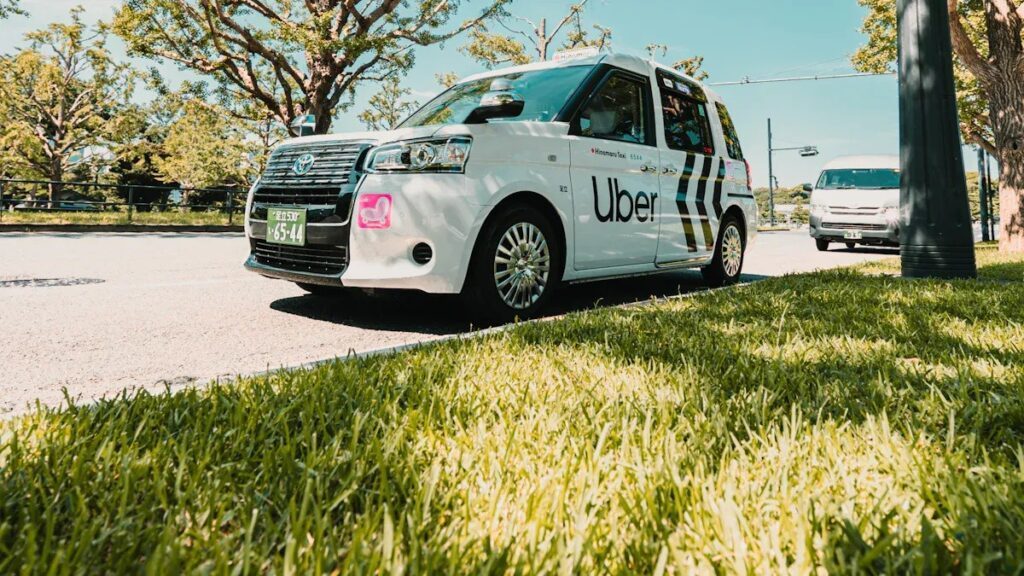
There’s a persistent myth that Uber is always cheaper at night.
It isn’t. It’s cheaper when demand is low and drivers are available. That’s it.
Pricing experts point to a few windows where rides tend to be cheaper because demand dips (source):
- Weekdays: early morning (around 4–6/7 a.m.), mid-morning, early afternoon, late evening (9 p.m.–midnight)
- Weekends: early morning, late morning, mid-afternoon
But airports are their own ecosystem. You’re not just competing with locals going home from a bar; you’re competing with:
- Clusters of flights landing at the same time
- Events, conventions, concerts
- Bad weather that delays flights and stacks arrivals
So yes, 10:30 p.m. on a Tuesday might be cheap in the city, but if three transatlantic flights land at 10:15 p.m., your airport pickup can still surge.
What I actually do:
- Open both Uber and Lyft. Fare differences of $5–$10 are common, especially on airport routes (source).
- Check the taxi flat rate (if the airport has one) as a sanity check.
- If surge is high and I’m exhausted, I ask:
Is paying $15 more worth getting to bed 40 minutes earlier?
Sometimes the answer is yes.
That’s the real red eye flight arrival pros and cons: you might save on the ticket, but you’ll often pay it back in either money or sleep.
4. Safety and Stress: Walking Out of the Terminal at 1 a.m.
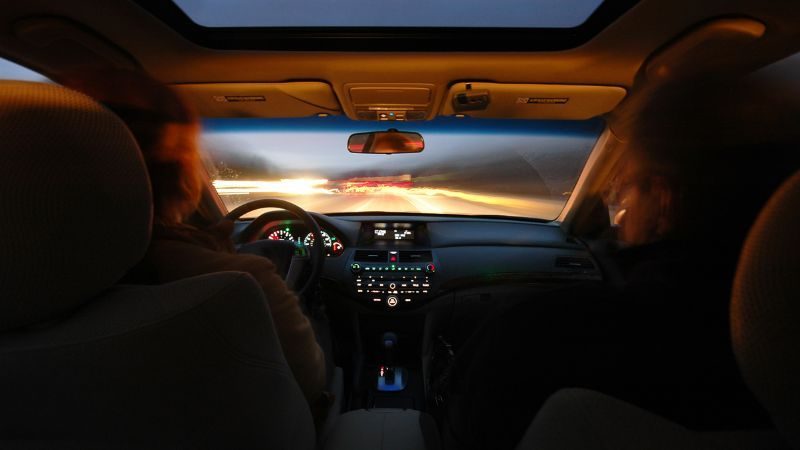
Money is only half the story. The other half is how it feels to arrive.
Late-night and pre-dawn arrivals amplify every vulnerability:
- Terminals are quieter. Fewer staff, fewer passengers.
- Public transport may be closed or running skeleton service.
- You’re tired, jet-lagged, and less sharp.
For solo travelers and especially women, this matters. Professional car services lean hard on this point: trained chauffeurs, commercial insurance, tracked trips, and a company that knows exactly who picked you up and when (source).
Rideshares are generally safe, but they’re also:
- Anonymous drivers with varying experience
- Pickups in dark, sometimes confusing zones
- Occasional long waits in exposed areas when drivers are scarce
Ask yourself:
Do I really want to be standing outside a foreign airport at 2 a.m. refreshing an app, hoping a driver appears?
If my phone dies or the app glitches, what’s Plan B?
There’s no universal right answer to airport transfer safety at night. But if you’re arriving late in a city you don’t know well, staying in a quieter neighborhood, or traveling with kids or elderly parents, paying for a pre-booked, door-to-door transfer is often the most rational choice. You’re not just buying a ride; you’re buying certainty and a calmer walk out of the terminal.
5. The Sleep Equation: Is That Cheaper Flight Worth the Jet-Lag?
We rarely put a price on our own sleep. Airlines know this. That’s why the cheapest flights are often the ones that wreck your schedule.
Think about a 1 a.m. arrival vs a 3 p.m. arrival:
- At 3 p.m., you land, grab a normal-priced ride, check in, shower, maybe walk the neighborhood, and go to bed at a reasonable hour.
- At 1 a.m., you land exhausted, pay more for transport, arrive at your hotel at 2–3 a.m., and start your first day half-broken.
Now add early-morning arrivals. Landing at 5–6 a.m. can be brutal if:
- Your hotel won’t let you check in until 2–3 p.m.
- You end up paying for an extra night just to sleep on arrival.
- You wander around with luggage, too tired to enjoy anything.
So when you see a $70 cheaper flight that lands at 12:40 a.m., ask:
Will I end up paying that $70 back in higher transport, early check-in fees, or an extra hotel night?
What’s the value of starting my trip rested instead of wrecked?
The sleep impact of late night flight arrivals is real. Sometimes the answer is still: I’ll take the cheap one.
But at least you’re making a conscious trade, not a blind one.
6. City-by-City Reality: Why Some Airports Hurt More Than Others
Not all airports are created equal. A late-night arrival in one city can be painless; in another, it’s a budget trap.
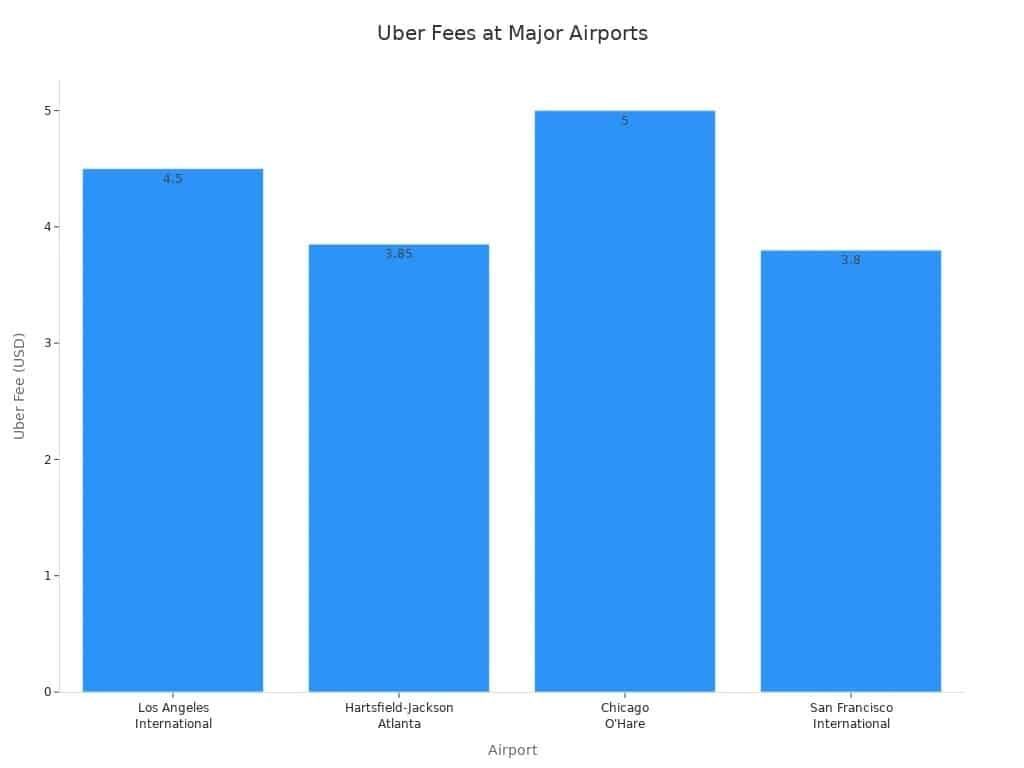
One large comparison of 47 U.S. airports found that airport-to-downtown rideshare prices can differ by a factor of 6–7x (source). The main drivers:
- Distance from airport to city center
- Local per-mile and base rates
- Airport surcharges (JFK’s pickup fee alone is $6.50)
- Booking/service fees
Examples:
- New York (JFK/LGA/EWR): High base rates + high surcharges. Late-night arrival + surge can be brutal. But there are taxis with flat rates and multiple transit options.
- Denver (DEN): Far from downtown (about 24 miles). Even with moderate rates, rideshare is expensive. The A Line train is often faster, cheaper, and more predictable, especially at reasonable hours.
- Smaller markets (e.g., El Paso): Low base rates, sometimes no airport surcharge. Here, the late-night pain is more about availability than price.
What this means for you:
- In expensive, distant airports, a late-night arrival magnifies every cost.
- In compact, cheaper markets, the main risk is no drivers, not high prices.
If you care about major city airport transfer cost comparison, do a quick reality check before you book:
- Search
Uber from [airport] to [hotel]
and look for ballpark estimates. - Check if there’s a flat-rate taxi or reliable train/bus that runs at your arrival time.
- Decide if a pre-booked transfer makes more sense for that specific airport.
7. How to Plan Smart for Late-Night or Early-Morning Arrivals
If you do choose (or can’t avoid) an odd-hour arrival, you can still stack the deck in your favor. Here’s a practical checklist I use.
Before you book the flight
- Look up typical Uber/Lyft fares from that airport to your area.
- Check if the airport has 24/7 public transport that’s actually practical (not just technically running). Public transport for early morning arrivals can be great in some cities and useless in others.
- Compare the total cost of a cheap late-night flight + expensive transfer vs a pricier daytime flight + cheaper transfer.
After booking the flight
- Decide your primary mode: taxi, rideshare, or pre-booked transfer.
- If you choose a transfer, book it 24–48 hours in advance, give them your flight number, and confirm pickup instructions (source).
- If you’re relying on rideshare, save both Uber and Lyft, add a backup payment method, and bring a small power bank.
On arrival
- Check both apps and compare with the taxi rate posted at the airport.
- Consider walking to a nearby hotel or commercial area if it safely avoids a big airport rideshare surcharge (this works at some airports, not all).
- If surge is extreme and you’re not comfortable waiting outside, pay the premium or use the taxi line. Your safety and sleep are worth more than a perfect bargain.
And one more thing: if you’re traveling with others, run the numbers as a group. A pre-booked van or SUV split three or four ways can beat both Uber and taxis on price, while also being safer and more predictable. It can also help avoid late arrival hotel check in costs if you get there on time and in one piece.
8. So… Should You Land Late or Early?
Here’s how I think about early morning flight arrival planning and late-night landings now:
- I choose late-night or early-morning arrivals only when:
- I know the airport and city well, and
- I’ve pre-booked a transfer or I’m confident about taxis and transit at that hour, and
- The savings are real even after I factor in higher transport costs and lost sleep.
- I avoid them when:
- I’m arriving somewhere new or with a reputation for expensive or chaotic airport transport.
- I’m solo, arriving very late, or staying in a quieter area.
- I need to be sharp the next morning (work trip, important meeting, long drive).
The point isn’t to scare you away from red-eyes or dawn landings. It’s to make you see the full price: not just the ticket, but the ride, the risk, and the sleep you’re trading away.
Next time you’re about to click Book
on that suspiciously cheap flight, pause and ask yourself one simple question:
What will it really cost me to walk out of that airport at that time?
Your answer to that is worth more than any promo code.