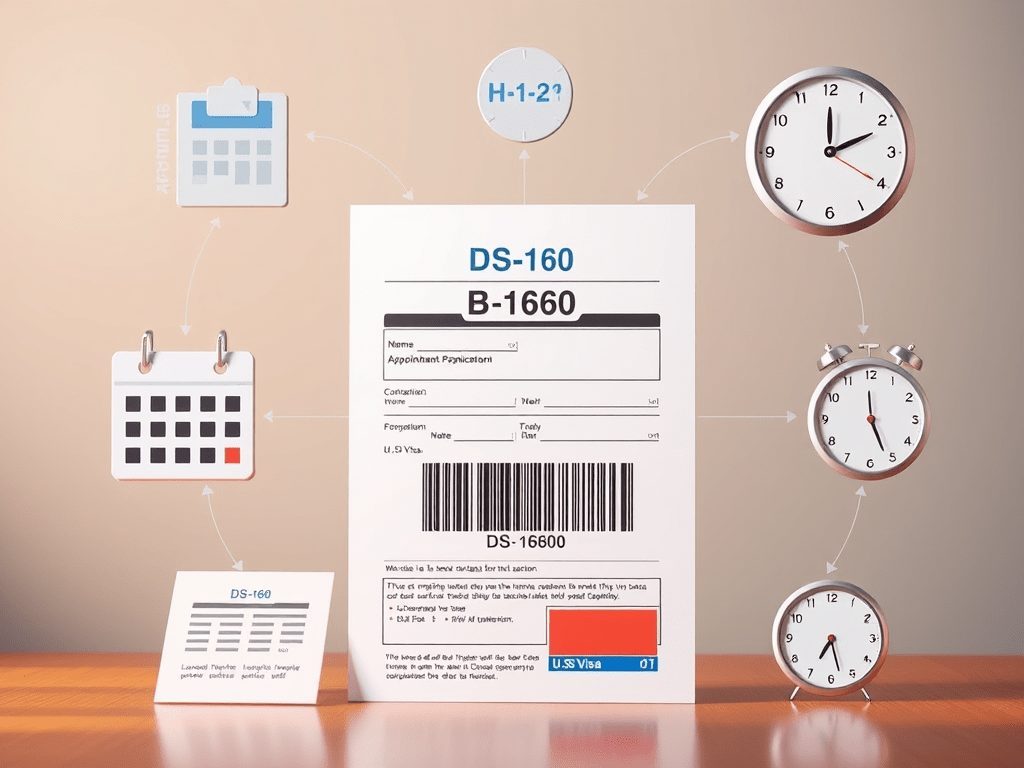
I’m going to be blunt: if you’re stuck in a U.S. family visa backlog, you’re not planning a trip. You’re planning a decade of your life.
Five, ten, even fifteen years of waiting is now normal in many family preference categories. The rules keep shifting, the Visa Bulletin retrogresses, and kids risk aging out. If you treat this like a short delay, you’ll get hurt. If you treat it like a long-term life project, you can still build a good life while you wait.
This guide won’t give you shortcuts. Instead, it focuses on what you can control: strategy, timing, documents, money, and your family’s mental health while you face long U.S. immigration wait times.
1. First Decision: Are You Planning for Years or for a Lifetime?
Most families underestimate the wait. That’s the first big mistake.
For many F1–F4 cases, especially from India, Mexico, and the Philippines, you’re not planning a 2–3 year delay. You’re planning a 5–10+ year phase of life. In 2025, backlogs and retrogression got worse, not better. Even F2A, which used to be relatively fast, retrogressed sharply. A lot of people who thought they were almost done suddenly weren’t.
So ask yourself:
- If this takes 10–15 years, what will my life look like in the meantime?
- Will my children still be under 21 when a visa becomes available?
- Will my career, health, or finances survive a decade of uncertainty?
Once you accept that the wait is long, your planning changes:
- You stop putting life on hold “until the visa comes.”
- You start building Plan B and Plan C in your current country.
- You treat the U.S. green card as a
long-term option
, not your only oxygen source.
That mindset shift is the foundation. Without it, every delay feels like a disaster instead of something you expected. With it, a 5 to 10 year family visa wait becomes something you plan around, not something that controls you.
2. Understanding the Queue: Priority Dates, Retrogression, and NVC Backlogs
Before you plan anything, you need to know which line you’re actually in and how many lines there are. Long U.S. family visa backlog planning starts with understanding the system.
Family-based immigration has two major bottlenecks:
- Visa number availability – controlled by the Visa Bulletin. Your place in line is your priority date (the date your I-130 was filed).
- Consular interview capacity – controlled by U.S. embassies/consulates and the National Visa Center (NVC). Even when your date is current, you can still wait months or more than a year for an interview.
These are independent. Clearing one doesn’t automatically clear the other. Many families are “documentarily qualified” at NVC and still stuck because their consulate has limited interview slots.
In 2025, things got messier:
- Visa Bulletin dates for F1–F4 moved unpredictably, sometimes backwards (retrogression).
- Family categories are now updated quarterly instead of monthly, so you get fewer chances to see movement.
- Backlogs at NVC and consulates remain higher than pre-COVID levels.
Here’s a practical way to approach it:
- Check your priority date and category (F1, F2A, F2B, F3, F4).
- Compare it to the Visa Bulletin’s
Final Action Dates
for your country of chargeability. - If your date is current but nothing is happening, ask: is the problem USCIS, NVC, or consular interview capacity?
Once you know which bottleneck you’re stuck in, you stop wasting energy on the wrong one. You can’t fix consular capacity, but you can fix missing documents, unclear case status, or mistakes that slow you down during the priority date waiting period.
3. Where Will You Wait: Inside the U.S. or Abroad?
This is one of the hardest decisions. Many people assume that once an I-130 is filed, they can just stay in the U.S. and wait. That’s usually wrong.
Here’s the uncomfortable truth: an approved petition and a priority date do not give you the right to stay in the U.S.
If you’re already in the U.S., ask yourself:
- Do I currently have a valid status (F-1, H-1B, TPS, pending asylum, etc.)?
- Does my status allow dual intent (like H-1B), or is it sensitive to immigrant intent (like many visitor visas)?
- Is a visa immediately available in my category so I can file adjustment of status (I-485)?
If the answer to that last question is no
and you don’t have another valid status, you generally cannot just remain in the U.S. waiting for your priority date to become current. You may have to leave and continue via consular processing.
So the real planning questions become:
- Is it safer to build my life in my home country while I wait?
- Can I realistically maintain a long-term nonimmigrant status in the U.S. without violating rules?
- What happens if my temporary status ends years before my priority date becomes current?
This is where a good immigration lawyer is worth the money. The rules around dual intent, overstay, and adjustment eligibility are complex, and a wrong move can cost you the green card entirely. Treat this decision as a major life fork, not a small paperwork detail.
4. Protecting Children from Aging Out: CSPA, Timing, and Tough Choices
If you have kids, the backlog isn’t just about patience. It’s about math and birthdays.
In 2025, USCIS adopted stricter guidance on the Child Status Protection Act (CSPA). That made it harder for some children to keep “child” status and avoid aging out at 21. For families stuck in long queues, this is a real threat.
Here’s how to think about it:
- List each child’s current age and the realistic timeline for your category.
- Ask: if the wait stretches another 5–10 years, will this child still be under 21 when a visa is available?
- Understand how CSPA might “freeze” age in your specific scenario, and where it might not.
Because of retrogression and slow processing, you can’t just assume CSPA will save your child. You need a strategy:
- File petitions as early as possible – every month counts when kids are teenagers.
- Watch Visa Bulletin movement closely; when your date is close to current, be ready with all documents so you don’t lose time.
- Consider whether separate petitions (for example, a U.S. citizen parent filing directly for a child) might be faster or safer than relying on derivative status.
Sometimes the hardest part is emotional: accepting that one child may age out while others don’t. It’s brutal. But it’s better to see the risk early and explore alternatives (student visas, future employment-based options, or other countries) than to be shocked at 21.

5. Building a Bulletproof Case: Documents, Scrutiny, and Avoiding Denials
With backlogs this long, you can’t afford a weak file. A mistake today can cost you years later.
In 2025, USCIS officers gained more power to deny cases outright without first issuing a Request for Evidence (RFE) or Notice of Intent to Deny (NOID). Security checks and background screening got tougher, and financial sponsorship (Form I-864) is under a microscope.
Treat every filing like this:
- Assume no second chances. File as if USCIS will decide based only on what you submit the first time.
- Over-document bona fide relationships, especially marriage-based cases. Photos, joint finances, leases, kids’ records, communication history – all of it.
- Be obsessive about consistency. Small inconsistencies in dates, addresses, or timelines can trigger extra scrutiny or delays.
- For I-864, don’t play on the edge. If your income is borderline, consider a joint sponsor or stronger evidence instead of hoping USCIS will be generous.
If your priority date is current but your case isn’t moving:
- Confirm that all required documents are uploaded and accepted at NVC.
- Use your case number and priority date when contacting USCIS or NVC to ask about status.
- If you hit a wall, consider an experienced immigration attorney to check whether the delay is normal backlog or a specific problem with your file.
In a world of long U.S. family visa backlogs, a preventable denial is the most expensive mistake you can make. It doesn’t just cost money; it can cost years.
6. Money, Work, and Life Plans: Treat the Wait Like a Long-Term Project
Most people plan for the filing fees. They don’t plan for the life cost of a decade-long process.
For real long-term family immigration planning, put everything on paper:
- Total cost over the full journey: government fees, medical exams, translations, travel for interviews, postage, and potential attorney fees. For a typical spousal case, this can easily reach $5,000–$6,000 or more over time.
- Career strategy in your current country: if you’re waiting abroad, can you build a career that still leaves you flexible to move later?
- Education plans for kids: will they finish high school or even university before the visa comes? How will a mid-education move affect them?
- Housing and savings: are you renting, buying, or living with family while you wait? What’s your savings target before you move?
Then ask yourself some uncomfortable questions:
- If the U.S. option vanished tomorrow, would my current life still be viable?
- Am I delaying major decisions (marriage, kids, property, business) just because of a hypothetical future move?
- Do I need a Plan B country or alternative immigration path (study, work, another destination) if the U.S. timeline becomes unworkable?
Backlogs force you to think like a risk manager. The goal isn’t to be pessimistic; it’s to avoid building your entire life on a moving target. Smart financial planning for a U.S. family visa wait gives you options, not just hope.

7. Alternative Paths and Strategic Pivots: Don’t Worship One Route
Family sponsorship is powerful, but it’s not always the smartest or only path. With F1, F2B, F3, and F4 visa backlog timelines stretching into decades for some countries, it’s worth exploring alternatives in parallel.
Some options to look at:
- Employment-based visas (like H-1B, O-1, or employer-sponsored green cards) if your skills fit.
- Study in the U.S. with a realistic plan for what happens after graduation, knowing that some student statuses are sensitive to immigrant intent.
- Other countries’ immigration programs that may be faster or more predictable for your profile.
For some families, the family petition becomes a long-term backup while they pursue a more active route through work or study. For others, the best move is to double down on building a strong life where they are and treat the U.S. option as a bonus if it eventually materializes.
The key is this: don’t let the existence of a petition freeze your life. A priority date is not a guarantee; it’s a possibility. Plan your strategy around that reality.
8. Staying Sane and Informed: Systems, Not Obsession
There’s also the mental side. You can’t refresh the Visa Bulletin into moving faster. You can’t email your way into more consular interview slots. But you can build a system that keeps you informed without consuming your life.
Here’s a simple system that works for most families dealing with long U.S. visa delays:
- Check the Visa Bulletin when it’s actually updated (now quarterly for family categories), not every week.
- Keep a simple spreadsheet with: priority date, category, key filing dates, receipt numbers, and copies of all notices.
- Set calendar reminders for major milestones: biometrics, medical exams, document uploads, and follow-ups.
- Follow a few reliable immigration information sources (official government sites and one or two reputable legal blogs) instead of random social media rumors.
And then, the hard part: live your life.
Build your career. Raise your kids. Travel where you can. Learn skills that will help you anywhere, not just in the U.S. Managing family separation during a visa backlog is painful, but you don’t have to let the process own every decision you make.
In the end, surviving a 5–10+ year U.S. family visa backlog isn’t about waiting perfectly. It’s about planning realistically, protecting your family from avoidable risks, and refusing to put your entire life on pause for a system you don’t control.