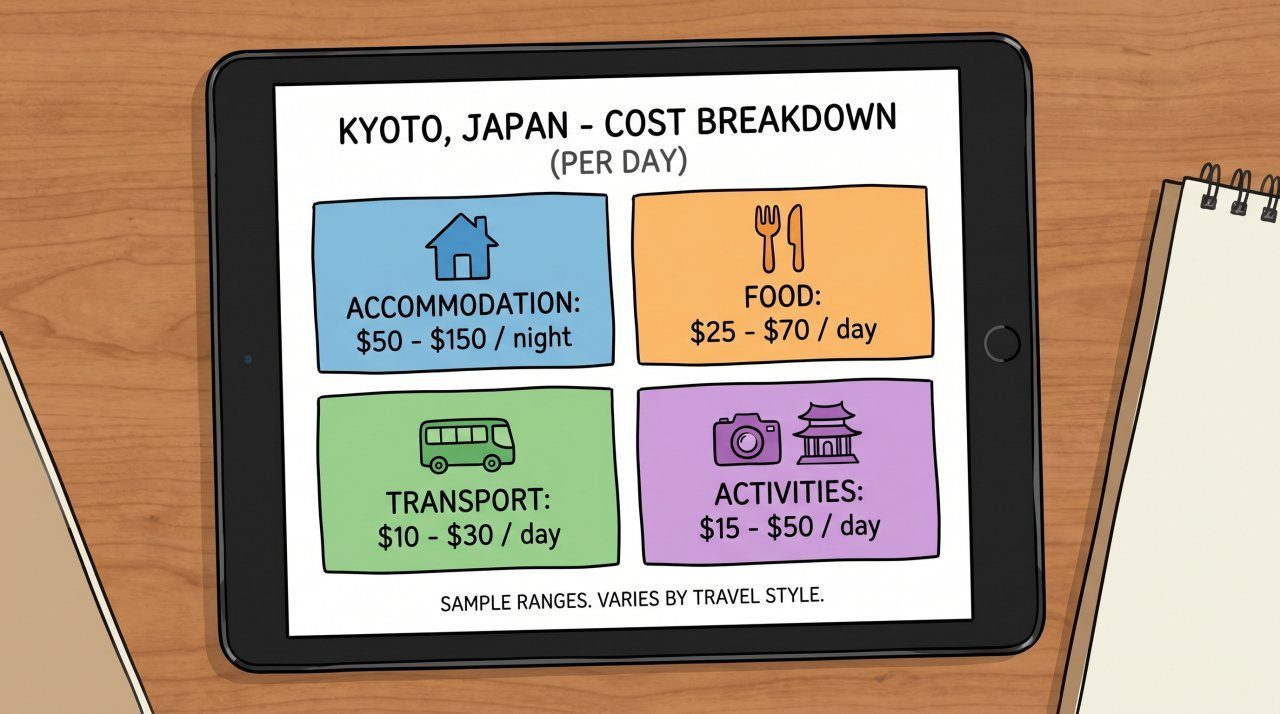
Cheap trips are rarely as cheap as they look on Instagram. That $300 flight to Europe? It can quietly turn into a $3,000 week once you add hotels, trains, and restaurant meals. Meanwhile, a $900 flight to Southeast Asia might end up being the better deal over a month once you look at the full budget travel cost breakdown.
Over the years, I’ve learned (sometimes the hard way) that cheap
has very little to do with one flight deal or a viral TikTok hack. The real question is how your accommodation, transport, and food costs stack up in different regions—and how you shift money between them.
This guide walks through the real cost of cheap trips by region, using realistic numbers from road trips in the USA, long stays in low-cost countries, and the classic Southeast Asia vs. Europe travel cost comparison. The aim is simple: stop asking Is this flight cheap?
and start asking Is this trip cheap overall?
1. Start With the Only Question That Matters: Cost Per Day, Not Cost Per Flight
Most people start with flights. I start with daily cost.
Before I even open Skyscanner, I ask myself:
- How much can I afford in total? Not what I wish I could afford—what’s actually in the bank.
- How many days do I want to travel?
- What daily budget does that give me? (Total ÷ days.)
This is the same logic you’ll see in solid budget guides from places like The Traveler and Investopedia: set the total, then slice it into categories. That’s how you avoid the classic cheap flights, expensive trips trap.
Here’s a simple way to break down your daily budget:
- 40–50% Accommodation
- 20–30% Food
- 20–30% Transport (local + long-distance averaged out)
- 10–20% Activities & extras
Once you know your daily number, the key question becomes: In which region does this daily budget actually work? That’s where the real regional travel cost comparison starts.
Rough, realistic daily ranges (per person, excluding flights):
- Southeast Asia: $30–$60 (hostels/guesthouses, street food, buses)
- Eastern Europe / parts of Latin America: $40–$80
- Western Europe: $70–$120 (if you’re careful)
- USA & Canada: $80–$150+ depending on city and car rental
If your daily budget is $50, a week in Paris will hurt. A month in Vietnam might feel easy. Same total money, completely different daily travel budget by region.
Takeaway: Don’t chase the cheapest flight. Chase the region where your daily budget actually buys you a good life.

2. Accommodation: Why Your Hotel Night Can Cost 3x More Just by Crossing a Border
Accommodation is usually your biggest fixed cost. The same comfort level can cost three times as much just by changing countries. This is where the true cost of budget accommodation really shows up.
How prices really compare by region
Think of these as ballpark nightly prices for a basic but decent place (per room, not per person):
- Southeast Asia (Vietnam, Thailand, Indonesia): $10–$25 for a hostel or simple guesthouse, $25–$50 for a nice local hotel.
- Eastern Europe / cheaper Latin America: $15–$35 for hostels/guesthouses, $40–$70 for mid-range hotels.
- Western Europe: $25–$50 for a hostel bed, $80–$150 for a mid-range hotel in a major city.
- USA: $30–$60 for a hostel bed (where they exist), $90–$250+ for hotels depending on city.
One detailed breakdown of a USA trip in 2026 found average hotel rates around $259/night in Manhattan vs. $96 in Las Vegas. Same country, completely different reality. And that’s before you add taxes, resort fees, and parking, which can quietly add hundreds of dollars to a week-long stay and distort your accommodation transport food travel costs.
Tricks that work almost everywhere
- Stay 2–3 km outside the tourist core. In many cities, moving just a couple of metro stops out can cut your nightly rate by 30–50% while keeping you well-connected.
- Use weekly or monthly discounts. Platforms like Airbnb often drop prices by 20–50% for longer stays. Slow travel isn’t just romantic; it’s math.
- Mix accommodation types. Alternate between social hostels (cheap, central, breakfast included) and quiet studios or guesthouses to keep both costs and energy balanced.
- Share. In expensive regions, a group of 3–4 splitting an apartment can bring your per-person cost down to hostel levels with far more comfort.
Regional reality check:
- In Southeast Asia, you can often get a private room with AC and breakfast for the price of a dorm bed in Western Europe.
- In the USA, a
cheap
hotel can double in price once you add resort fees, taxes, and parking. Always read the fine print.
Takeaway: When comparing regions, don’t just compare hotel rates. Compare what you actually get for the same nightly budget, including hidden fees and extras.
3. Transport: When a Road Trip Is Cheaper Than Flying (and When It’s Not)
Transport is where people either overspend or underestimate. A cheap flight can be undone by pricey trains and taxis. A cheap
road trip can quietly bleed money through gas, parking, and car rentals. This is a big part of the cheap trip hidden costs that catch people off guard.
Region by region transport patterns
- Southeast Asia: Long-distance buses and trains are cheap. Budget airlines can be a bargain if you book early and travel light. Local transport (tuk-tuks, Grab, metro) is usually affordable.
- Western Europe: Trains are fast and comfortable but not always cheap. Booking in advance and using regional passes can help. Budget airlines are plentiful but come with baggage and airport transfer costs.
- USA: Distances are huge. Domestic flights often sit in the high-$200s round-trip. Car rentals can easily hit $570–$1,000+ per week once you add insurance, taxes, gas, and parking. Public transit is great in some cities, almost useless in others.
When driving actually saves money
On paper, driving instead of flying looks cheaper. In reality, you need to add:
- Gas (which varies wildly by region)
- Tolls and parking (especially in big cities)
- Extra nights on the road (accommodation + food)
Most budget travel cost breakdown guides for road trips show the same pattern: accommodation and food are what make or break the budget, not just gas. Car camping, tent camping, and staying with friends can flip the equation in your favor. Eating every meal at roadside diners will do the opposite.
Slow travel vs. fast travel
Here’s the uncomfortable truth: moving less is the biggest transport hack.
- Every time you change cities, you pay in money (tickets) and time (lost days).
- Staying a month in one place can cut your transport costs by half or more compared to hopping every 3–4 days.
Slow travel shines in low-cost regions. A long stay in Mexico, Vietnam, or Eastern Europe means one big flight, then cheap local buses and trains. In the USA or Western Europe, slow travel still helps, but your daily base costs are higher, so the savings are less dramatic.
Takeaway: Don’t just ask How much is the flight?
Ask How often will I move once I land, and what does each move cost?
That’s how you really compare trip costs between itineraries.

4. Food: The Silent Budget Killer (or Your Biggest Advantage)
Food is where cheap
trips quietly become expensive. It’s also where you can save a surprising amount without feeling deprived, especially when you understand how food and transport travel expenses interact.
What food really costs by region
- Southeast Asia: Local meals for $2–$4 are normal. Western-style cafes and restaurants can be 2–3x more.
- Eastern Europe / Latin America: Local spots are very reasonable; tourist zones can double prices.
- Western Europe: Eating out for every meal adds up fast. Lunch specials and bakeries are your friends.
- USA: One analysis pegs eating out at around $96 per person per day if you do breakfast, lunch, and dinner out. That’s more than many people’s entire daily budget in cheaper regions.
Patterns that matter more than any single hack
- Tourist zone vs. local streets. In many cities, walking just 2–3 blocks away from the main square can cut your meal price by half and improve the food.
- Lunch vs. dinner. In Europe and North America, lunch specials can be 30–50% cheaper than the same dish at dinner.
- Self-catering. Cooking one simple meal a day (breakfast or dinner) can save you $10–$30 daily in expensive regions.
- Street food vs. sit-down restaurants. In Southeast Asia, street food is often both cheaper and better. In the USA or Europe, street food can still be pricey, but supermarkets and bakeries are your budget allies.
On long trips, I treat food like a sliding scale:
- Cheap region? Eat out more, but still avoid tourist traps.
- Expensive region? Cook more, target lunch deals, and be picky about which meals are
worth
a splurge.
Takeaway: Food is the easiest category to adjust in real time. If you overspend on a hotel or activity, you can rebalance by cooking or choosing cheaper local spots for a few days.
5. USA vs. Europe vs. Southeast Asia: What the Same Budget Actually Buys You
Let’s put this together with a simple thought experiment. Imagine you have $2,000 (excluding flights) and you’re deciding where to go. This is where a clear travel cost breakdown by region really helps.
Option A: One week in an expensive US city
Think New York, San Francisco, or somewhere similar.
- Accommodation: $200–$300/night × 7 = $1,400–$2,100 (before taxes, fees, parking)
- Food: $50–$80/day if you mix cheap eats and a few nicer meals = $350–$560
- Local transport & activities: $20–$40/day = $140–$280
You can see the problem. Even on the low end, you’re flirting with or blowing past $2,000 in one week, especially once you add taxes, tips, and surprise fees. This is how a supposedly cheap vacation total cost spirals.
Option B: Two weeks in Western Europe
Let’s say you’re careful but not extreme.
- Accommodation: $80/night × 14 = $1,120 (mix of hostels, budget hotels, and maybe one apartment stay)
- Food: $30–$40/day = $420–$560 (breakfast at home, lunch specials, occasional dinners out)
- Local transport & activities: $15–$25/day = $210–$350
Now your $2,000 buys you roughly two weeks, if you’re disciplined and avoid too many city hops and pricey trains.
Option C: One month in Southeast Asia
Here’s where the math flips and the Southeast Asia vs Europe travel cost comparison becomes obvious.
- Accommodation: $20–$30/night × 30 = $600–$900 (private rooms in guesthouses or simple hotels)
- Food: $10–$20/day = $300–$600 (mostly local food, occasional Western meals)
- Local transport & activities: $5–$15/day = $150–$450
Suddenly, your $2,000 can comfortably cover a month, especially if you stay longer in fewer places and use weekly or monthly accommodation discounts.
Same money, three completely different trips. The cheap
option is not the one with the lowest flight price. It’s the one where your daily budget actually stretches.
Takeaway: When you compare regions, always translate your total budget into days of travel at a realistic daily cost. That’s the only comparison that really matters.

6. Hidden Costs That Make Cheap
Destinations Expensive (and Vice Versa)
Some regions look cheap on paper but hide costs in the fine print. Others look expensive but reward you if you play the game well. This is where a lot of budget travel mistakes cost people real money.
Common hidden costs in expensive regions
- Sales tax & service charges: In the USA and parts of Europe, prices are shown before tax. Expect 5–10%+ added at checkout.
- Tipping: In the USA, 15–25% on restaurants, bars, and some services is standard. That’s a huge invisible line item if you’re not used to it.
- Resort & city fees: Many US hotels add $25–$50/night in
resort
ordestination
fees. Over a week, that’s $175–$350 you didn’t see in the headline price. - Parking: $15–$70/night at city hotels is common. Road trips into big cities can get expensive fast.
Hidden advantages in cheaper regions
- Exchange rates: A strong home currency can make already-cheap countries even more affordable.
- Included extras: Breakfast, Wi‑Fi, and sometimes even airport transfers are often included in room rates in Southeast Asia and parts of Latin America.
- Low-cost local life: Laundry, SIM cards, and everyday items are often a fraction of the price you’d pay at home.
On the flip side, there are universal hidden costs you should plan for everywhere:
- Bank fees: 3% foreign transaction fees + ATM charges can quietly add $200–$300 on a $5,000 trip if you use the wrong card.
- Roaming & airport SIMs: Buying data at the airport is almost always more expensive than using an eSIM or local provider you researched in advance.
- Travel insurance: Not glamorous, but one hospital visit can wipe out years of savings. In some regions, it’s non-negotiable.
Takeaway: When you compare regions, add 10–20% to your mental budget for stuff I didn’t think about
. Then actively work to shrink that number with better cards, eSIMs, and a bit of research.
7. How to Decide Where to Go: A Simple, Skeptical Framework
Instead of asking Where is cheap?
, I use a more annoying but more useful question:
Where is cheap for me, for this length of time, with my travel style?
If you want to know how to compare trip costs in a practical way, here’s a framework you can steal:
- Set your total budget. Be honest. No
I’ll just put the rest on a card and figure it out later.
- Decide your non-negotiables. Private room? Certain region? Specific event or festival?
- Estimate realistic daily costs for 2–3 regions using tools like Numbeo, BudgetYourTrip, and real trip breakdowns from blogs.
- Convert your budget into days in each region. Where do you get the most days without living miserably?
- Check flights last. If one region gives you 30 days and another gives you 7, a slightly more expensive flight might still be the better deal.
- Stress-test your plan. Add 15–20% for surprises. If the trip only works when everything goes perfectly, it’s not a real plan.
Once you’re on the road, treat budgeting like a game:
- Track your spending daily (apps like TravelSpend, Trail Wallet, or a simple spreadsheet work).
- If you go over one day, consciously spend less the next.
- Shift between categories: splurge on a great meal, save on accommodation the next night, or vice versa.
Takeaway: The cheapest
trip is the one you can actually afford without coming home to months of credit card debt. Regions matter, but your decisions inside those regions matter more.

8. So… What’s Really Cheap?
Here’s the uncomfortable conclusion: there is no universally cheap destination. There are only places where your money works harder—or lazier—depending on how you travel and how you balance your accommodation, transport, and food costs.
In the USA or Western Europe, you can still travel on a budget—but you’ll need to:
- Share rooms or stay outside the center
- Cook often and hunt for lunch deals
- Use public transport and walk a lot
- Watch out for taxes, tips, and fees
In Southeast Asia, Eastern Europe, or parts of Latin America, you can live well on less—but you still need to:
- Avoid tourist traps and overpriced Western-style spots
- Resist the temptation to upgrade everything just because it’s
cheap
- Slow down, stay longer, and let weekly/monthly discounts work for you
If you remember nothing else, remember this:
Cheap trips aren’t about finding the lowest price. They’re about understanding how accommodation, transport, and food interact in each region—and then designing your trip around that reality.
Once you start thinking that way, cheap
stops being a marketing word and becomes something you can actually measure, control, and use to build the kind of trip you really want.