I love a good deal as much as anyone. But after enough bleary-eyed arrivals and wasted first days, I’ve learned something the hard way: the cheapest departure time is not always the cheapest trip.
Red-eye flights, overnight layovers, 5 a.m. departures – they all look tempting on the booking screen. You see $80–$200 in savings and think, How bad can one rough night be?
Then you’re paying surge pricing for a 3 a.m. Uber, stumbling through your first day like a zombie, and burning a vacation day you technically “saved.”
This is where the true cost of red eye flights shows up: not just in your wallet, but in your time, energy, and mood. Let’s look at when those off-peak flights actually make sense – and when they quietly cost you more.
1. Are You Really Saving Money, Or Just Moving Costs Around?
When I compare flight times now, I don’t just look at the fare. I look at the full door-to-door cost. Red-eyes and crack-of-dawn flights often win on ticket price but lose everywhere else.
- Ticket savings: Many analyses show red-eyes can be about 15–40% cheaper, sometimes $150–$200 less on long routes (example). On paper, the red eye flights vs savings trade-off looks great.
- Ground transport: Late-night or pre-dawn arrivals often mean
no trains, no buses, just surge-priced rideshares.
That “cheap” flight can turn into an expensive airport transfer. - Hotel timing: Arrive at 6 a.m., but your room isn’t ready until 3 p.m. Now you’re paying for early check-in, a day-use room, or a spa just to shower and nap.
- Food & coffee: Exhaustion = impulse spending. Extra coffees, snacks, and airport meals add up fast, especially on long travel days.
Here’s how I sanity-check a “cheap” red-eye, early departure, or overnight layover:
- Estimate late-night/early-morning transport (Uber, taxi, parking, or airport hotel shuttles).
- Add a realistic fatigue budget: extra meals, coffee, maybe a day-use hotel or lounge pass.
- Compare that total to a slightly more expensive daytime flight with normal transit and check-in times.
More often than you’d think, the $80 you saved on the ticket quietly becomes $120 extra in everything else. That’s the flight time vs price trade off most booking sites don’t show you.
2. Jet Lag vs. Schedule: Does the Time Actually Fit Your Body?
Cheap flights ignore your body clock. You can’t. The real question isn’t Is it cheaper?
but Will this timing wreck my first 24–48 hours?
From what I’ve seen (and felt), timing matters more than most people admit when you look at the cost of jet lag for travelers:
- Red-eyes (late night → early morning) can work if you can sleep on planes and land close to local morning. You’re basically shifting your night into the air.
- Midday flights often mean fewer delays and a more natural rhythm, but you may land in the evening already tired and tempted to crash too early.
- Very early departures (5–7 a.m.) often force a 2–3 a.m. wake-up. That’s not just inconvenient – it’s a mini jet lag before you even leave your time zone.
One simple rule I use now: Does this flight help me behave like it’s the destination’s local time as soon as I land?
- If I land in the morning, I plan to stay awake until at least early evening.
- If I land at night, I want to be tired enough to sleep at a normal local bedtime.
If the timing fights that rhythm, I treat it as a hidden cost: more jet lag, more wasted hours, less enjoyment. That’s the jet lag cost vs ticket savings equation most of us only learn after a few miserable arrivals.
3. The Vampire Costs of Red-Eyes: What You Don’t See at Checkout
Red-eyes look efficient on paper: Sleep on the plane, wake up there, save a hotel night.
In reality, they come with what I think of as vampire costs – they quietly drain you.

Here’s where I see people (including myself) get burned in the red eye vs daytime flight comparison:
- Sleep quality: Even with perfect prep, plane sleep is rarely as good as a bed. Light sleepers pay for it the next day.
- First-day productivity: You “gain” a day, but if you’re too wrecked to enjoy it, did you really? For work trips, the productivity loss from red eye flights can easily outweigh the fare savings.
- Health & mood: Dehydration, bad posture, and fragmented sleep can make you irritable and more likely to get sick.
- Early arrival gap: Landing at 5–7 a.m. with a 3 p.m. check-in is a long, uncomfortable stretch if you haven’t planned it.
To make a red-eye actually worth it, I now ask myself:
- Can I realistically get 4–6 hours of decent sleep on this specific flight (seat, aircraft, duration)?
- Do I have a clear plan for the hours between landing and check-in?
- Is the savings enough to justify feeling subhuman for a day?
If the answer to any of those is not really,
I treat the red-eye as more expensive than it looks. That’s where the false savings on budget flights really show up.
4. Early Departures & Overnight Layovers: The Other “Cheap” Traps
Red-eyes get all the attention, but brutally early departures and overnight layovers can be just as sneaky. The overnight layover cost analysis is rarely obvious when you’re just staring at ticket prices.
Early departures (5–7 a.m.)
- You’re waking up at 2–3 a.m. to get to the airport.
- Public transport may not be running; taxis and rideshares cost more.
- You start your trip with sleep debt before you even board.
When I see a 6 a.m. flight that’s $60 cheaper, I mentally add:
- Extra cost of transport at that hour.
- The value of the sleep I’m losing (especially if I need to work on arrival).
Once you factor in those early morning flight hidden costs, that bargain often doesn’t look so great.
Overnight layovers
These look like a bargain, but ask yourself:
- Will I need a hotel near the airport anyway?
- Is the airport comfortable or are we talking metal benches and fluorescent lights?
- What’s the risk if the first leg is delayed and I miss the second?
By the time you add a cheap airport hotel, meals, and the mental toll of broken sleep, that “deal” often stops being one. A lot of mistakes booking overnight layovers come from ignoring those extra pieces.
5. When Red-Eyes Actually Make Sense (And How to Make Them Work)
Despite all the downsides, I still book red-eyes sometimes. The key is being honest about who they work for and what prep they require.
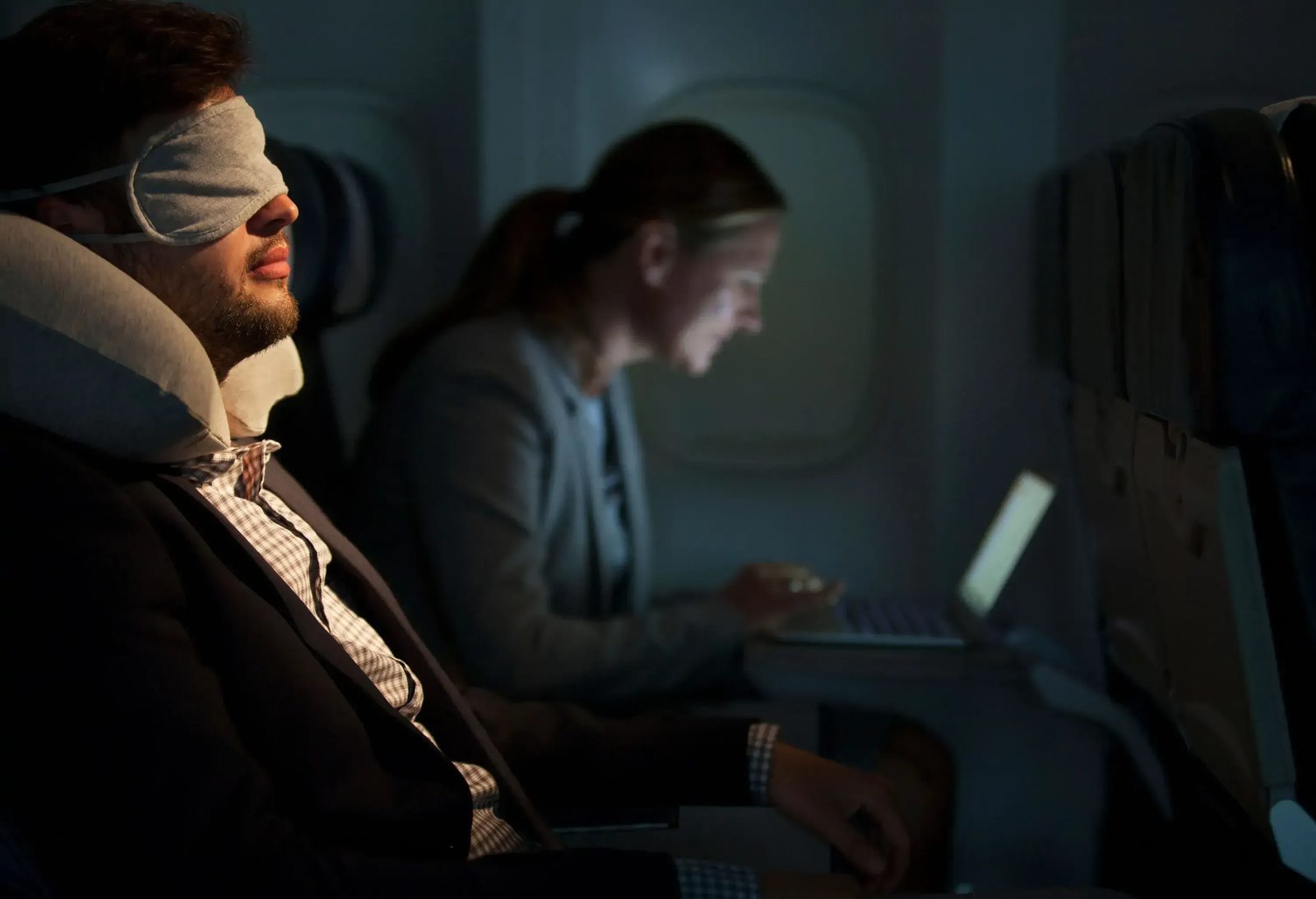
Red-eyes tend to work best if:
- You can sleep in economy with the right gear.
- You’re okay arriving early and staying active until check-in.
- You’re trying to maximize limited time (students, weekend trips, short work visits).
When I do book one, I treat it like a sleep project, not a casual choice:
- Seat choice: Window seat, away from restrooms and galleys. Avoid exit rows that don’t recline.
- Comfort kit: Neck pillow, eye mask, earplugs or noise-canceling headphones. I don’t rely on the airline for any of this.
- Food & caffeine: Light meal before boarding, no heavy food, and I cut caffeine by mid-afternoon.
- Sleep schedule: I shift my bedtime slightly earlier for a day or two before, so my body isn’t shocked.
- Onboard habits: Minimal screens, calming audio, and I try to sleep as soon as we’re at cruising altitude.
Done right, a red-eye can genuinely save you a hotel night and give you a usable first day. Done casually, it just front-loads your trip with exhaustion and turns those red eye flights vs savings into a bad deal.
6. The First-Morning Problem: What Happens After You Land?
Most people plan the flight and forget the first six hours on the ground. That’s where a lot of the hidden cost lives.

Here’s how I handle early arrivals now:
- Hotel strategy: I email the hotel in advance, ask about early check-in, and accept that there might be a fee. If it’s a short trip, I often just pay it.
- Luggage plan: If early check-in isn’t possible, I confirm they’ll store my bags so I can roam freely.
- Day-use options: In some cities, airport hotels, sleep pods, or nearby spas are worth a few hours’ rest and a shower.
- Soft landing activities: I plan low-stakes things: a slow breakfast, a walk, maybe a museum – nothing that requires sharp thinking.
If I can’t sketch a realistic, humane plan for those first hours, I assume the red-eye will cost me more than it saves. For family travel and early departure costs, this matters even more – tired kids plus no room ready is a rough combo.
7. How to Decide: A Simple Framework Before You Click “Book”
When I’m torn between a cheap red-eye/early flight and a pricier daytime option, I run through this quick checklist. It’s my personal travel cost guide for flight times:
- Money: After adding transport, food, early check-in, and any day-use hotel, how much am I really saving?
- Sleep: Will I get at least 4 hours of decent rest, or am I basically committing to an all-nighter?
- First day: Do I need to be functional (meetings, driving, important plans), or can I afford to be half-awake?
- Body clock: Does the arrival time help me sync to local time, or fight it?
- Backup plan: If the flight is delayed or I sleep badly, what’s my plan B?
If the savings are small and the risks are big, I book the saner time. If the savings are significant and I can engineer a decent sleep + arrival plan, I’ll take the red-eye or early slot.
The point isn’t to avoid red-eyes forever. It’s to stop treating them as automatic bargains. Once you factor in jet lag, logistics, and how you actually feel on the ground, the cheapest
departure time often isn’t the cheapest trip at all. That’s the real calculating total trip cost beyond airfare that most of us only learn after a few “never again” flights.