I love having a kitchen when I travel. I also hate feeling like I’ve been tricked by “budget” prices.
For years, I assumed self-catering = cheaper
. Book an apartment, cook a few meals, and boom—instant savings. Then I started looking at the full bill. Cleaning fees. Service fees. Random platform charges. Groceries I never finished. Suddenly that budget
self-catering stay didn’t look so budget.
This guide breaks down when self-catering really saves money—and when a straightforward hotel room is actually the better deal.
1. The Big Myth: Self-Catering Is Always Cheaper
Most people compare stays the lazy way. You see a nightly rate for a hotel, a nightly rate for a self-catering apartment or Airbnb, and you pick the lower one. I used to do exactly that. It’s also how you quietly overpay.
Here’s the reality (and what tools like the AgentCalc cost calculator make painfully obvious):
- Hotels usually charge per room, per night. Taxes and resort fees are often added per night too.
- Vacation rentals / Airbnbs charge per property, plus one-time fees like cleaning and platform/service fees.
So the real comparison looks more like this:
- Hotel total ≈ nights × (nightly rate + nightly taxes/fees)
- Self-catering total ≈ nights × (nightly rate + nightly taxes) + one-time cleaning + one-time service fees
That one-time chunk is where the self catering hidden costs live. A $120 cleaning fee on a 2-night stay adds $60 per night. On a 7-night stay, it’s under $18 per night. Same fee, completely different story.
Once I started doing this properly, a pattern appeared:
- Short city breaks (1–3 nights): hotels often win, even when the self-catering base rate looks cheaper.
- Week-long or longer stays: self-catering apartments, serviced apartments, or corporate housing often pull ahead.
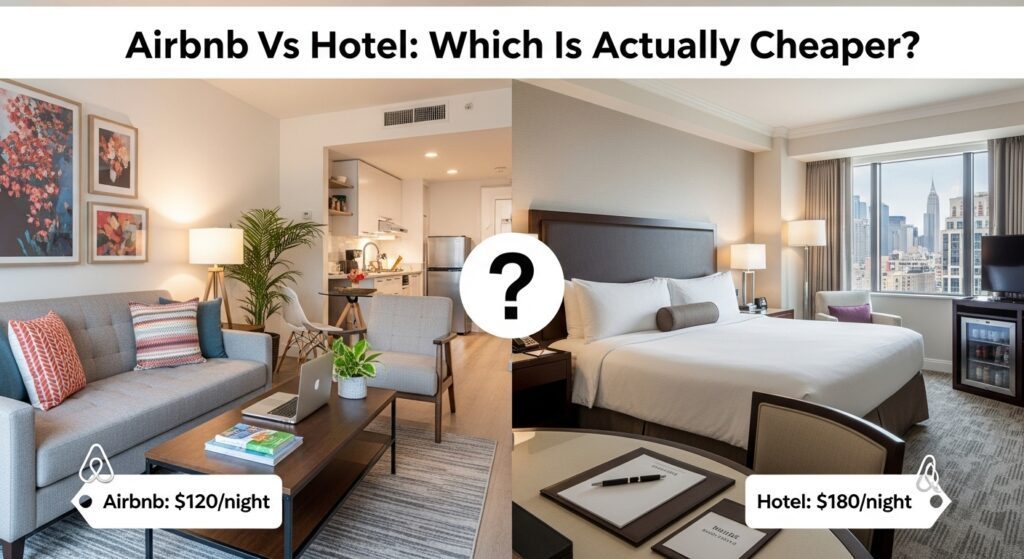
Takeaway: If you’re not spreading cleaning and service fees across your stay and folding them into the nightly cost, you’re not really doing a self catering vs hotel cost comparison at all.
2. Cleaning Fees vs Resort Fees: Which One Bites You Harder?
Let’s talk about the two villains of modern travel pricing: cleaning fees and resort fees.
On self-catering stays—especially on platforms like Airbnb—cleaning fees have quietly exploded. I’ve seen cleaning fees higher than a single night’s rate. Hotels, meanwhile, play their own game with resort or “facility” fees that magically appear at checkout.
They hit your wallet in different ways:
- Cleaning fees (self-catering) are usually one-time. Brutal for 1–2 nights, fine for a week, barely noticeable for a month.
- Resort fees (hotels) are usually per night. Mild for one night, painful for a week, outrageous for a month.
From the research on self catering accommodation cost breakdowns:
- For 1–2 night stays, cleaning fees often make vacation rentals more expensive than hotels, even when the base rate looks cheaper (Travelohlic backs this up).
- For 5–7 nights or more, those same rentals can become the better deal as the fixed fees get spread out.
My rule of thumb now:
- If I’m staying under 3 nights, I assume a self-catering place with a cleaning fee is more expensive until the math proves otherwise.
- If I’m staying a week or more, I assume a hotel with nightly resort fees is more expensive until the math proves otherwise.
Takeaway: Cleaning fees punish short stays. Resort fees punish long ones. Your trip length decides who wins the self catering vs hotel cost battle.
3. The Kitchen Trap: Are You Really Saving on Food?
The kitchen is the emotional hook. I’ve told myself this story so many times: We’ll cook, we’ll eat healthy, we’ll save a fortune.
Sometimes that’s true. Often, it’s wishful thinking.
Here’s what actually happens on a lot of trips:
- You buy too many groceries for a short stay.
- You end up eating out more than planned because you’re tired, busy, or just excited to explore.
- You throw away half-used condiments, produce, and snacks when you leave.
Meanwhile, hotels quietly fight back with:
- Free breakfast (easily worth $10–$20 per person per day).
- Coffee, tea, and snacks in the lobby or lounge.
So the real question isn’t just Is self catering really cheaper?
It’s: What’s the true cost of groceries on holiday versus eating out and hotel perks?
From research on serviced apartments and corporate housing, the kitchen starts to pay off when:
- You’re staying a week or more.
- You’re traveling as a family or group.
- You genuinely plan to cook most breakfasts and some dinners.
In those situations, self-catering can cut your food budget dramatically. Serviced apartments, for example, are often 10–30% cheaper overall than hotels on longer stays once you factor in meals and laundry savings (TheSqua.re points this out).

But if you’re on a 3-night city break, out all day and most evenings? That kitchen is just expensive decor—and a classic self catering travel budget mistake.
Takeaway: A kitchen only saves money if you actually use it enough to beat the value of free hotel breakfasts and the cost of wasted groceries. Otherwise, the self catering vs eating out costs tilt back toward the hotel.
4. Space vs Rooms: When Groups Really Win with Rentals
Where self-catering almost always shines is group travel.
Hotels charge per room. Vacation rentals charge per property. That difference is huge when you’re not traveling solo.
Think about it this way:
- Two hotel rooms at $180 each = $360 per night.
- One 2–3 bedroom apartment at $260 per night + cleaning fee spread over a week = maybe $280–$300 effective per night.
Per person, the apartment wins. And you get more than just beds:
- A living room to hang out in.
- A kitchen for breakfasts and simple dinners.
- Often laundry, which saves on baggage and laundromats.
Research backs this up:
- Vacation rentals can be up to 30% cheaper than hotels for groups and longer stays (Llivo).
- Corporate housing and serviced apartments become significantly more economical for extended stays, especially for families and business travelers (ExtendedStayPros).
But there’s a twist in this self catering holiday cost comparison: if you want an entire place to yourself and you’re only two people, hotels often win.
One study found that entire-place Airbnbs were more expensive than hotels in 46 out of 50 U.S. cities for a 1-night stay for two adults (Upgraded Points).
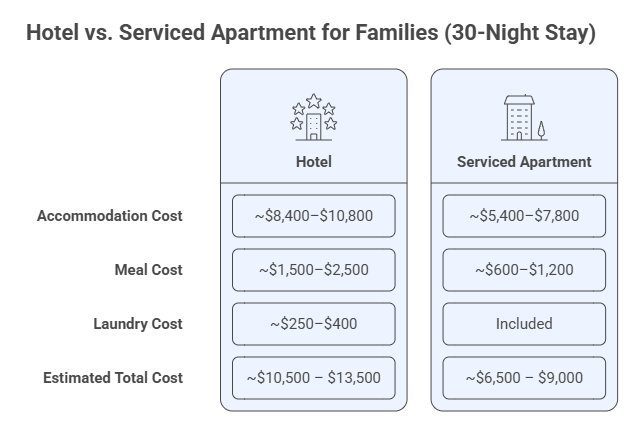
Takeaway: Self-catering shines for groups and families. For solo travelers or couples who want a whole place, hotels can quietly be the cheaper option once you look at the self catering apartment total trip cost.
5. Chores, Rules, and Checkout Anxiety
: The Non-Money Costs
Price isn’t the only cost. There’s also your time, energy, and stress level.
With hotels, the deal is simple: you pay more per night, but you get:
- Daily housekeeping (or at least easy access to fresh towels).
- 24/7 front desk and security.
- No cleaning checklist at checkout.
With many self-catering stays—especially peer-to-peer rentals—you might face:
- Long lists of house rules and strict check-in/check-out times.
- Expectations to take out trash, strip beds, start laundry, or risk extra fees.
- Extra charges for late checkout, extra guests, or minor rule violations.
Several recent analyses point out that these hidden expectations can turn a seemingly cheap stay into an expensive, stressful one. You’re trying to catch a flight and also worrying, Did I take the bins out? Did I run the dishwasher?
So I now ask myself:
- Is saving $20–$30 a night worth doing light cleaning on my vacation?
- Do I want to worry about whether I’ve followed every rule perfectly?
Sometimes the answer is yes. Sometimes I’d rather pay a bit more and just close the door behind me.
Takeaway: Self-catering often comes with hidden labor and rule anxiety. When you think about how to price a self catering trip, factor in your time and stress as part of the “cost.”
6. Location, Transport, and the Invisible
Costs
Another common trap: focusing only on the nightly rate and ignoring where the place actually is.
Hotels tend to cluster in:
- City centers
- Business districts
- Near major transit hubs
Self-catering stays are often in:
- Residential neighborhoods
- Outskirts of the city
- Areas with fewer transit options
That can be charming—or expensive. A cheaper apartment that forces you into daily rideshares, taxis, or a rental car can easily erase the savings. Parking fees add up too.
On the flip side, a central hotel with a good breakfast might mean:
- No car rental.
- Shorter, cheaper transit rides.
- More time actually enjoying the trip instead of commuting.
Takeaway: A cheap
self-catering stay in the wrong location can cost more in transport and time than you save on the room. These are the unexpected costs of vacation rentals that rarely show up in the listing price.
7. A Simple Framework: How I Now Decide What to Book
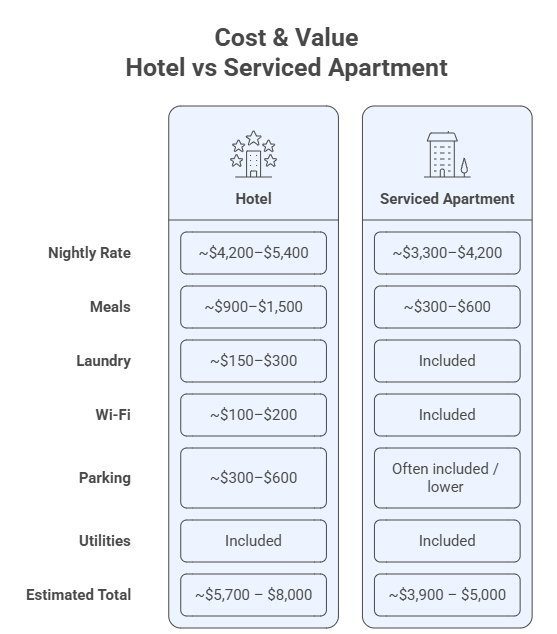
So how do you actually compare an Airbnb kitchen with cleaning fees against a hotel with resort fees and free breakfast? Here’s the framework I use now—a simple self catering cost guide for travelers.
Step 1: Calculate the real nightly cost
- For each option, add everything: base rate, taxes, cleaning fees, service/platform fees, resort fees, and mandatory parking.
- Divide the total by the number of nights to get a true per-night cost.
Step 2: Put a dollar value on perks
- Hotel with free breakfast? Subtract what you’d realistically spend on breakfast per person.
- Rental with a kitchen and laundry? Estimate how many meals you’ll actually cook and how much laundry you’ll avoid paying for.
Step 3: Check the soft costs
- How much do you value daily housekeeping and 24/7 support?
- Are you okay with house rules and light cleaning at checkout?
- Is the location going to force you into extra transport costs?
Step 4: Use length of stay as a tiebreaker
- 1–3 nights, solo or couple: I usually lean hotel, unless a private-room rental is dramatically cheaper.
- 4–7 nights: I compare carefully. Serviced apartments and well-priced self-catering stays often win here once you factor in food and laundry.
- 8+ nights or remote work: I strongly favor self-catering, serviced apartments, or corporate housing with a proper kitchen and workspace.
Step 5: Decide what you’re really optimizing for
- If you want predictability, service, and zero chores → pay a bit more for a hotel.
- If you want space, a kitchen, and a home-like feel → lean toward self-catering, but only after the math checks out and you’ve accounted for all the extra fees for self catering stays.
In the end, the question isn’t just Is self-catering cheaper?
The real question is: For this specific trip, with this group size, in this city, for this many nights… which option gives me the best balance of cost, comfort, and sanity?
Once you start thinking that way, the answer gets a lot clearer—and your “cheap” stays stop turning into expensive surprises.