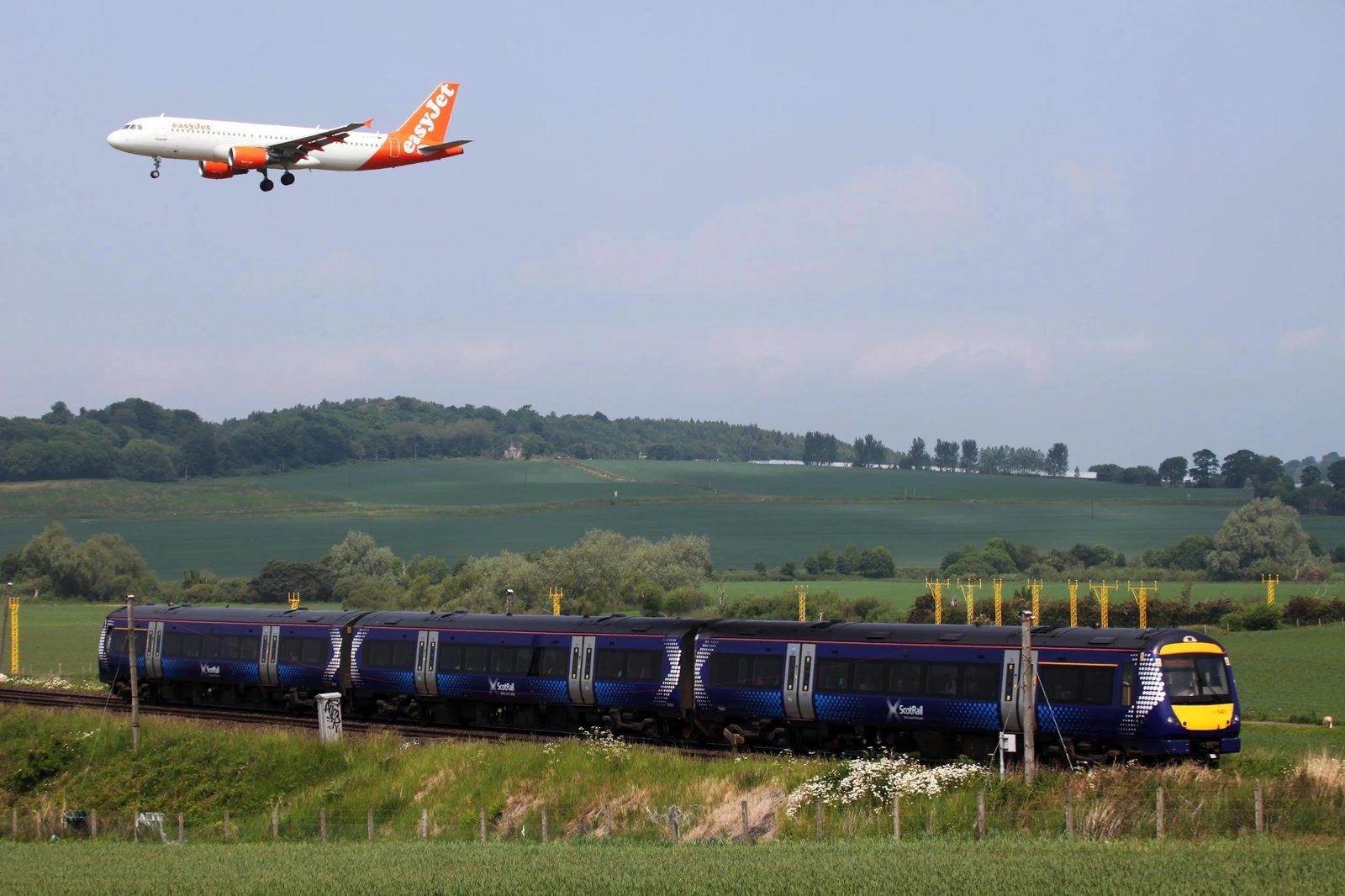
I used to assume the cheapest way to hop between cities was to grab a budget flight and call it a day. Then I started adding up the real costs: airport transfers, baggage fees, lost time, stress. That “€19 flight” quietly turned into €80–€120 and swallowed a whole day of energy.
If you’ve ever had that same sinking feeling at the check-out page, this guide is for you. Let’s look at when a short-haul flight actually loses to trains, buses, and night routes – and how to spot those moments before you hand over your card.
1. The Door-to-Door Reality Check: Is Flying Actually Faster?
Most people compare a 1h15 flight to a 5-hour train and think, Obviously the plane.
But that’s not how your day works. Your day starts at your accommodation door and ends at the next one.
So instead of comparing timetable times, I now compare the whole journey for every trip:
- Pre-departure time
Flights: 90–120 minutes at the airport (more if you’re anxious or it’s a busy hub).
Trains/buses: 10–30 minutes is usually enough. - Transfers
Airports are often 25–60 km away. That’s 30–90 minutes each way plus €10–€40 per leg.
Train and bus stations are usually central. You might walk or take a short metro ride. - Arrival faff
Flights: taxiing, deplaning, passport control, baggage claim, then another transfer.
Trains: step off, you’re in the city. Often you’re 10–20 minutes from your bed.
Once I started timing it, a “1.5-hour” short-haul flight often became 4–6 hours door-to-door. Meanwhile, a 4–5 hour high-speed train is… 4.5–5.5 hours door-to-door. On many European routes, rail is as fast or faster than flying once you count everything.
Typical pattern from multiple comparisons (see analyses like this one):
- Under ~4–5 hours by train: trains usually win on time and stress.
- 4–6 hours by train: it’s a close call; trains often tie or slightly lose on time but win on comfort.
- 6+ hours by train: flights usually win on time, unless there’s a great night train.
If you only remember one thing from this section, make it this: compare door-to-door, not timetable-to-timetable. That’s the only way a real short distance travel without flying comparison makes sense.

2. The Hidden-Cost Trap: When the “€19 Flight” Isn’t Actually Cheaper
Let’s talk money, because this is where flying often looks unbeatable – until you do the math and calculate the true cost of flying.
Budget airlines are masters of the headline fare
. Rail and buses are usually more honest: what you see is closer to what you pay. To compare a short haul flight vs train cost (or bus), I now run through a simple checklist for every option:
- Base fare (flight vs train vs bus)
- Baggage
Flights: what do you actually need? A personal item only? Cabin bag? Checked bag?
Trains/buses: usually include luggage for free. - Seat selection & extras
Flights: seat, priority boarding, payment fees.
Trains: sometimes a small reservation fee on high-speed routes; buses rarely charge extra. - Airport transfers
Two legs, often €10–€40 each. This alone can double a cheap flight. - Flexibility
Can you change or cancel? How much does that cost if plans shift?
On many routes, studies show flights are still cheaper on paper – sometimes dramatically so. Greenpeace found that on a lot of cross-border routes, flying beats trains on price, especially in Western Europe. But that’s before you add the hidden costs of budget airlines.
Here’s the twist I see again and again in real overland travel cost comparison:
- If you travel hand-luggage-only, stay near airports, and don’t care about flexibility, flights often stay cheaper.
- If you carry a cabin bag or checked bag, need central locations, or value flexibility, trains and buses suddenly become competitive or cheaper.
My rule now: if a flight is not at least 30–40% cheaper than the train or bus after adding all fees and transfers, I seriously consider swapping the flight for trains or buses. That’s usually the point where cheap alternatives to short haul flights start to win.
3. Time vs Energy: Which Mode Leaves You Less Exhausted?
There’s another cost we rarely price in: our own energy. I’ve had 2-hour flights that wiped me out more than 7-hour train rides.
Think about what your body and brain go through on each mode:
- Flights
Early alarms, security lines, liquids rules, cramped seats, turbulence, pressure changes, boarding chaos, strict seatbelt rules. You’re interrupted constantly. It’s hard to work, read deeply, or relax properly. - Trains
Walk on, sit down, open laptop or book. You can stand up, stretch, visit the café car, use your own water bottle, keep your bag nearby. No turbulence, no seatbelt sign. - Buses
Less space than trains, but still no airport security, often central stations, and increasingly decent Wi‑Fi on long-distance routes.
On a 4–5 hour train, I can usually get 2–3 hours of real work done or actually enjoy the scenery. On a short-haul flight, I’m lucky if I get 30–45 minutes of usable time between announcements, turbulence, and cramped space.
So I ask myself:
- Do I need to arrive functional? For a work trip or a short weekend, I’ll often pay a bit more for a train because I arrive human.
- Am I traveling with kids or someone with mobility needs? Central stations, fewer queues, and the ability to move around make trains and good buses much less stressful.
Sometimes the cheapest ticket is the one that doesn’t ruin the next day. A flight vs bus price comparison or train comparison isn’t just about euros; it’s about how you feel when you step off.
4. Distance Bands: When Trains, Buses, and Flights Each Make Sense
Instead of asking Is flying cheaper?
I find it more useful to ask: For this distance, which mode usually wins once I include time, money, and sanity?
Here’s a simple distance-based framework I use, inspired by analyses like this one. It doubles as a quick cost guide for replacing flights with trains and buses.
0–25 km: Walk, bike, or local transit
- Walk, bike share, scooters, or a day pass on local transport.
- Anything else is usually overkill unless you have mobility issues or heavy luggage.
25–200 km: Regional trains and buses shine
- Flights are almost never worth it here once you add airport time.
- Regional trains and intercity buses are usually cheapest and simplest.
- Bonus: frequent departures and flexible tickets.
200–700 km: The real battleground
- Any mode can win depending on the route.
- High-speed rail often beats flying on time and comfort for 4–6 hour routes.
- Buses can be the rock-bottom price option, especially overnight.
- Flights win when rail is slow, fragmented, or overpriced.
This is where you really need to run the door-to-door and hidden-cost comparison. A 500 km trip can be:
- 3 hours by high-speed train, city center to city center.
- 1 hour by plane + 3–4 hours of transfers and airport time.
- 7–9 hours by bus, but at half the price.
On many Europe train vs plane travel time and price comparisons, this middle distance band is where trains quietly win once you factor in everything.
700+ km: Flights usually win – unless a night train fits perfectly
- For long distances, flying is often the fastest and sometimes the cheapest, especially if you travel light.
- But a well-timed night train or overnight bus can be a secret weapon: you travel while you sleep and skip a hotel night.
So instead of defaulting to planes, I now default to this question: For this distance band, which mode is usually the sweet spot? That’s how I find affordable overland travel options without spending hours on comparison sites.
5. Night Trains and Overnight Buses: When “Slow” Becomes Smart
Night trains and overnight buses are where the math gets interesting. On paper, they’re slower. In real life, they can be the most efficient option you have.
Here’s how I think about night routes instead of flights:
- They replace a hotel night
If a sleeper train costs €80–€120 but saves you a €70–€120 hotel, yourtransport
cost is suddenly much lower than it looks. - They give you a full day at your destination
Leave at 21:00, arrive at 07:00. You get almost a full day on both ends instead of losing a day to airports. - They reduce airport stress
No 4 a.m. alarms, no security lines, no liquid rules. Just board, settle in, sleep (or try to).
Of course, not all night routes are equal:
- Night trains with couchettes or sleepers can be genuinely comfortable. You pay more than a bus, but you get privacy and rest.
- Overnight buses are cheaper but can be rough on your body. I use them when budget really matters or when there’s no rail alternative.
My rule: if a night train or bus lets me:
- Arrive early enough to use the day, and
- Replace a hotel night, and
- Keep the total cost similar to or lower than a flight + hotel
…then I treat it as a serious contender, even if the timetable says it’s “slower.” A night train vs flight cost comparison only makes sense when you include that saved hotel night.
6. When Flying Still Makes Sense (And You Shouldn’t Feel Guilty)
Despite all this, I still fly. Sometimes it’s the only thing that makes sense. The trick is to know when flying is genuinely the better option, not just the default.
I usually stick with flights when:
- There’s no fast rail or simple bus route
If the train is 10–15 hours with multiple changes and the flight is 2–3 hours door-to-door, I fly. - The price gap is huge
On some routes, flights are 4–20x cheaper than trains. If I’m on a tight budget and the difference is hundreds of euros, I’ll take the plane and try to cut emissions elsewhere. - I’m making a long jump
Crossing regions (e.g., Paris–Athens, London–Copenhagen) often makes more sense by air, especially on limited time. - I’m traveling very light
With just a small backpack and no need for flexibility, those ultra-cheap fares can actually stay cheap.
The key is honesty. If I’ve checked the train and bus options, done the door-to-door math, and the flight still clearly wins on time and money, I take it. But I no longer assume that’s always the case.
7. A Simple Step-by-Step Method to Choose Your Mode
To make this practical, here’s the process I use now when planning a short-haul trip. It works whether you’re comparing a long distance bus vs plane ticket, or trying to swap flights for trains and buses on a regular route.
- List all realistic modes
Flight, high-speed train, regional train, bus, night train/bus. Don’t dismiss anything yet. - Check door-to-door time for each
Add:
– Time from your accommodation to station/airport
– Required early arrival (10–30 min for trains/buses, 90–120 min for flights)
– In-vehicle time
– Arrival faff (baggage, passport, etc.)
– Time from arrival station/airport to your next accommodation - Calculate true cost
For each option, add:
– Base fare
– Baggage fees (be honest about what you’ll actually bring)
– Seat selection / extras you care about
– Transfers to/from airports or stations
– Any hotel night saved by a night train/bus - Score comfort and energy
Ask yourself:
– Will I be able to work, read, or rest?
– How many queues and checks are involved?
– How will I feel when I arrive? - Factor in your priorities
– If budget is #1, pick the cheapest option that doesn’t wreck your trip.
– If time is #1, pick the fastest door-to-door.
– If comfort or sustainability matters, give trains and night routes extra weight.
Once you’ve done this a few times, patterns emerge. You’ll start to see that on many 4–6 hour train routes, flying isn’t actually cheaper or faster once you count everything. And you’ll also see where flights still clearly win.
8. The Mindset Shift: Stop Chasing the Lowest Screenshot Fare
Underneath all the numbers, this is really a mindset shift.
Instead of asking What’s the cheapest ticket?
I now ask:
- What’s the best-value journey?
- What’s this really going to cost me – in money, time, and energy?
Sometimes that’s a €15 flight with a tiny backpack. Sometimes it’s a €60 high-speed train that drops me in the city center, rested and ready. Sometimes it’s a night train that quietly saves me a hotel bill.
When trains are cheaper than flying, it’s rarely obvious from the first search result. The same goes for buses. You have to look one layer deeper: door-to-door time, real costs, and how you’ll feel at the other end.
Next time you’re about to book a short-haul flight, pause for five minutes. Run the door-to-door time. Add the baggage and transfers. Consider a train, a bus, or a night route. You might be surprised which one actually wins – and how much better the journey feels.