I don’t gamble on flights. I watch prices, track patterns, and then decide how much risk I’m actually willing to take. The uncomfortable truth is this: most last-minute flights are more expensive – but not all of them. If you’re flexible and a bit strategic, there are times when waiting really does pay off.
This guide is about those moments. When it’s smart to wait, when it’s financial suicide, and how to build a risk-managed last-minute strategy instead of just crossing your fingers and hoping for a miracle fare.
1. First Decision: Do You Even Qualify for Last-Minute Strategy?
Before you start refreshing flight search sites at 1 a.m., ask yourself something blunt:
If this trip doesn’t happen because prices explode, is that acceptable?
If the answer is no – it’s a wedding, a funeral, a once-a-year conference, a school holiday trip – you’re not a last-minute candidate. You’re a book-early traveler, whether you like it or not.
Here’s how I mentally sort trips when I’m weighing last minute flights vs booking early:
- Must-go, fixed dates (weddings, holidays, key work events): I book early. Data from multiple sources shows prices usually rise sharply in the last 7–10 days, especially on popular or long-haul routes and around holidays like Christmas and Thanksgiving.
- Nice-to-go, flexible dates (city breaks, solo escapes, digital nomad moves): These are the trips where a cheap last minute flight strategy can make sense.
- Ultra-flexible (you can change destination, dates, or skip entirely): This is where last-minute can actually be a tool, not a gamble.
If you’re in the second or third group, keep reading. You’re the kind of traveler last-minute deals are actually built for.

2. The Pricing Reality Check: Why Last-Minute Is Usually Worse
Let’s strip away the myths. Airlines don’t sit around thinking, We’d better slash prices at the last second so people can save money.
They think in revenue buckets and probabilities.
Here’s what’s happening behind the scenes when you’re wondering when last minute flights are cheaper and when they’re not:
- Fare buckets: Each flight has a limited number of cheap seats, then a set of more expensive ones. As the cheap buckets sell out, the system automatically moves you into higher-priced buckets. Close to departure, most of the cheap ones are gone.
- Business travelers: Many people who book late are traveling for work and aren’t paying personally. Airlines know this. They keep last seats expensive because someone, somewhere, will pay.
- Dynamic pricing: Fares can change multiple times a day based on demand, search volume, and remaining seats. As departure nears and the plane fills, the algorithm usually pushes prices up, not down.
Studies on routes like New York–London show that booking within 48 hours can cost nearly 3x more than booking earlier. Around peak periods (Christmas, summer, Thanksgiving), last-minute is almost always brutal.
So why do we all know someone who scored an insane last-minute deal
? Because those stories are memorable. The hundreds of people who overpaid don’t brag about it at dinner.
If you take one thing from this section, let it be this: the default is that waiting costs more. A last-minute win is the exception, not the rule.
3. When Waiting Can Actually Pay Off (and When It Won’t)
Last-minute deals do exist – but they’re not random. They tend to cluster around specific conditions and predictable last minute airfare price patterns. When I’m considering waiting, I run through this checklist.
Good conditions for last-minute deals
- Short-haul, low-demand routes: Think regional or domestic flights that aren’t business-heavy or tourist magnets.
- Midweek departures: Tuesday and Wednesday are often cheaper, especially for last-minute. Airlines know demand is softer.
- Off-season travel: Shoulder seasons and off-peak months can leave airlines with more empty seats they’re willing to discount.
- Budget carriers: Low-cost airlines sometimes drop prices close to departure to fill seats, then make money on bags and extras.
- Flexible trip shape: You’re open to one-way, open-jaw (fly into one city, out of another), or odd routings.
Bad conditions for last-minute deals
- Holidays and school breaks: Christmas, New Year, Thanksgiving, summer holidays – if you wait, you usually pay more. A lot more.
- Long-haul and popular routes: Transatlantic, transpacific, or iconic city pairs (NYC–London, LA–Tokyo) rarely reward last-minute waiting, especially for last minute international flight prices.
- Event-driven demand: Big concerts, sports events, festivals, trade shows – once dates are fixed and demand is known, prices tend to climb.
- Fixed dates, no flexibility: If you must fly on a specific day and time, the last-minute game is stacked against you.
My rule of thumb: if more than one of the bad conditions applies, I book early. If several of the good conditions apply and I’m flexible, I might deliberately wait and watch – but I’m always aware of the cost of waiting for flight deals if things go the wrong way.

4. How to Use Flexibility as a Weapon (Not a Vague Idea)
People love to say, Just be flexible.
Helpful? Not really. Flexibility only matters if you turn it into something concrete – especially if you want a flexible traveler flight deals approach that actually works.
Here’s how I make flexibility do real work when I’m figuring out how to find cheap last minute flights.
1. Flexibility on destination
Instead of saying, I must go to Barcelona,
I’ll say, I want somewhere warm in Europe with good food.
Then I search broadly:
- Use tools like Skyscanner’s “Everywhere” search or Kiwi’s flexible destination options.
- Let the price decide whether you end up in Lisbon, Valencia, or Naples.
When you loosen the destination, you suddenly have options – and options are where last-minute value hides.
2. Flexibility on dates and trip length
Sometimes extending your trip by a day or two makes the flights cheaper overall – even after extra hotel nights. I’ve seen Tuesday–Thursday flights undercut Friday–Sunday by hundreds of dollars.
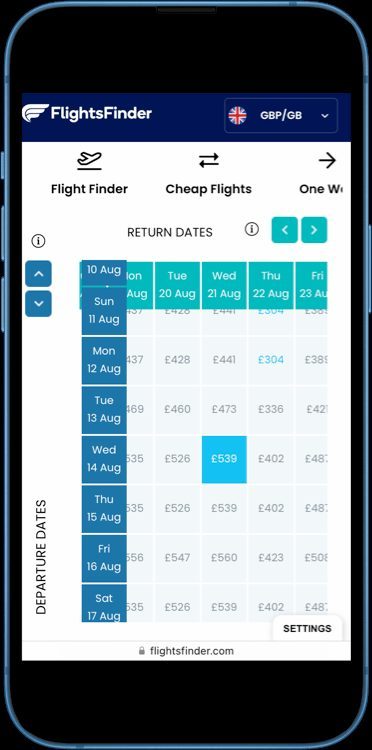
- Use date grids and price calendars on tools like Google Flights or Kiwi.
- Ask:
If I shift this trip by 1–3 days, do I save enough to justify the change?
This is the heart of a flexible dates cheap flights strategy. You’re not just chasing the lowest fare; you’re balancing time, money, and comfort.
3. Flexibility on airports
Secondary airports are a classic last-minute hack:
- Bangkok’s Don Mueang vs. Suvarnabhumi.
- Oakland vs. San Francisco.
- London Gatwick or Stansted vs. Heathrow.
At the last minute, these smaller or secondary airports can be dramatically cheaper. I always search “nearby airports” and compare total cost (including ground transport and time).
4. Flexibility on structure: one-way, open-jaw, and “hacker” fares
Round-trip isn’t always your friend. Close to departure, I often find:
- Two one-way tickets on different airlines are cheaper than a round-trip.
- Flying into one city and out of another (open-jaw) unlocks better pricing.
- Virtual interlining (connecting separate tickets) can cut costs, if you’re comfortable with the risk of missed connections.
Tools like Kiwi and some meta-search engines are good at surfacing these “hacker fares”. Just be honest with yourself about your risk tolerance for tight connections and separate tickets – this is where the risk of waiting for last minute flights can turn into missed flights and extra hotel nights if you push it too far.

5. Airline Choice: Some Carriers Are Quietly Better for Last-Minute
Not all airlines treat last-minute buyers the same way. Recent analysis of over 21,000 fares on busy U.S. routes found something surprising: on average, last-minute tickets were only about 3.1% more expensive than advance bookings – and sometimes even cheaper on certain routes and airlines.
So when I’m booking late, I don’t just ask, What’s cheapest?
I ask, Which airline’s pricing behavior actually works in my favor?
Budget airlines
- Carriers like Spirit or Frontier often show low last-minute base fares.
- But they make money on extras: bags, seat selection, priority boarding, even printing boarding passes.
- I always calculate the all-in cost, not just the headline fare.
On paper, they can look like the perfect answer to how to find cheap last minute flights. In reality, the add-ons can quietly erase the savings.
Full-service airlines
- Carriers like Delta, United, American, JetBlue, and Hawaiian often charge higher last-minute prices, especially on popular routes.
- Some, like JetBlue and Hawaiian, have been shown to add steep markups for late bookings.
- But you may get better schedules, more reliable operations, and included extras.
Sometimes paying a bit more for a full-service airline is part of a risk managed last minute travel approach: fewer surprises, fewer headaches.
Middle-ground and outliers
- Some airlines (like Alaska and Southwest in certain analyses) sometimes price last-minute tickets lower than advance fares on specific routes.
- These can be sweet spots if they serve your origin and destination.
The key is not to assume last-minute = always terrible
or budget = always cheaper.
Instead, compare across multiple airlines and platforms every time. Let the data, not loyalty, decide.
6. Tools, Tactics, and Timing: How I Actually Hunt Last-Minute
So how do you turn all this into a real-world flight booking timing cost comparison strategy? Here’s the practical, step-by-step way I approach a potential last-minute trip.
Step 1: Define your risk boundaries
- What’s your maximum budget for this flight?
- What’s your latest acceptable arrival time?
- Are you willing to change destination or skip the trip if prices don’t cooperate?
If you can’t answer these, you’re not ready to play the last-minute game. This is where many people make classic mistakes booking last minute flights: they wait without a plan, then panic-book at a terrible price.
Step 2: Scan widely, not narrowly
- Use meta-search tools (Skyscanner, Google Flights, Kiwi, Kayak, etc.) to see multiple airlines at once.
- Turn on nearby airports and flexible dates.
- Check airline deal pages and last-minute sections – some carriers quietly post weekend or 72-hour sales.
When relevant, I’ll also cross-check with a site’s own analysis or data studies, often linked from their news or blog sections (for example, this breakdown of last-minute pricing behavior).
Step 3: Use alerts, but act fast
- Set price alerts for your route and date range.
- When a price drops into your acceptable range, don’t wait for “maybe it’ll go lower.” Last-minute dips can vanish in hours.
- Remember: the goal isn’t the absolute lowest price in the universe; it’s a good price within your risk tolerance.
This is where the cost of waiting for flight deals becomes very real. Hesitate too long, and that great fare becomes a cautionary tale.
Step 4: Know the realistic booking windows
For most people, the best strategy is still to book early. Last-minute should be your exception, not your default.
- Domestic flights: Often cheapest around 1–2 months out; many experts suggest ~28–45 days as a sweet spot.
- International flights: Often better 2–4 months out, longer for peak seasons.
- Peak periods: 3–6 months ahead for domestic, up to 12 months for major international holiday travel.
Think of last-minute as a special move you use when the conditions are right – not your everyday habit.
7. Building Your Own “Last-Minute Playbook”
Instead of asking, Are last-minute flights cheaper?
try a better question:
Under what conditions am I personally willing to wait, and how will I decide when to pull the trigger?
Here’s a simple framework you can adapt into your own airfare timing and price strategy:
- Classify the trip: Must-go vs. nice-to-go vs. ultra-flexible.
- Check the calendar: Is it a peak period, major event, or school holiday? If yes, lean strongly toward early booking.
- Assess route type: Long-haul or iconic route? Assume prices will rise. Short-haul, off-peak, or secondary airports? More room to play.
- Set your limits: Maximum budget, acceptable dates, and whether you’re willing to change destination.
- Choose your tools: Meta-search engines, alerts, airline deal pages, and (if you’re really optimizing) fare trackers or AI-based monitoring tools.
- Decide your “buy” signal: A specific price, a certain number of days before departure, or a combination of both.
This is your personal flight booking window for lowest cost. It won’t look exactly like anyone else’s, and that’s the point.
The goal isn’t to outsmart airline algorithms every time. It’s to avoid emotional, last-second decisions that blow up your budget and turn a fun idea into a financial hangover.
In the end, last-minute flights are cheaper only for a specific kind of traveler: flexible, informed, and honest about their risk tolerance. If that’s you, you can turn what looks like chaos into a controlled, cost-smart strategy – and sometimes, yes, walk away with that story-worthy deal.